As tensions surge, a senior Iranian commander signals a **new regional order** while global markets reel from conflict disruptions.
In a rare broadcast on Monday, March 30, 2026, Iran's Revolutionary Guards commander Esmail Qaani declared a "new regional order" following days of intense conflict. His message, posted on social media before the account was suspended, praised proxy groups for challenging Israeli strategies. Meanwhile, the International Monetary Fund issued a stark warning regarding the IMF economic impact of the ongoing West Asia war, citing rising food insecurity and disrupted global trade flows.
The conflict, which intensified after U.S. and Israeli strikes against Iran on February 28, has triggered a rapid military and diplomatic response across the Middle East. On Monday, the Israeli military claimed to have struck a university in Tehran used for advanced weapons research, while reports emerged of an oil refinery in Haifa being hit by incoming Iranian missiles. Concurrently, NATO air and missile defense forces in the eastern Mediterranean intercepted a ballistic munition fired from Iran, marking the fourth such intercept since the war began.
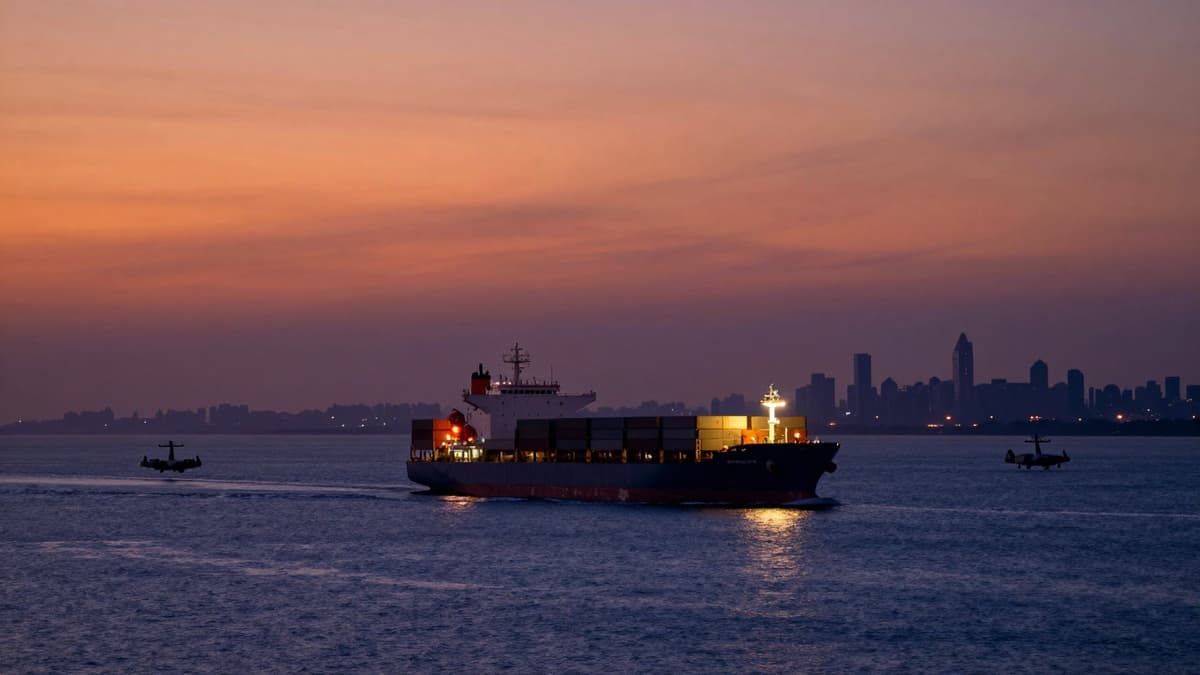
The core of the military confrontation remains the Strait of Hormuz, a critical global energy choke point. While Iranian forces have threatened to close the strait, two Chinese container ships successfully navigated the passage on Monday. This was their second attempt after turning back on Friday, and according to data analyst Rebecca Gerdes, it marks the first time container vessels of this nature have left the Persian Gulf since the conflict began, excluding Iranian-flagged ships. The vessels were observed steaming at elevated speeds toward the Gulf of Oman.
On the diplomatic front, tensions are spiking between Iran and its neighbors. Iran's Foreign Ministry confirmed that Ambassador Mohammad Reza Shibani is defying a Lebanese expulsion order, refusing to leave Beirut despite the deadline passing on Sunday. "Our embassy in Lebanon is active," stated spokesperson Esmail Baghaei, noting the ambassador will continue his mission. This defiance comes amidst a backdrop where Lebanon has declared the ambassador persona non grata to weaken Iran's diplomatic presence.
The human cost of the escalating violence is becoming increasingly clear. In New Delhi, India's Ministry of External Affairs reported that eight Indian nationals have lost their lives and one remains missing in "various incidents" across the region since February 28. While the specific circumstances of the deaths were not detailed, the ministry highlighted that one Indian national died in a recent attack in Kuwait. Despite the danger, India has managed a significant evacuation effort, with approximately 550,000 passengers returning to India from the region.
Diplomatic efforts continue at the highest levels, with U.S. Secretary of State Marco Rubio expressing hope for working with internal factions within Iran's government. Rubio noted that the U.S. has received "positive messages" from figures with the "power to deliver," suggesting fractures within the Islamic Republic. Similarly, Israeli Prime Minister Benjamin Netanyahu is reportedly pushing for a "security belt across the region," a strategy that Qaani claims has been exposed by the actions of Tehran-backed groups like Hezbollah and the Houthis.
The West Asia war is not just a military conflict; it is a global economic shock. The IMF warned that the conflict is causing a "global, but asymmetric shock," leading to tighter financial conditions and dimming the outlook for economies already recovering from previous crises. Low-income countries face the highest risk of food insecurity due to soaring food and fertilizer prices, even as advanced economies scale back international assistance.
In response to the economic strain, various nations are rolling out emergency measures. Dubai has approved 1 billion dirhams ($272.26 million) in economic facilitation measures to support businesses, effective April 1 for a period of three to six months. The United Arab Emirates aims to enhance the flexibility of its economy during this volatile period. Similarly, Germany's Economy Minister Katherina Reiche announced that the German government will decide on further relief measures after the Easter holiday to help consumers weather higher prices, citing visible signs of a slowdown in the German economy.
The humanitarian and financial strain is hitting Sri Lanka particularly hard. The country announced a nearly 40% increase in electricity prices starting April 1, driven by energy shortages linked to the regional war. For middle-class consumers, the cost per kilowatt-hour will rise to 84 rupees, a significant jump from the previous 61 rupees. The Public Utilities Commission of Sri Lanka warned that further price hikes are likely in April as global energy prices remain elevated.
As the conflict enters a new phase with the involvement of multiple global powers and the activation of various proxy networks, the situation remains fluid. The interception of missiles, the movement of commercial vessels, and the shifting diplomatic stances all indicate a complex and volatile landscape. The world now watches closely as the IMF economic impact continues to unfold, potentially reshaping global trade and energy security for the foreseeable future.
The convergence of military strikes on critical infrastructure, such as the Haifa refinery and Tehran university, alongside the disruption of maritime trade routes, suggests a prolonged period of instability. The IMF has indicated that without intervention, the asymmetric shock could exacerbate food insecurity in low-income nations. As nations like Germany and Dubai implement relief measures, the long-term trajectory depends on the ability to restore stability to the Strait of Hormuz and de-escalate the diplomatic standoff between Tehran and its adversaries. The interplay between military aggression and economic survival will likely define the region's recovery in the coming months.
Jun 8, 2026 00:51 UTC
Trump Claims Iran Nuclear Deal Imminent Despite Diplomatic Fractures
Jun 8, 2026 00:47 UTC
Iran Fires Missiles at Israel After Beirut Strike
Jun 7, 2026 22:00 UTC
US, Iran Peace Hops Fade 100 Days Into War
Jun 7, 2026 20:57 UTC
Iran Strikes Israel: IRGC Promises Week of Continuous Offensive
Jun 8, 2026 02:28 UTC
Trump Walks Out of Meet the Press After Rejecting Evidence Demands


