As election fever intensifies across India, Congress leader Rahul Gandhi accuses Himanta Biswa Sarma of corruption while Mamata Banerjee highlights voter intimidation tactics.
The 2026 general election season has intensified with sharp rhetorical exchanges across multiple states, as political leaders clash over governance, corruption, and electoral integrity. On Sunday, April 5, 2026, Rahul Gandhi targeted Assam Chief Minister Himanta Biswa Sarma, while Mamata Banerjee raised alarms about electoral roll revisions in West Bengal. Meanwhile, leaders in Tamil Nadu, Karnataka, and Kerala focused on development narratives and procedural reforms ahead of their respective polls.
The day began with fiery rhetoric from Congress leader Rahul Gandhi, who addressed an election rally in Assam's Biswanath Charialli. He declared Himanta Biswa Sarma to be India's most corrupt Chief Minister, accusing the leader of spreading only hatred. Gandhi promised that no legal action would be spared, regardless of any future requests for forgiveness, once the Congress party returns to power. This aggressive stance contrasts sharply with BJP National Vice President Baijayant Jay Panda's earlier comments on the same day. Panda lauded the central government's focus on Assam and the Northeast, citing industrial growth and women's empowerment as key achievements of the Modi administration. He pointed to new semiconductor factories and job opportunities for youth as evidence of a "huge pro-incumbency" in the state.
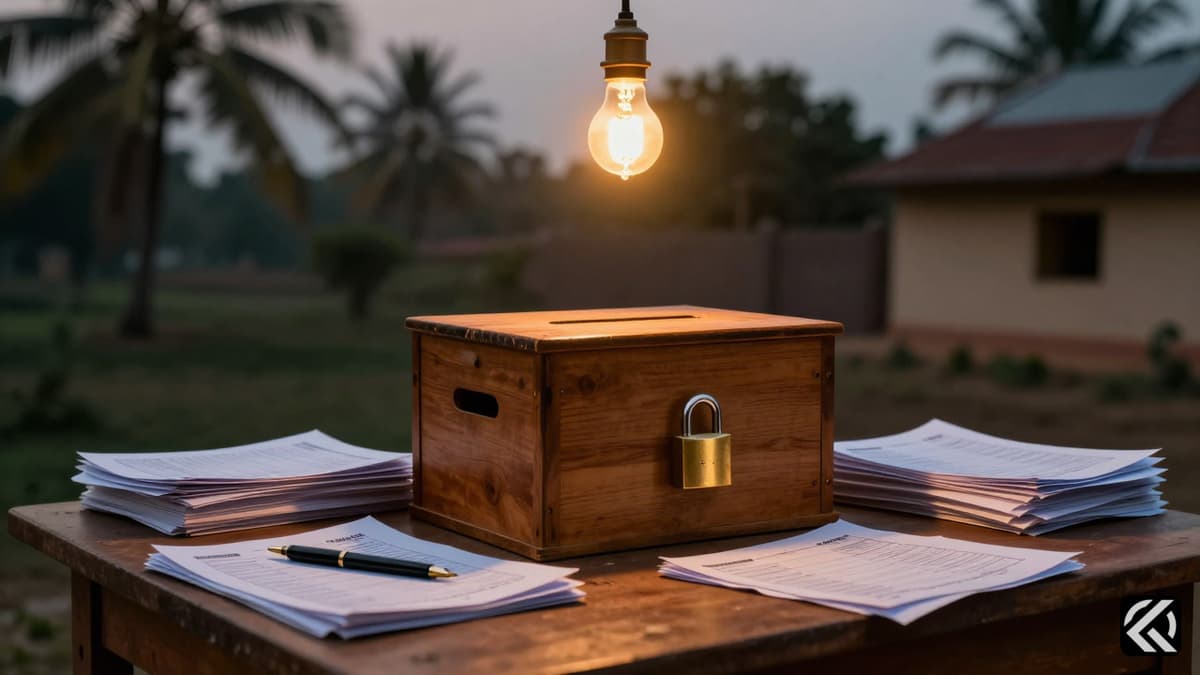
Simultaneously, in West Bengal, Chief Minister Mamata Banerjee used a public rally in Murshidabad to renew her criticism of the Special Intensive Revision of electoral rolls. She alleged that the process is being utilized to intimidate voters by removing their names. Banerjee claimed that approximately 500 officers had been removed to disrupt administrative work, though she acknowledged that operations would resume after the elections. She emphasized that striking names from voter lists constitutes a form of pressuring citizens, asserting, "If you are striking off someone's name, you are trying to intimidate someone."
In Tamil Nadu, the political narrative shifted towards the dynamics of the upcoming Assembly elections. Chief Minister M.K. Stalin dismissed predictions of a close multi-cornered contest, stating in an interview with The Hindu that the race would ultimately favor the DMK-led Secular Progressive Alliance. He characterized the election as a straightforward contest between the DMK and the AIADMK. Conversely, the AIADMK alliance faced internal criticism from Adhav Arjuna of the TVK, who accused DMK chief M.K. Stalin of abandoning social justice principles for "monarchy" and "money power." Arjuna alleged that the DMK alliance is now maintained through financial influence rather than natural political alignment.
Udhayanidhi Stalin further accused the Centre of punishing Tamil Nadu by withholding funds and attempting political control. Meanwhile, Thol. Thirumavalavan stressed that hate politics has no place in the state, urging support for DMK welfare initiatives. The Amma Makkal Munnetra Kazhagam (AMMK) candidate Rajasekaran took a direct approach, slamming the DMK government for taking unprecedented loans and burdening the state with debt. He specifically highlighted corruption complaints against DMK minister K.N. Nehru involving the Enforcement Directorate.
Elsewhere, the Samajwadi Party's Ramgopal Yadav called for a return to ballot paper elections, arguing that advanced technology carries risks of theft similar to bank account data breaches. He predicted that the BJP would be voted out of power in Uttar Pradesh by 2027 and Delhi by 2029. In Karnataka, veteran BJP leader B.S. Yediyurappa alleged that Congress leaders arrived for bypoll campaigns with "suitcases full of money," intending to win through cash and muscle power. He warned that the people would "teach them a lesson" for this approach.
In West Bengal, the BJP faced speculation regarding its Chief Ministerial face, with state president Samik Bhattacharya confirming no decision had been made. Instead, the party planned to campaign on Prime Minister Narendra Modi's development agenda. In the Siliguri constituency, Trinamool Congress candidate Goutam Deb declared assets worth over ₹4.52 crore and affirmed no pending criminal cases against him. In Kerala, the district of Kannur implemented 100% webcasting and camera surveillance across 2,177 polling stations to ensure a transparent voting process, with real-time monitoring from district and constituency-level control rooms.
The convergence of corruption allegations and development claims suggests a highly polarized election landscape. Rahul Gandhi's direct attack on Himanta Biswa Sarma indicates that the Congress party will likely keep the focus on ethical governance and anti-corruption measures in the Northeast. This strategy aims to counter the BJP's Assam BJP development praise narrative, which relies heavily on infrastructure and industrial growth metrics. The tension between these two narratives-corruption vs. development-will likely define the campaign in Assam.
In West Bengal, the issue of Mamata Banerjee voter list intimidation could prove to be a critical battleground. If the removal of voter names is perceived as a successful strategy to suppress turnout, it may alter the demographic outcomes significantly. However, if the public perceives this as a legitimate intimidation tactic, it could galvanize opposition support. The future of West Bengal's political stability will depend on whether the election commission can address these concerns before the final tally.
Looking ahead, the Tamil Nadu contest between the DMK and AIADMK will likely remain the primary focus in the south, with the "no close contest" narrative from Stalin aiming to consolidate his base. The allegations of financial dominance and debt burdens raised by rivals like Rajasekaran and Arjuna suggest a fragmented opposition that may struggle to coalesce unless they can address the specific economic grievances of the electorate. The election will ultimately serve as a referendum on the current state's economic management and the perceived integrity of the electoral machinery.
Jun 8, 2026 02:17 UTC
Magnitude 7.8 Quake Shakes Philippines, Urging Immediate Evacuations
Jun 8, 2026 00:51 UTC
Trump Claims Iran Nuclear Deal Imminent Despite Diplomatic Fractures
Jun 8, 2026 00:47 UTC
Iran Fires Missiles at Israel After Beirut Strike
Jun 7, 2026 22:00 UTC
US, Iran Peace Hops Fade 100 Days Into War
Jun 8, 2026 04:15 UTC
Trump Urges Netanyahu to Halt Iran Strike for Peace