Southern state leaders escalate resistance as the Union Government advances its delimitation plan. CMs from the region threaten a political standstill to protect their interests.
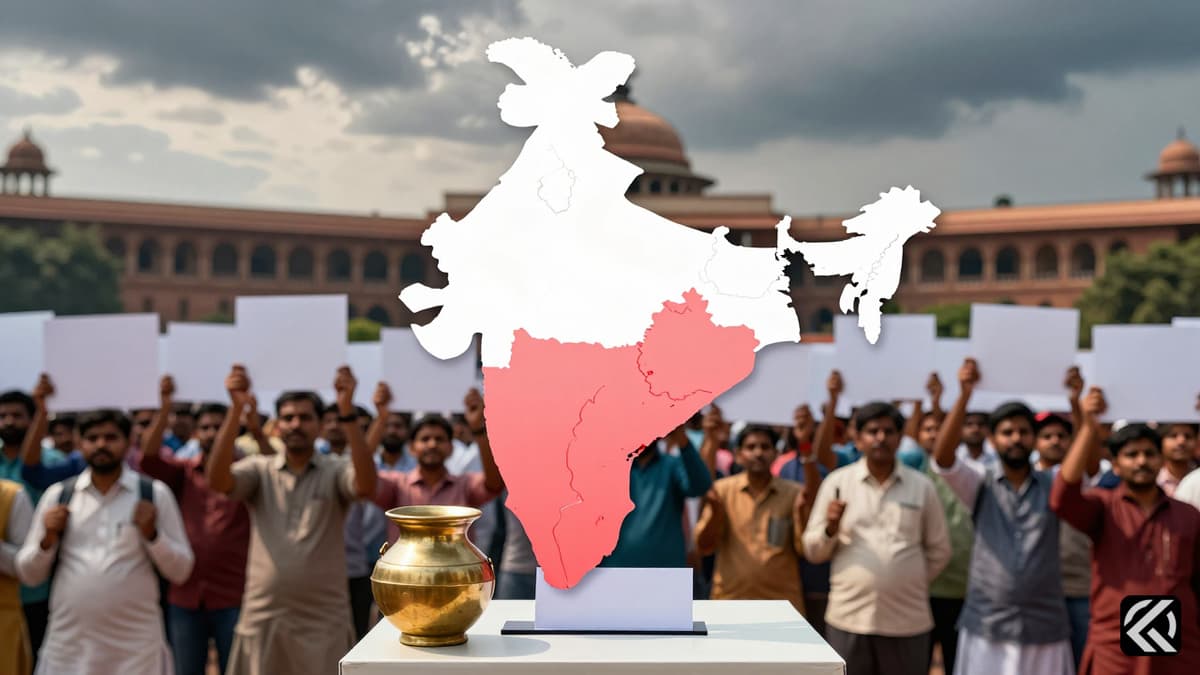
The Chief Ministers of non-BJP-ruled states, particularly in southern India, intensified their opposition on Tuesday, April 14, 2026. They are challenging the Union Government's proposal on delimitation just ahead of the planned implementation of women reservation in the Lok Sabha. Tamil Nadu Chief Minister M.K. Stalin issued a stark warning that if the Centre's proposal negatively impacts southern states, it would trigger a massive movement. This political confrontation marks a significant escalation in the region's response to the central government's latest constitutional adjustments.
The immediate catalyst for this surge in resistance is the proposed "pro rata" formula for increasing Lok Sabha seats. Telangana Chief Minister Revanth Reddy has explicitly called upon M.K. Stalin to lead a united front of southern states against this specific mechanism. The core of the dispute lies in the perception that the current delimitation proposal favors northern states by offering them increased political power. Consequently, leaders from the south are preparing to mobilize a southern States protest that could potentially bring the region to a complete standstill.
The timeline of these events underscores the urgency of the situation. On a single Tuesday, multiple high-profile leaders from the southern region coordinated their rhetoric to present a unified front. This suggests that the issue is not merely a localized grievance but a coordinated regional strategy to counter what they view as an imbalance in political representation. The tension is palpable as the implementation date for the women's reservation approaches, adding a layer of complexity to the ongoing political deadlock.
M.K. Stalin's stance is particularly significant given his role as a prominent leader in the non-BJP bloc. His warning that a massive protest would bring the state to a standstill serves as a direct challenge to the central government's timeline and strategy. This rhetoric indicates a deep-seated belief among southern leaders that the current proposal will erode their political influence and alter the demographic balance of power in the parliament. The fear of losing political ground in the north has galvanized these leaders to take immediate and drastic action.
Revanth Reddy's call for a "united front" further solidifies the regional alliance. By asking Stalin to spearhead this movement, Reddy is acknowledging the need for a centralized leadership to coordinate the resistance across different states. This approach aims to maximize the impact of their collective dissent, ensuring that the central government cannot easily dismiss the concerns of individual states. The formation of such a front highlights the strategic depth of the southern leadership's response to the delimitation issue.
The proposed formula involves a "pro rata" increase in Lok Sabha seats, which the southern states interpret as a shift in power dynamics. While the central government's intent may be to accommodate population changes, the southern leaders perceive this as a move that disproportionately benefits northern states. This perception has fueled the anger and led to the organized calls for resistance. The debate over the fairness of this formula has become a central point of contention in the ongoing political discourse.
As the situation unfolds, the focus remains on whether the southern states can effectively execute their threat of a mass movement. The ability to bring the state to a standstill is a significant political tool that, if deployed, could force the central government to reconsider its approach. The next few weeks will be critical in determining whether the proposed delimitation plan proceeds as scheduled or faces significant delays due to this regional backlash.
The intersection of regional politics and national policy is becoming increasingly strained. The southern states are leveraging their collective influence to protect their interests, signaling that any attempt to alter the balance of power without their consent will be met with fierce resistance. This dynamic sets the stage for a potentially contentious period in Indian politics, where the implementation of the women reservation could be derailed by the very states that are meant to benefit from a more representative parliament.
The immediate future looks fraught with potential for further escalation. If the central government proceeds with the delimitation plan as proposed, it is highly likely that the southern States protest will intensify, potentially leading to widespread civil disobedience. The coordinated response from Telangana and Tamil Nadu suggests that other non-BJP ruled states in the south may soon join this front, amplifying the pressure on the Union Government. Unless a significant compromise is reached regarding the distribution of additional seats, the implementation of the women's reservation could be postponed indefinitely or face severe logistical challenges. The political landscape in India is shifting, with southern states asserting their agency against what they perceive as central overreach. The coming days will define whether this coalition can sustain its momentum and force a renegotiation of the terms regarding the Lok Sabha seat allocation.
Jun 8, 2026 02:17 UTC
Magnitude 7.8 Quake Shakes Philippines, Urging Immediate Evacuations
Join 50,000+ readers getting the global briefing every morning.
No spam. Unsubscribe anytime.
Jun 8, 2026 02:17 UTC
Magnitude 7.8 Quake Shakes Philippines, Urging Immediate Evacuations
Jun 8, 2026 00:51 UTC
Trump Claims Iran Nuclear Deal Imminent Despite Diplomatic Fractures
Jun 8, 2026 00:47 UTC
Iran Fires Missiles at Israel After Beirut Strike
Jun 7, 2026 22:38 UTC
Congress Party Claims Unity for INDIA Bloc Delhi Meeting