Section
Flydubai captain Smit Machchhar fought off a violent attack during a suspected hijacking attempt, saving countless lives. He shares his harrowing experience with India’s Prime Minister Narendra Modi in an emotional video call.
Smit Machchhar, the heroic Flydubai captain who endured a savage assault by his own copilot, revealed his motivation for fighting back: he could not bear to “let everybody else die.” In his first public remarks regarding the terrifying incident that occurred on Wednesday, Machchhar shared the harrowing details of the suspected hijacking attempt that nearly resulted in a mid-air catastrophe for flight FZ 1073, which was en route to Tel Aviv. The situation was averted only through the brave intervention of passengers who rushed into the cockpit and stand-in pilots who eventually regained control of the aircraft.
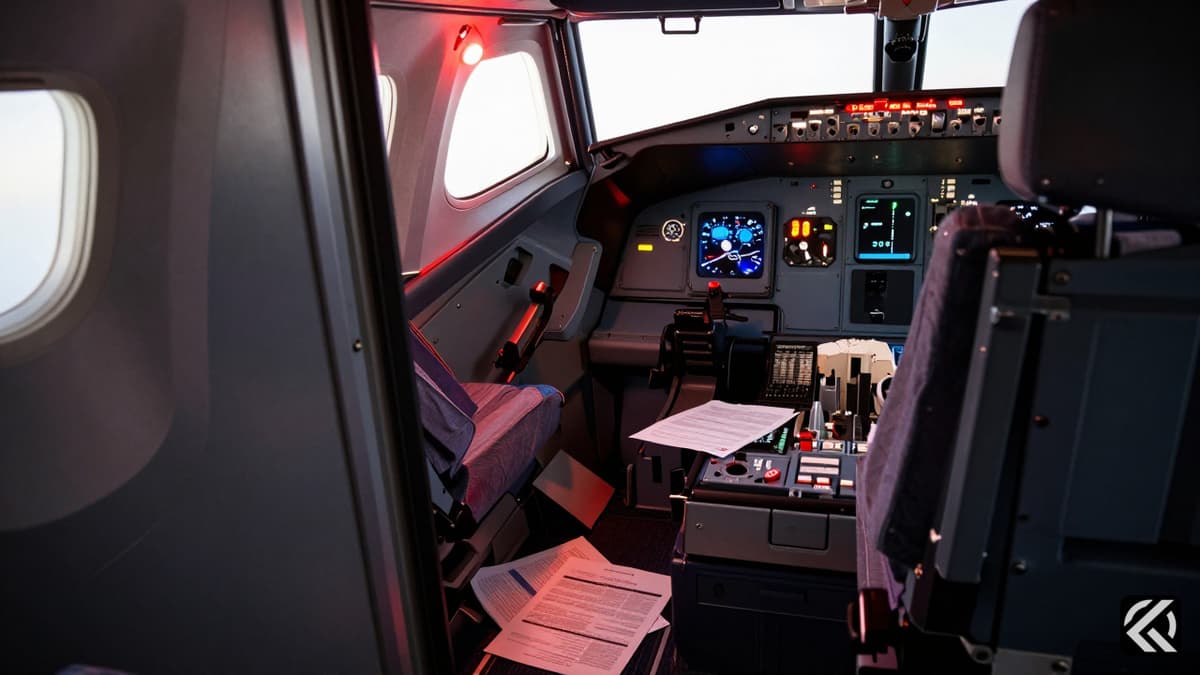
During a video call on Friday with India’s Prime Minister Narendra Modi, Machchhar recounted the brutal physical struggle he faced. “In that moment, I was fighting for my life,” Machchhar told the Prime Minister. He described being so severely wounded that he had fallen to the floor, questioning at the time, “what if I don’t get up?” Images from the flight later revealed a gruesome scene, with blood splashed across the cockpit and the seriously wounded pilot lying on the ground, his face partially covered by a mask. Despite the attacker continuing to beat him, Machchhar realized the plane was descending while he was on the ground. Summoning his remaining strength, he recalled hearing a voice within himself say, “And I knew in that moment - one last push, Smit! Just do it. The door is right there.”
He managed to open the cockpit door, allowing several passengers who had rushed in to restrain his attacker. “And then I just opened it… and then everybody came,” Machchhar explained. He emphasized that while his primary drive was self-preservation, his sense of duty to the other 100+ people on board was equally powerful. “I was doing this for my life, but at the same time, I knew that I couldn’t let everybody else die.” Modi praised the veteran pilot, stating that his “courage, patience and quick thinking… saved the lives of so many people,” noting that Machchhar was “fighting the battle of life and death.”
Machchhar is currently recovering at a hospital in Abu Dhabi, the capital of the United Arab Emirates. Prior to his transfer to Abu Dhabi, the plane was forced to make an emergency landing in Saudi Arabia, where he received initial treatment for massive blood loss and severe wounds. Shota Musaev, a dentist and passenger on the flight, had previously told CNN that Machchhar’s bravery helped prevent a disaster comparable to 9/11, according to Israeli Prime Minister Benjamin Netanyahu. The emotional toll of the event is still evident; Machchhar apologized to Modi for crying during their call and spoke in Gujarati, his native language, to connect with the Prime Minister.
The incident has brought his personal history into sharp focus. Born into a textile business family, becoming a pilot was not Machchhar’s “childhood dream,” as he admitted in a 2025 interview with the Bona-Fide Banter podcast. He had initially enrolled in a textile engineering course after school, marking a significant deviation from his family’s trade. Despite this unexpected career path, his actions on FZ 1073 demonstrated a profound sense of professional pride. “Now that you have called me, I am really really proud of myself,” Machchhar told Modi. “I wasn’t proud before this, but now I am.”
His recovery process has been emotionally complex for his family. He revealed that his daughter visited him in the hospital but was frightened by his condition. His youngest son, who is only two years old, has not yet been able to meet him. This incident highlights the immense psychological and physical resilience required in the aviation industry, especially in the face of such a direct and violent threat to air safety.
The survival of Smit Machchhar and the passengers of flight FZ 1073 underscores the critical importance of cockpit security and crew training in mitigating in-flight threats. While the immediate threat was neutralized, the incident will likely prompt airlines to review protocols regarding cockpit door access and passenger intervention during crises. The emotional recovery of Machchhar, a father of two who faced mortality daily, will serve as a powerful testament to human resilience. Future aviation policies may see stricter guidelines on managing internal threats, ensuring that pilots are better supported psychologically and physically. The global reaction, including praise from world leaders, highlights how such events unite the international community in condemning violence against civilians, setting a precedent for how aviation security will be prioritized in the coming years.
Oct 6, 2026 02:48 UTC
Yemen Forces Recapture Mocha in Major Counteroffensive
Oct 6, 2026 00:07 UTC
Teen Loses Hand in French School Protest Clashes Amid Escalating Violence
Oct 5, 2026 22:36 UTC
UAE Shares FlyDubai Crew Data After Pilot Seize Control Attempt
Oct 5, 2026 22:00 UTC
US Withdraws Heavy Bombers From UK Base Amidst Rising Tensions With Iran
Oct 6, 2026 06:46 UTC
Historic Pentagon Firing Squad Execution for Former US Army Major Hasan