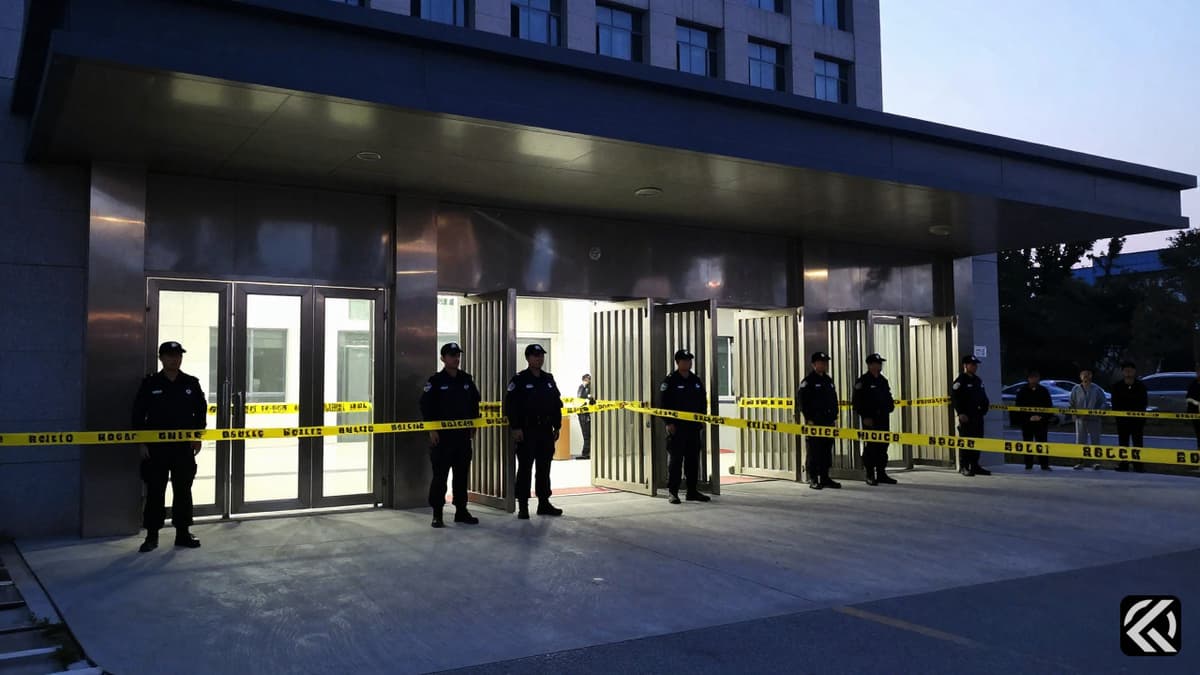
West Bengal's electoral officer asserts strict security measures eliminate fraud risks, while political leaders across India debate the reliability of recent exit poll predictions.
West Bengal Chief Electoral Officer Manoj Agarwal firmly denied allegations of electoral malpractice, asserting that robust security arrangements leave "no scope for wrongdoing" at counting centers. This statement was issued on Friday, May 1, 2026, following intense scrutiny of the voting process and conflicting predictions from various survey agencies regarding the upcoming vote count scheduled for May 4. The comments came amidst heightened tensions and political accusations leading up to the critical determination of the state's next government.
Agarwal dismissed the claims of potential irregularities as baseless, emphasizing that round-the-clock CCTV monitoring of strong rooms is strictly in place. He told reporters that any allegations made without concrete evidence should be viewed with skepticism. "One should have reason and evidence for making allegations," Agarwal stated, underscoring the administration's confidence in the integrity of the West Bengal Assembly elections. His remarks served as a direct counter to the anxieties expressed by political stakeholders who have been vocal about the security of their votes.
The controversy intensified after West Bengal Chief Minister Mamata Banerjee spent nearly four hours at the counting center for her Bhabanipur constituency, housed in the Sakhawat Memorial School in south Kolkata. Banerjee alleged possibilities of malpractice and was seen closely monitoring the EVM strong room. Her prolonged presence highlighted the high stakes and the distrust some political factions feel regarding the impartiality of the electoral process. In response to these tensions, security has been significantly tightened outside the strong room at the Netaji Indoor Stadium in Kolkata, where vote counting is scheduled to commence.
Political reactions to the current climate have been sharply divided, with many leaders questioning the credibility of Exit polls that have predicted a BJP-led victory in Bengal. Jammu and Kashmir Chief Minister Omar Abdullah warned of a "dangerous trend" in the electoral process, particularly concerning the Special Intensive Revision of electoral rolls. He emphasized that if these revisions affect the outcome, it would set a treacherous precedent. Abdullah also dismissed the accuracy of recent exit polls, drawing a parallel to five years prior when similar polls incorrectly predicted a BJP victory in West Bengal. "Tell me, which exit poll has actually turned out to be correct so far?" he asked, suggesting that the final results might oppose the survey predictions.
Abdullah defended the right of political leaders like Banerjee to maintain vigilance outside strong rooms, noting that such practices date back to the era of physical ballot boxes. "We used to keep our people outside the strong room," he explained, framing the current actions as a standard security measure rather than an indication of fraud. This perspective contrasts with the views of others who see the allegations as symptoms of a broader manipulation. Akhilesh Yadav, chief of the Samajwadi Party, went further, alleging that the BJP and the Election Commission have executed in West Bengal what was merely a "trial" run in Uttar Pradesh. He claimed a parallel structure of Central forces was built in Bengal, yet remained confident that Mamata Banerjee would secure a historic win.
The Election Commission of India has introduced new measures to bolster transparency, including a QR code-based photo identity card system designed to eliminate unauthorized entry at counting centers. This three-tier security mechanism requires manual checking of photo IDs in the first two tiers, with entry to the innermost cordon permitted only after QR code verification. This technological intervention aims to ensure that only authorized personnel can access the voting machines, addressing one of the primary concerns raised by political parties regarding the security of the Tamil Nadu Assembly elections and other concurrent polls.
In Tamil Nadu, the political narrative has focused heavily on the confidence of the DMK-led coalition. MDMK founder Vaiko expressed absolute confidence in a DMK victory, criticizing the inconsistency of Exit polls. He noted that while some surveys favor the AIADMK or TVK, these projections remain speculative. "Exit polls don’t go the same line," Vaiko stated, highlighting the conflicting data from different agencies. Tamil Nadu Chief Minister M.K. Stalin echoed this sentiment, stating that the rewards for his party's hard work would be reaped on May 4. He dismissed the notion that his statements were based on exit polls, asserting there was "absolutely no change" in the anticipated outcome.
The electoral landscape is further complicated by reports of post-poll violence and incident of targeted attacks. At least three incidents were reported in Murshidabad, Malda, and North 24 Parganas districts. In Murshidabad, a CPI(M) polling agent was allegedly assaulted by local leaders linked to the TMC. Meanwhile, in Tamil Nadu, a temporary office of the Tamilaga Vettri Kazhagam (TVK) was set on fire near Tiruchi, ahead of a planned visit by party leader C. Joseph Vijay. These incidents underscore the volatile atmosphere surrounding the polls.
Third gender voter turnout has been a notable positive development in the West Bengal Assembly elections. The Election Commission reported that 91.28% of third gender electors participated in the second phase, with a total of 792 voters casting their ballots. This sharp increase from 56.79% in the first phase demonstrates growing political engagement among marginalized communities. Puducherry also recorded high turnout among this demographic, highlighting a broader trend of inclusive participation across southern India.
Despite the administrative assurances and new security protocols, the political rhetoric remains fierce. Former MLA P V Anvar, now contesting as a UDF-backed Independent, vowed that the UDF government, if elected, would investigate corruption in the incumbent LDF administration. This mutual suspicion suggests that the aftermath of the elections will be as contentious as the voting process itself.
As the region braces for the May 4 vote count, the intersection of strict security measures and deep political distrust defines the current moment. The implementation of QR-based verification aims to mitigate fraud fears, yet the conflicting exit poll data and allegations of external interference suggest a potentially turbulent outcome. The final results will likely test the resilience of electoral integrity frameworks and the political stability of the affected regions.
May 1, 2026 03:50 UTC
Trump Administration Declares Iran Conflict Terminated
Apr 25, 2026 01:38 UTC
Iranian FM Araghchi Heads to Islamabad for Critical US-Iran Talks
Apr 24, 2026 17:13 UTC
Trump Confirms Extended Ceasefire as Iran Vows Port Blockade
Apr 24, 2026 13:45 UTC
Nato Rejects Expulsion Claims Amid US Spain Falkland Tensions
May 1, 2026 09:20 UTC
Officials Defy Malpractice Claims Before Critical Vote Counting