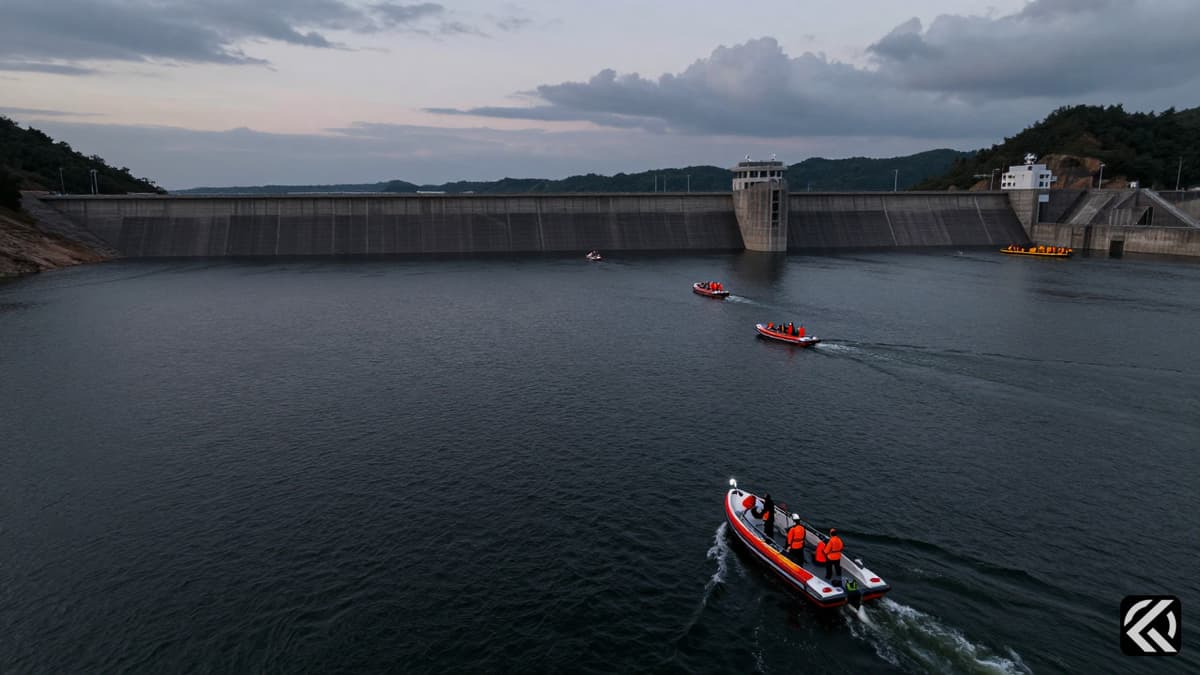
The search for victims of the Bargi dam boat disaster has ended, raising the confirmed death toll to 13 with the recovery of the final two bodies.
The death toll associated with the recent Jabalpur cruise tragedy has officially risen to 13, following the recovery of the bodies of the last two missing victims from the Bargi dam. Collector Raghvendra Singh provided this grim confirmation to The Hindu on Sunday, May 3, 2026, marking the end of a frantic and extensive search effort that had consumed the attention of emergency services and the public alike. The recovery of these final remains signifies that no survivors remain in the water, shifting the focus of authorities from rescue to recovery and investigation.
The identification of the deceased individuals has brought a measure of clarity to the families involved, though it deepens the sorrow of the community. The bodies recovered in this final phase belonged to Mayuram, who was nine years old, and Kamraj Arya, who was 39 years old. Their identification was part of the concluding efforts of a multi-agency response team that had worked tirelessly to scour the vast expanse of the dam’s waters. The presence of a child among the victims underscores the tragic nature of the incident, highlighting the vulnerability of passengers on the cruise vessel that met its fate in these waters.
The search operation that led to these discoveries was a massive logistical undertaking spanning three full days. It required the coordination of multiple elite emergency response units, including personnel from the Indian Army, the National Disaster Response Force (NDRF), the State Disaster Emergency Response Force (SDERF), and local police and home guard units. The involvement of such a diverse and powerful array of resources illustrates the severity of the situation and the challenge posed by the dam’s environment. The collaboration between national and local forces was critical in ensuring that every inch of the water was monitored and every potential lead was pursued with urgency.
The conclusion of the search operation, as confirmed by Collector Raghvendra Singh, brings a formal close to the immediate humanitarian crisis. However, it opens the door to necessary inquiries into how such a tragedy occurred. The sheer scale of the operation, involving thousands of personnel and extensive equipment, suggests that the search area was difficult to navigate and the conditions were likely treacherous. The fact that it took three days to locate the final two bodies indicates the complexity of the task, possibly due to the size of the reservoir, water currents, or the time elapsed since the incident.
The role of the local administration, led by the Collector, was pivotal in managing the aftermath. Raghvendra Singh’s public communication regarding the status of the victims provided essential updates to the public and the families of the missing. His statements served as the primary source of factual information during a time of high emotion and uncertainty. The confirmation of the death toll by an authoritative figure helps to prevent the spread of rumors and misinformation, which can often proliferate during large-scale disasters.
The integration of the Indian Army and the NDRF into the search efforts highlights the national significance of the response. These agencies are typically deployed for major disasters due to their specialized training and equipment. Their presence at the Bargi dam indicates that the state government deemed the situation beyond the capacity of local resources alone. The NDRF, in particular, is known for its expertise in water rescue operations, making their contribution vital to the ongoing search. Similarly, the SDERF and local police provided necessary local knowledge and support, ensuring that the national teams could operate effectively.
The identities of the victims, Mayuram and Kamraj Arya, are now known, allowing their families to begin the grieving process. The age difference between the two victims-one a child and the other an adult-highlights the indiscriminate nature of the disaster. It serves as a somber reminder of the fragility of life in the face of such accidents. The recovery of their bodies is a critical step in providing closure to their loved ones, even if the pain remains.
As the search operation winds down, the focus will inevitably shift to the causes of the accident. Questions will arise regarding the safety protocols of the cruise vessel, the weather conditions at the time, and the regulatory oversight of tourism activities on the dam. The involvement of such a high-profile search operation suggests that the incident will be scrutinized heavily by the public and the government. Accountability may become a central theme in the weeks and months following this tragedy.
The conclusion of the search does not mean the end of the impact. The community of Jabalpur and the surrounding areas will grapple with the loss of 13 lives. The Jabalpur cruise tragedy will likely influence future regulations regarding water tourism and safety standards for dam-related activities. It may also lead to discussions about emergency preparedness and the capacity of local authorities to respond to such large-scale incidents. The memory of Mayuram, Kamraj Arya, and the other 11 victims will serve as a lasting testament to the need for vigilance and safety in all forms of public recreation.
The confirmation of the 13th victim marks the end of the immediate crisis but initiates a period of regulatory review. Authorities will likely mandate stricter safety inspections for all vessels operating on the Bargi dam. This could include mandatory life-saving equipment checks, capacity limits, and weather-based closure protocols. The tragedy highlights the urgent need for robust emergency response frameworks in tourist-heavy water bodies, potentially leading to increased funding for local rescue capabilities and stricter enforcement of existing maritime laws to prevent future losses of life.
May 4, 2026 17:13 UTC
UAE Intercepts Iranian Missiles Amid Escalating Strait of Hormuz Tensions
Join 50,000+ readers getting the global briefing every morning.
No spam. Unsubscribe anytime.
May 4, 2026 17:13 UTC
UAE Intercepts Iranian Missiles Amid Escalating Strait of Hormuz Tensions
May 4, 2026 15:53 UTC
BJP Secures Historic Mandate in West Bengal
May 4, 2026 15:20 UTC
US Launches Project Freedom to Guide Ships Through Strait of Hormuz
May 4, 2026 13:50 UTC
Rudy Giuliani Hospitalized in Critical Condition Amid Trump Praise


