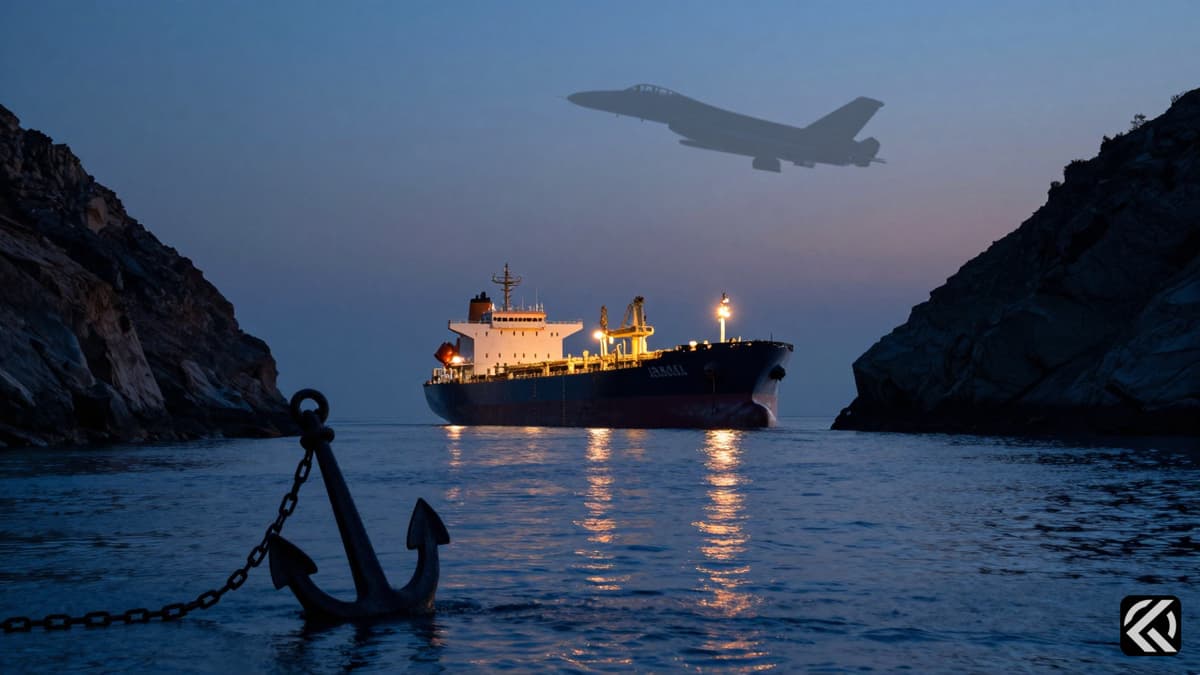
President Trump issues a stark ultimatum: Iran must reopen the Strait of Hormuz or face total destruction by midnight Tuesday, with the US ready to seize oil.
President Donald Trump issued a stark warning at a White House news conference on Tuesday, stating the United States could take out Iran's entire country by midnight the following day. The confrontation centers on the Strait of Hormuz, which Trump insists must reopen as part of any proposal to end the ongoing Iran-US War.
During the conference, the President outlined a grim scenario where every bridge and power plant in Iran could be destroyed if a deal is not reached. Despite the escalation, Trump maintained that Iran remains an "active, willing participant" in negotiations, though he offered no clarity on whether hostilities are ramping up or winding down.
The discussion turned to Seize Iranian Oil, with Trump revealing his vision of controlling oil supplies in both Iran and Venezuela. He cited the US operation in Venezuela, where the conflict ended in 45 minutes, as a model for future actions. Trump, identifying himself as a "businessman first," stated that "to the winner belong the spoils," indicating a willingness to seize Iranian oil despite acknowledging the political risks involved.
Defense Secretary Pete Hegseth and other top officials, including Chairman of the Joint Chiefs Dan Caine and CIA Director John Ratcliffe, joined the President. They recounted the successful rescue of two US airmen after a fighter jet was downed in Iran last week. Trump praised the crew member's "absolute commitment to surviving," a trait he claimed made the "daunting challenge" of the rescue possible.
Trump also addressed the internal security breach that led to initial reports of a missing Air Force officer, threatening jail time for the reporter who published the story and vowing to find the "leaker." He noted that not all military advisers supported the operation to rescue the crew of the downed F-15E fighter jet, highlighting internal dissent even as he lauded the mission's success.
The President's frustration extended to US allies, whom he claimed "didn't help us" in the war. He suggested the widening rift with NATO began when he proposed acquiring Greenland. This sentiment of isolating allies underscores the unilateral approach the US is taking as the Tuesday deadline approaches.
The administration's stance on oil represents a significant pivot. When asked about the prospect of seizing Iranian oil, Trump clarified his position: "If I had my choice, yeah." He referenced the US operation in January that captured Venezuelan leader Nicolás Maduro, noting that the war concluded in 45 minutes and that the US is now a partner with Venezuela's interim leadership, having taken hundreds of millions of barrels.
While Trump expressed a desire to reprise this situation in Iran, he admitted uncertainty about whether the American public supports such a move. The Strait of Hormuz remains the central point of contention. Trump declared that reopening the waterway is a "very big priority" and that any acceptable deal must include free traffic of oil and other goods. He dismissed a 45-day ceasefire proposal from other countries as "not good enough," viewing it as an insufficient attempt to stave off massive strikes on Iranian infrastructure.
Furthermore, Trump questioned Iran's current capabilities to disrupt the strait, stating that they likely have no mine-droppers or mines left, describing the Iranians as "very good bullsh*t artists." This confidence suggests a belief that the US has the upper hand in controlling the critical waterway.
Meanwhile, on the northern front of the region, the conflict is intensifying in Lebanon. Israel has ordered residents of dozens of villages in southern Lebanon to leave their homes "immediately" and flee north of the Zahrani River. IDF spokesman Avichay Adraee cited "Hezbollah activities" as the reason for the strong action.
This evacuation order marks an escalation, following earlier plans floated by Israeli politicians to create a buffer zone by destroying civilian infrastructure within 2 to 3 kilometers of the border. Far-right lawmakers have demanded an even more aggressive approach, calling for the wholesale expulsion of Lebanese civilians south of the Litani River. Defense Minister Israel Katz has outlined a plan to destroy villages and bar the 600,000 displaced Lebanese from returning until northern Israel is secure, explicitly comparing the strategy to the destruction of Rafah and Khan Younis in Gaza.
The convergence of the US ultimatum on the Iran-US War and Israel's military maneuvers in Lebanon creates a precarious security environment. The President's explicit threat to seize Iranian oil and destroy infrastructure by midnight Tuesday signals a move from diplomatic pressure to immediate kinetic action. If Iran fails to comply with the reopening of the Strait of Hormuz, the likelihood of widespread destruction of Iranian bridges and power plants increases dramatically. The administration's reliance on the "winner take all" philosophy, derived from the Venezuelan model, suggests that the US is prepared to assume direct control over Iranian oil resources should a deal fail.
In the near term, this deadline will test the resolve of both Tehran and regional allies. The US decision to call out allies for their lack of support indicates a potential shift in transatlantic relations, potentially isolating Washington further if the conflict expands. Simultaneously, the IDF's orders to displace Lebanese civilians and the Israeli government's consideration of destroying villages suggest a deepening of the conflict in Lebanon, potentially drawing more regional actors into the fray. The combination of these actions could lead to a broader regional war, with oil markets facing immediate volatility due to the threat to the Strait of Hormuz and the potential for US military operations in Iran to disrupt global supply chains. The coming 45 minutes to 24 hours will be critical in determining whether diplomacy can still prevent a catastrophic escalation.
Jun 8, 2026 02:17 UTC
Magnitude 7.8 Quake Shakes Philippines, Urging Immediate Evacuations
Jun 8, 2026 00:51 UTC
Trump Claims Iran Nuclear Deal Imminent Despite Diplomatic Fractures
Jun 8, 2026 00:47 UTC
Iran Fires Missiles at Israel After Beirut Strike
Jun 7, 2026 22:00 UTC
US, Iran Peace Hops Fade 100 Days Into War
Jun 8, 2026 04:15 UTC
Trump Urges Netanyahu to Halt Iran Strike for Peace


