Section
Widespread unrest grips France as students mobilize against crumbling infrastructure, triggering fires at educational institutions and sparking a national political debate.
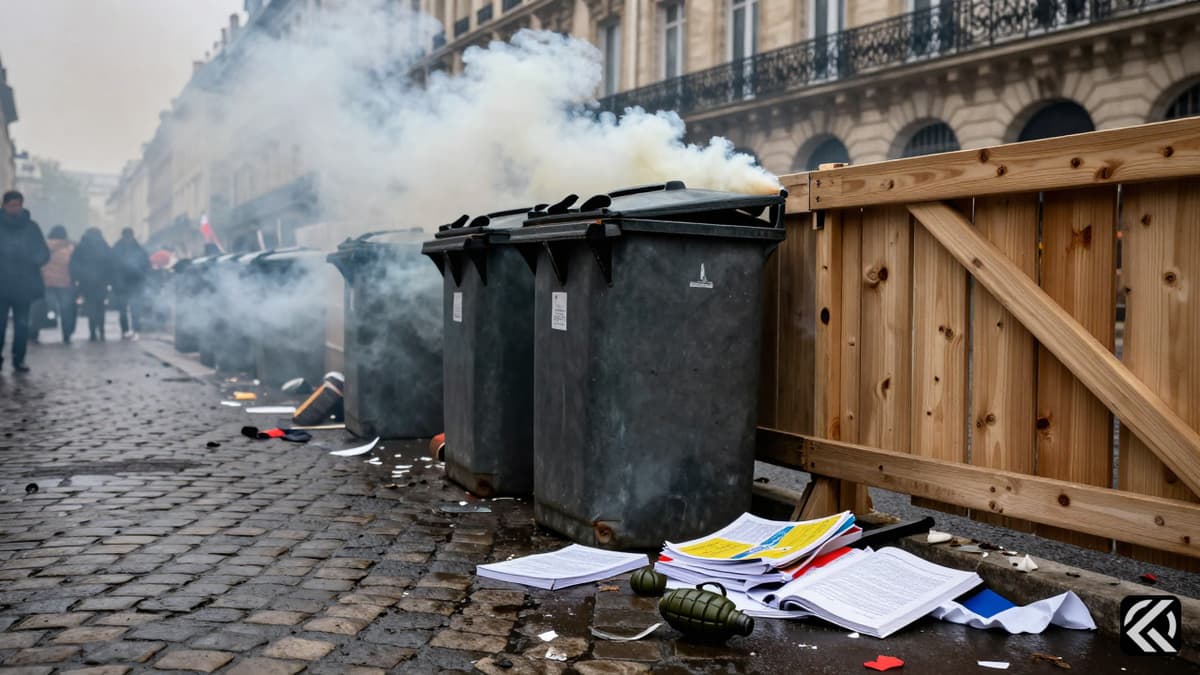
Fires have broken out at several schools in France, as student protests France escalate into widespread unrest. Students are blockading education institutions nationwide to demand better school funding and improved studying conditions. The situation has intensified, with blazes reported in Nantes, Rouen, and Marseille, signaling a shift from peaceful demonstration to destructive conflict.
The unrest began with blockades at French lycées-schools for 15-18 year olds-before spreading to hundreds of institutions. In Nantes, western France, blazes erupted at two high schools after a bin was set alight. One fire at Nelson Mandela high school spread to the front of the building, damaging the entrance hall. Similarly, in Rouen, a school entrance was filmed engulfed in flames. In Marseille, staff at Victor Hugo high school were splashed with petrol as protesters filled containers. A headteacher in Auchel was injured by a firework. These incidents mark a dangerous escalation in the ongoing dispute over the school funding crisis plaguing the education sector.
The interior ministry reported that 1,949 people were arrested on Thursday alone, with 305 police officers injured. Prime Minister Sébastien Lecornu held a crisis meeting to address the unrest, after which the government described the student-led demonstrations as having descended into "urban violence." The scale of the disruption is massive, with 1,027 lycées affected by demonstrations and 222 currently blockaded. Additionally, at least 30 universities, including campuses in Rennes and Paris, have been blockaded. Public transport in Marseille and Strasbourg was halted due to vandalism and threats of violence, further isolating students and staff.
Seventeen-year-old Raphael, a participant in Strasbourg, highlighted the tangible reasons behind the anger. He told news agency AFP that his school’s facilities are failing, citing leaking rooms and insufficient toilets. "The building is falling apart, the cafeteria is too small. There's zero budget, zero resources, not enough supervisors," Raphael said. This sentiment is echoed by university students who joined the protests on Thursday, citing similar demands for resources and staff. The is not just a policy issue but a daily reality for students navigating decaying infrastructure and overcrowded classrooms.
The protests have become heavily politicized months ahead of France's next general election. The government and hard-right politicians have accused the hard left of igniting the unrest, which is organized by a union representing lycée students. This political framing has deepened the divide. Bally Bagayoko, mayor of a Parisian suburb and member of the radical left La France Insoumise (LFI), defended remarks suggesting violence could be legitimate in cases where protesters are shot at. Meanwhile, LFI leader Jean-Luc Mélenchon stressed support for non-violent protests but argued that blaming the left does not address the core issues motivating the demonstrations.
The intersection of educational neglect and political polarization creates a volatile environment. With public transport paralyzed and numerous schools compromised, the immediate impact on education is severe. The government's characterization of the events as urban violence contrasts sharply with the students' narrative of fighting for basic educational rights. As blockades continue at hundreds of schools, the tension between enforcing order and addressing systemic underfunding remains unresolved. The injuries to police and staff, along with the spread of fires, indicate that the situation is deteriorating rather than stabilizing. The involvement of university students suggests the discontent extends beyond secondary education, indicating a broader systemic failure in the French education model.
The current unrest in French schools underscores a deep-seated school funding crisis that has reached a breaking point. With over a thousand lycées affected and significant injuries reported, the government faces a critical juncture. If the underlying issues of overcrowding, staff shortages, and decaying infrastructure are not addressed through policy reform rather than just security measures, similar unrest is likely to persist. The politicization of the protests risks further alienating the student body, potentially influencing voter sentiment in upcoming elections. Long-term stability will require a collaborative approach to restore educational infrastructure and trust, rather than viewing students solely as disruptors of public order.
Oct 6, 2026 02:48 UTC
Yemen Forces Recapture Mocha in Major Counteroffensive
Oct 6, 2026 00:07 UTC
Teen Loses Hand in French School Protest Clashes Amid Escalating Violence
Oct 5, 2026 22:36 UTC
UAE Shares FlyDubai Crew Data After Pilot Seize Control Attempt
Oct 5, 2026 22:00 UTC
US Withdraws Heavy Bombers From UK Base Amidst Rising Tensions With Iran
Oct 6, 2026 08:40 UTC
Cornell Faculty Senate to Vote on Admin Over Rape Case