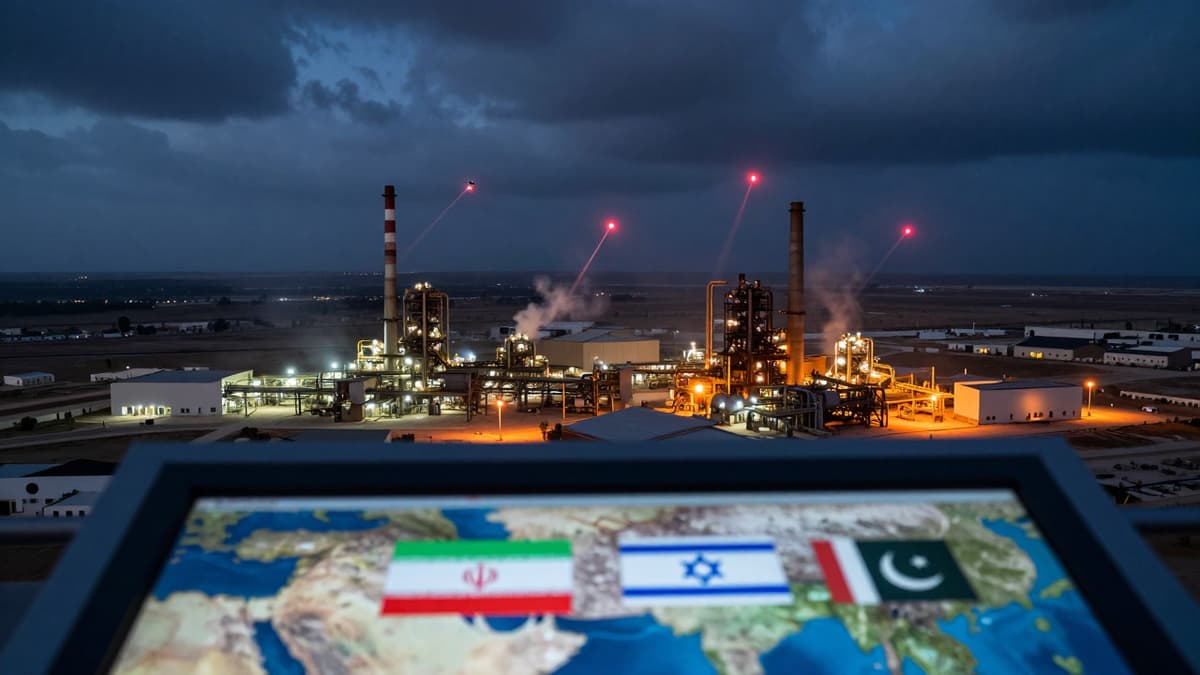
Tensions flare across West Asia as Iran targets aluminium facilities, while Pakistan Foreign Minister Ishaq Dar leads diplomatic efforts for a peaceful resolution.
The intensifying violence in the Middle East reached a critical point on Sunday, March 29, 2026, as the West Asia conflict escalated with new Iranian offensive operations and diplomatic maneuvers by neighboring states. In Islamabad, Pakistan Foreign Minister Ishaq Dar convened a meeting with his counterparts from Egypt and Turkiye, aiming to coordinate efforts for peace amidst the growing instability. Simultaneously, Iran’s Parliament speaker Mohammad Bagher Ghalibaf accused the United States of preparing a covert ground invasion while publicly pursuing dialogue. This dual reality of military aggression and diplomatic posturing has set the stage for a volatile period in the region.
The immediate trigger for the day's escalation was a coordinated assault by the Islamic Revolutionary Guards Corps, which claimed responsibility for launching a barrage of missiles and drones. These weapons struck facilities belonging to two of the world's largest aluminium producers located in Bahrain and the United Arab Emirates. The Revolutionary Guards asserted that these industrial sites were linked to the U.S. military, marking a significant expansion of the conflict's scope into the Gulf states. On the opposing front, Israeli authorities confirmed that their territory had become the target of a new wave of missiles fired from Iran, adding to the immediate danger facing the Jewish state.
Amidst the unfolding military confrontation, high-level diplomatic channels were activated in Pakistan. Foreign Minister Ishaq Dar met with his Egyptian and Turkish counterparts on Sunday to address the deteriorating security situation. The primary objective of this gathering was to discuss the ongoing West Asia conflict and formulate a united front for negotiation. The official statement released following the meeting emphasized that the three nations share a unified view on the necessity of restraint and de-escalation. They collectively underscored that disputes must be resolved through dialogue and diplomacy rather than further military engagement, signaling a desperate push for stability from the region's major powers.
The political rhetoric in Tehran has grown increasingly confrontational as the conflict deepens. Mohammad Bagher Ghalibaf, the speaker of Iran's Parliament, delivered a stark warning regarding American intentions. Speaking on Sunday, March 29, 2026, Ghalibaf stated that the enemy is engaging in a deceptive strategy. He claimed that while the United States publicly sends messages favoring negotiation and dialogue to end the war, it is simultaneously and secretly planning a ground attack. This assertion highlights a deepening trust deficit between Tehran and Washington, suggesting that the diplomatic track is viewed with extreme skepticism by the Iranian leadership.
The attacks on the aluminium facilities represent a significant escalation in the conflict's targeting of economic infrastructure. By striking two of the world's largest producers in Bahrain and the UAE, the Revolutionary Guards aim to demonstrate the reach of their capabilities and the vulnerability of regional allies supporting the U.S. military presence. The claim that these facilities were linked to the U.S. military frames the strike not merely as a regional dispute but as a direct response to American involvement, potentially widening the circle of confrontation to include other Gulf nations.
Israel's response to the incoming fire indicates that the conflict is now a multi-front engagement. The confirmation of a new wave of missiles fired at Israeli territory on Sunday suggests that the Iranian offensive is persistent and escalating. This development forces Israeli authorities to maintain a high state of readiness while navigating the complexities of the broader regional war. The simultaneous attacks on the Gulf and the direct strikes on Israel create a precarious balance of power that risks drawing in additional global players.
The diplomatic efforts led by Pakistan Foreign Minister Ishaq Dar serve as a critical counter-narrative to the violence. By bringing together the leaders of Egypt, Turkiye, and Saudi Arabia for a quadrilateral summit, Pakistan is attempting to forge a path toward de-escalation. The focus on resolving disputes through dialogue reflects the shared concern of these nations regarding the potential for a full-scale war that could destabilize the entire Middle East. The urgency of this meeting underscores the fear that military solutions alone will not resolve the underlying tensions driving the conflict.
As the weekend progresses, the world watches to see if the diplomatic initiatives can outpace the military escalations. The statements from both Tehran and the United States suggest a lack of common ground, with Iran alleging secret preparations for a ground war while the U.S. continues to engage in public talks. The involvement of multiple nations in the current crisis, from the initial launch of the Iran missile attacks to the diplomatic responses in Islamabad, points to a complex geopolitical chessboard where every move carries significant weight.
The convergence of Iranian military strikes on Gulf aluminium facilities and the subsequent diplomatic summits in Islamabad reveals a critical juncture in the West Asia conflict. While Pakistan, Egypt, and Turkiye push for dialogue, the persistent rhetoric from Iran's Parliament speaker regarding secret U.S. ground plans suggests that military posturing remains the dominant force. If the accusation of a covert ground attack proves true, the diplomatic channel led by Foreign Minister Ishaq Dar may face significant hurdles, potentially prolonging the cycle of retaliation and increasing the likelihood of broader regional escalation.
Jun 8, 2026 02:17 UTC
Magnitude 7.8 Quake Shakes Philippines, Urging Immediate Evacuations
Jun 8, 2026 00:51 UTC
Trump Claims Iran Nuclear Deal Imminent Despite Diplomatic Fractures
Jun 8, 2026 00:47 UTC
Iran Fires Missiles at Israel After Beirut Strike
Jun 7, 2026 22:00 UTC
US, Iran Peace Hops Fade 100 Days Into War
Jun 8, 2026 04:15 UTC
Trump Urges Netanyahu to Halt Iran Strike for Peace


