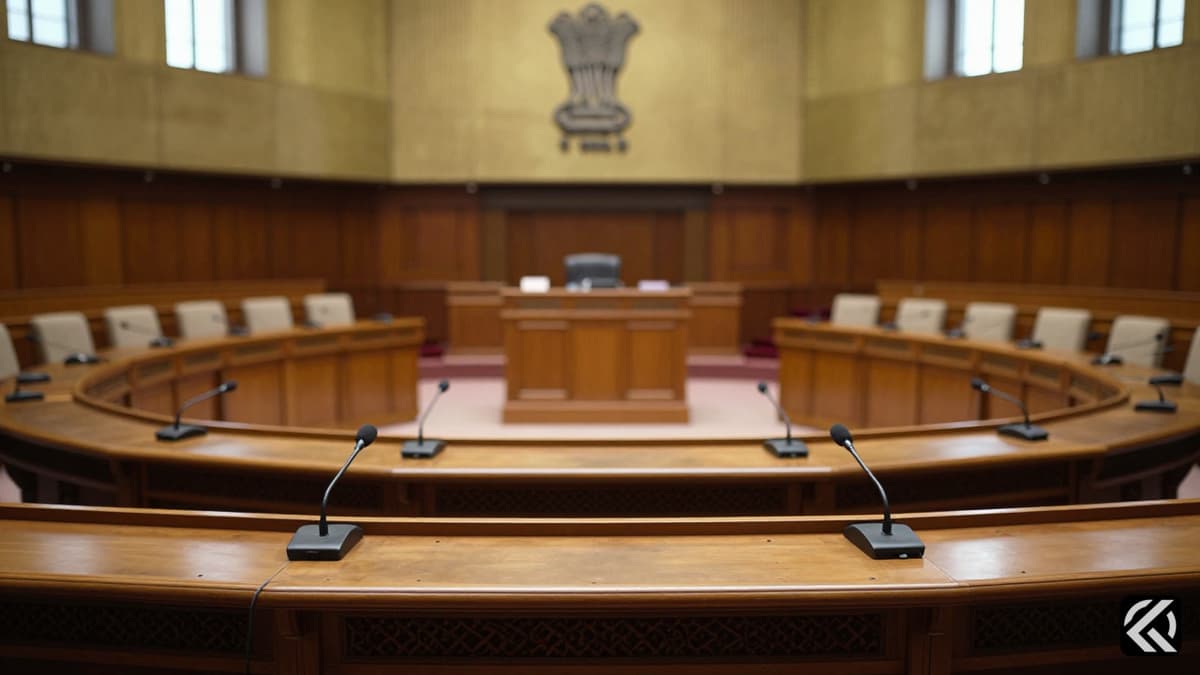
Prime Minister Modi has appealed to all political leaders to clear the Women's Reservation Act amendments with a unified voice as the Budget Session extends, highlighting a critical moment for responsibility towards women.
Prime Minister Narendra Modi has formally written to the heads of all political parties, urging them to cooperate in clearing amendments to the Women's Reservation Act 2023. This appeal comes directly ahead of the extended sitting of the Budget session, which is now scheduled to focus on finalizing these legislative changes. The Prime Minister characterizes this specific moment as a critical opportunity for political leaders to demonstrate their collective responsibility towards women in the country.
In a direct response to the Prime Minister's call for unity, Congress President Mallikarjun Kharge has reiterated a longstanding demand for a formal all-party meeting. Kharge argues that essential pre-legislative deliberations must occur before any further amendments can be processed. Furthermore, the Congress leader has explicitly questioned the strategic timing of introducing the amendment bill, noting its concurrence with the ongoing Assembly elections. This stance highlights a growing tension between the executive's push for immediate action and the opposition's insistence on a more inclusive, consultative approach to the legislation.
The current political landscape is defined by this divergence in strategy. While the Prime Minister seeks a "one voice" consensus to expedite the bill's progress, the Congress leadership views the lack of prior consultation as a significant procedural oversight. The timing of the bill's introduction remains a point of contention, with the opposition suggesting that the legislative calendar may have been manipulated to serve electoral purposes rather than the legislative merit of the bill. The Prime Minister's letter, however, serves as a direct invitation for parties to rise above these partisan divides and focus on the substantive goal of the legislation.
The extended sitting of the Budget session marks a pivotal juncture for Indian democracy. Historically, the Budget session has been dominated by fiscal discussions, but its extension to include major constitutional amendments signals a shift in legislative priorities. The Women's Reservation Act, originally passed in 2023, now faces a complex path forward as the government seeks to incorporate necessary changes proposed by various stakeholders. The Prime Minister's emphasis on a unified front suggests an expectation that the political costs of delay or obstruction are currently outweighed by the urgency of the matter.
Critics of the current timeline point out that the period leading up to the extension has been marked by intense electoral campaigning in several states. The introduction of the amendment bill amidst these elections has drawn sharp criticism regarding the appropriateness of the timing. The opposition argues that the gravity of a bill concerning gender representation deserves a period of calm reflection and broad consultation, rather than the frenetic pace of an election season. This debate underscores the broader challenges faced by democratic institutions when trying to balance urgent legislative needs with electoral realities.
The demand for an all-party meeting reflects a desire among opposition leaders to ensure that the amendments reflect a consensus rather than a partisan majority. Kharge's position is that without such deliberations, the legitimacy of the bill could be compromised. This calls into question the procedural fairness of the extended session. The Prime Minister's response, calling for cooperation, indicates a willingness to move forward but leaves open the question of whether the opposition's conditions for a formal meeting will be met before the session concludes.
The implications of this legislative maneuver extend beyond the immediate passage of the bill. If the amendments are cleared quickly as the Prime Minister hopes, it could set a precedent for how major social reforms are handled during election cycles. Conversely, if the opposition successfully halts or delays the process, it could lead to a prolonged stalemate, impacting the government's legislative agenda for the remainder of the session. The coming days will be crucial in determining whether the political will for this reform is sufficient to overcome the procedural and electoral hurdles currently in place.
The specific friction regarding the timing of the Women's Reservation Act amendments highlights a deeper ideological divide within the political framework. While the Prime Minister frames the current moment as one of responsibility, the Congress leadership views the timing as opportunistic. The demand for pre-legislative deliberations serves as a mechanism to ensure that the amendments are thoroughly vetted and accepted by a broad spectrum of political forces. This approach aims to protect the integrity of the bill from being viewed as a partisan tool used during an election period. The future trajectory of the bill will depend heavily on whether these two distinct political philosophies can converge or if they remain entrenched in their opposing positions.
As the extended Budget session continues, the path forward remains uncertain. The Prime Minister's appeal for a "one voice" approach stands in stark contrast to the opposition's call for a pause and a comprehensive meeting. The ultimate fate of the Women's Reservation Act amendments will likely be determined by the balance of power in the house and the willingness of the parties to compromise. If the current impasse is resolved, it could result in the swift passage of a significant legislative change. However, if the disagreement over timing and process persists, the session could end with the bill in limbo, leaving the issue of women's political representation unresolved for the foreseeable future. The coming legislative days will be closely watched as a test of political maturity and the capacity for cross-party collaboration on national issues.
Jun 8, 2026 00:51 UTC
Trump Claims Iran Nuclear Deal Imminent Despite Diplomatic Fractures
Jun 8, 2026 00:47 UTC
Iran Fires Missiles at Israel After Beirut Strike
Jun 7, 2026 22:00 UTC
US, Iran Peace Hops Fade 100 Days Into War
Jun 7, 2026 20:57 UTC
Iran Strikes Israel: IRGC Promises Week of Continuous Offensive
Jun 8, 2026 02:28 UTC
Trump Walks Out of Meet the Press After Rejecting Evidence Demands