India's Parliament commences a special sitting to deliberate on a major legislative package aimed at expanding the Lok Sabha and implementing long-awaited women's reservation.
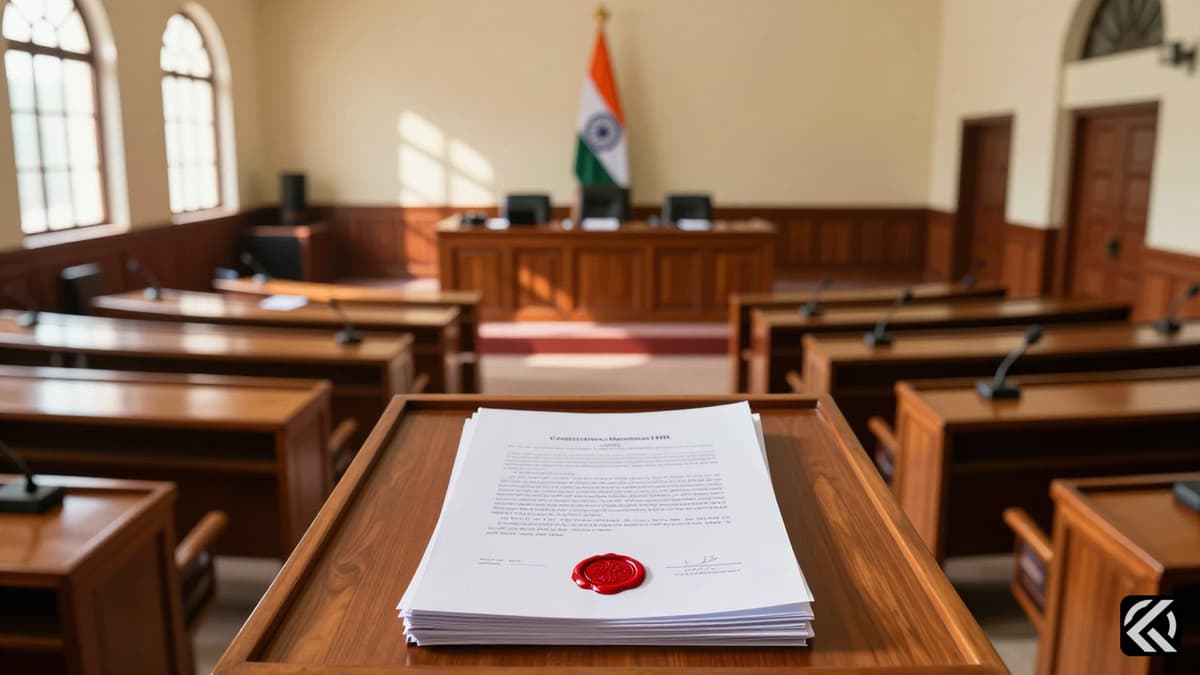
The extended Budget Session of the Indian Parliament is set to commence a critical three-day special sitting on Thursday, April 16, 2026. This session is expected to deliberate on a significant legislative package comprising three key bills designed to restructure the electoral landscape. The government has explicitly stated that these measures are aimed at expediting the implementation of 33% reservation for women in the Lok Sabha and State Assemblies.
On Tuesday, April 14, 2026, the Central government circulated draft bills among Members of Parliament (MPs). These proposals include the Constitution 131st Amendment Bill, the Delimitation Bill, 2026, and the Union Territories Laws (Amendment) Bill, 2026. The draft proposals envision a substantial increase in the strength of the Lok Sabha, rising from the present 543 seats to up to 850 seats. This expansion would follow a fresh delimitation exercise based on the last published census. The primary objective is to create sufficient space within both the Lok Sabha and State Assemblies to accommodate the mandated reservation for women.
The political landscape has already reacted to these proposals. The INDIA bloc parties have taken a unanimous decision to vote against the delimitation provisions specifically contained within the Constitution (131st) Amendment Bill, 2026. Congress president Mallikarjun Kharge confirmed this stance at the conclusion of an alliance meeting on Tuesday, April 13, 2026. Despite the opposition to the delimitation aspect, the INDIA bloc made it clear that they are not against the reservation for women in the Lok Sabha and State Assemblies. This distinction highlights a strategic divergence in how the opposition views the legislative package, separating the mechanism of delimitation from the principle of gender equality in representation.
The proposed legislative framework relies heavily on the mechanics of a delimitation exercise. This process, based on the most recent census data, is intended to redraw constituency boundaries and adjust seat allocations to reflect current demographic realities. The government's approach suggests that the current size of the Lok Sabha is insufficient to accommodate the new quota while maintaining representative balance. By increasing the total number of seats to 850, the administration aims to fulfill the requirements of the Nari Shakti Vandan Adhiniyam without reducing the number of seats available for other constituencies, although this expansion is the subject of the ongoing political debate.
The circulation of the draft bills on April 14 allowed MPs a brief window to review the proposals before the special sitting began. The urgency of the session is underscored by the timing, with the three-day sitting designed to fast-track these specific amendments. The government's stance remains that these bills are necessary to expedite the implementation of women's reservation, which has been a long-standing political commitment. The inclusion of the Union Territories Laws (Amendment) Bill, 2026, alongside the primary amendment and delimitation bills, indicates a comprehensive overhaul of electoral laws intended to cover all levels of governance simultaneously.
The opposition's strategy, as articulated by Mallikarjun Kharge, focuses on a specific objection to the delimitation provisions. By voting against the delimitation parts of the Constitution 131st Amendment Bill, the INDIA bloc signals that while they support the goal of gender parity, they have concerns regarding the methodology or timing of the delimitation exercise. This suggests that the political friction lies not in the concept of women's representation but in the technical execution of redrawing boundaries, which has historically been a contentious issue in Indian politics. The unanimous nature of the bloc's decision reinforces the solidarity of the alliance in this specific legislative challenge, even as they maintain a supportive stance on the core principle of women's reservation.
As the Parliament moves into its special sitting, the focus remains on the interplay between expanding the legislative body and ensuring fair representation. The outcome of these deliberations will determine the future composition of India's highest legislative body and its state counterparts. The debate will likely center on the balance between administrative necessity driven by census data and the political implications of shifting constituency boundaries.
The passage of these bills represents a pivotal moment in India's democratic history, aiming to institutionalize gender parity in its legislative bodies. If the women reservation in Lok Sabha is successfully implemented through the proposed expansion, it will fundamentally alter the demographic representation of the country's ruling assembly. The opposition's conditional support indicates that while the end goal of gender equality is widely accepted, the method of achieving it via delimitation remains a point of contention. The long-term impact will likely involve a more diverse parliament, provided the legislative hurdles regarding the delimitation process are navigated successfully in the coming days of the special sitting.
Jun 8, 2026 04:15 UTC
Trump Urges Netanyahu to Halt Iran Strike for Peace
Join 50,000+ readers getting the global briefing every morning.
No spam. Unsubscribe anytime.
Jun 8, 2026 02:28 UTC
Trump Walks Out of Meet the Press After Rejecting Evidence Demands
Jun 8, 2026 02:17 UTC
Magnitude 7.8 Quake Shakes Philippines, Urging Immediate Evacuations
Jun 8, 2026 00:51 UTC
Trump Claims Iran Nuclear Deal Imminent Despite Diplomatic Fractures
Jun 8, 2026 00:47 UTC
Iran Fires Missiles at Israel After Beirut Strike