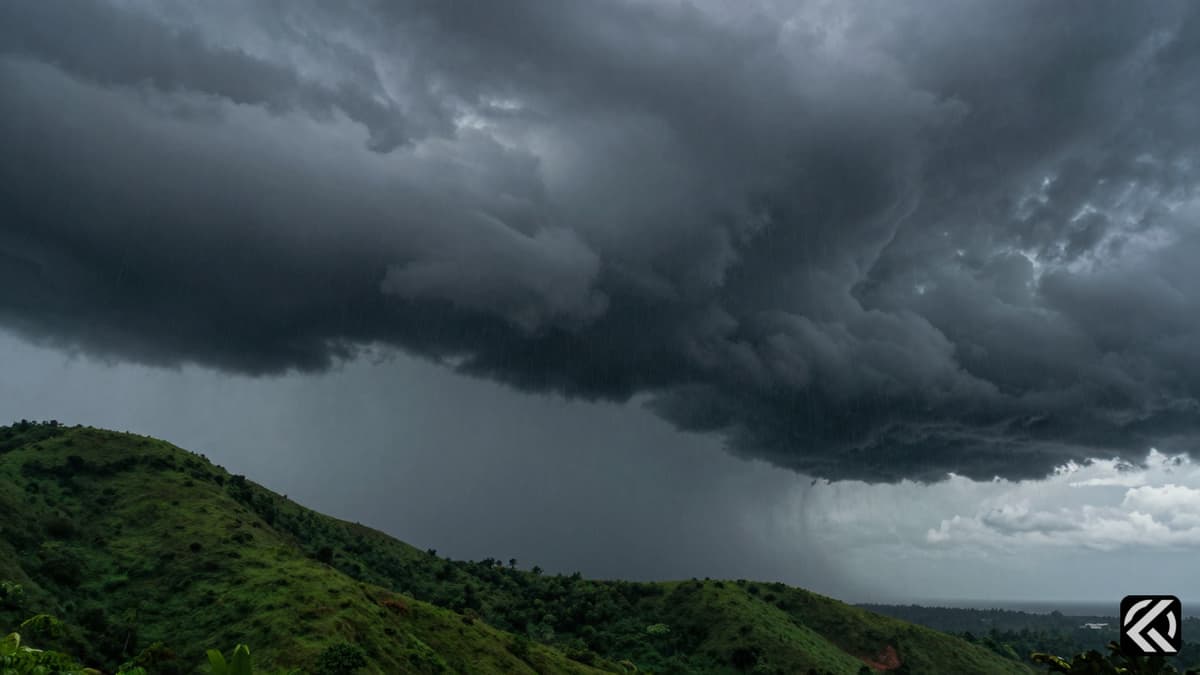
The long-awaited southwest monsoon has finally arrived in Kerala, triggering severe weather alerts across multiple districts, while Delhi prepares for rising temperatures and rain.
The India Meteorological Department (IMD) has officially confirmed the arrival of the Kerala Monsoon 2026, marking the end of a delayed onset for the southwest monsoon season. After missing its predicted start date of May 26 and the normal onset date of June 1, the rains finally began on Thursday, June 4, 2026, bringing relief to the state after a prolonged dry spell.
As the monsoon clouds gather in the south, the weather office in Delhi issued a yellow alert for rain and thunderstorms, signaling impending weather changes in the national capital. This alert comes as temperatures in Delhi are expected to peak around 38 degrees Celsius, with minimum temperatures already hovering significantly above normal. Station-wise data indicates that minimum temperatures reached 29.7 degrees Celsius on Thursday, with specific stations like Ayanagar recording lows 2.3 degrees above normal, underscoring the heat preceding the rain.
Meanwhile, the weather agency issued an orange alert in three specific districts of Kerala for the morning hours due to the intensity of the incoming system. The IMD warned of thunderstorms accompanied by heavy rainfall and maximum surface wind speeds reaching 40 kilometres per hour in parts of the state. This severe weather alert highlights the immediate impact of the monsoon's arrival, necessitating caution for residents in the affected areas.
While the monsoon brings agricultural promise, it also triggers infrastructure challenges. In Kerala’s Idukki district, a five-storey building under construction collapsed at Pambanar, near Peerumedu, around 3:30 a.m. on Thursday. Officials confirmed that no casualties were reported because no workers were staying in the building at the time of the incident. Although the structure was completely destroyed, a nearby family had a narrow escape from the debris. The building is owned by a Pambanar resident named Agnal, and the incident underscores the risks associated with construction activities during the onset of heavy rains.
In response to the dangers posed by the approaching weather, the Palghar district administration has launched an awareness drive on lightning safety. This initiative follows the tragic loss of 27 lives in the district due to lightning strikes between 2014 and 2025. District Disaster Management Officer Vivekanand Kadam organized a seminar to educate citizens and frontline government personnel about lightning risks, aiming to prevent future fatalities under the guidance of District Collector Indurani Jakhar.
Pre-monsoon preparedness is also being tightly coordinated across states. Punjab’s Local Government Minister, Harjot Singh Bains, unveiled a massive sewerage desilting drive to clear 2,200 km of sewer lines and 1,400 chronic hotspots before the rains worsen drainage issues. Similarly, Kerala’s Minister for Local Self-Governments K.M. Shaji reported in the Assembly on Tuesday that all planned preparedness activities are on schedule, ensuring the state is ready for the Kerala Monsoon 2026 impacts.
The delayed arrival of the Kerala Monsoon 2026 has heightened scrutiny on both agricultural planning and urban infrastructure resilience. As heavy rains lash various parts of Kerala, the immediate challenge for local authorities is managing drainage and preventing waterlogging in urban centers, a concern echoed by Punjab’s efforts to clear 1,400 identified chronic sewage overflow hotspots. The orange alert for thunderstorms and high winds in Alappuzha, Kottayam, and Ernakulam suggests that the initial phase of the monsoon will be volatile, requiring continuous monitoring by disaster management teams.
Looking forward, the successful onset of the monsoon is critical for India’s agriculture and economy, which remain heavily dependent on timely rainfall. However, the structural collapse in Idukki building collapse incidents, such as the recent one in Idukki, serves as a stark reminder of the need for rigorous construction standards during monsoon seasons. As clouds are tracked via the IMD INSAT 3D-S satellite, the focus must shift from immediate response to long-term mitigation strategies. The awareness drives in Palghar and the desilting efforts in Punjab indicate a growing trend toward proactive infrastructure management. If these preparations are sustained, the region could mitigate the economic damage typically associated with erratic monsoon patterns. The coming weeks will determine whether the delayed rains provide sufficient relief to crops without causing widespread structural or logistical disruptions in urban areas like Delhi, which currently faces a Delhi yellow alert for subsequent weather disturbances.
Jun 8, 2026 04:15 UTC
Trump Urges Netanyahu to Halt Iran Strike for Peace
Join 50,000+ readers getting the global briefing every morning.
No spam. Unsubscribe anytime.
Jun 8, 2026 02:28 UTC
Trump Walks Out of Meet the Press After Rejecting Evidence Demands
Jun 8, 2026 02:17 UTC
Magnitude 7.8 Quake Shakes Philippines, Urging Immediate Evacuations
Jun 8, 2026 00:51 UTC
Trump Claims Iran Nuclear Deal Imminent Despite Diplomatic Fractures
Jun 8, 2026 00:47 UTC
Iran Fires Missiles at Israel After Beirut Strike


