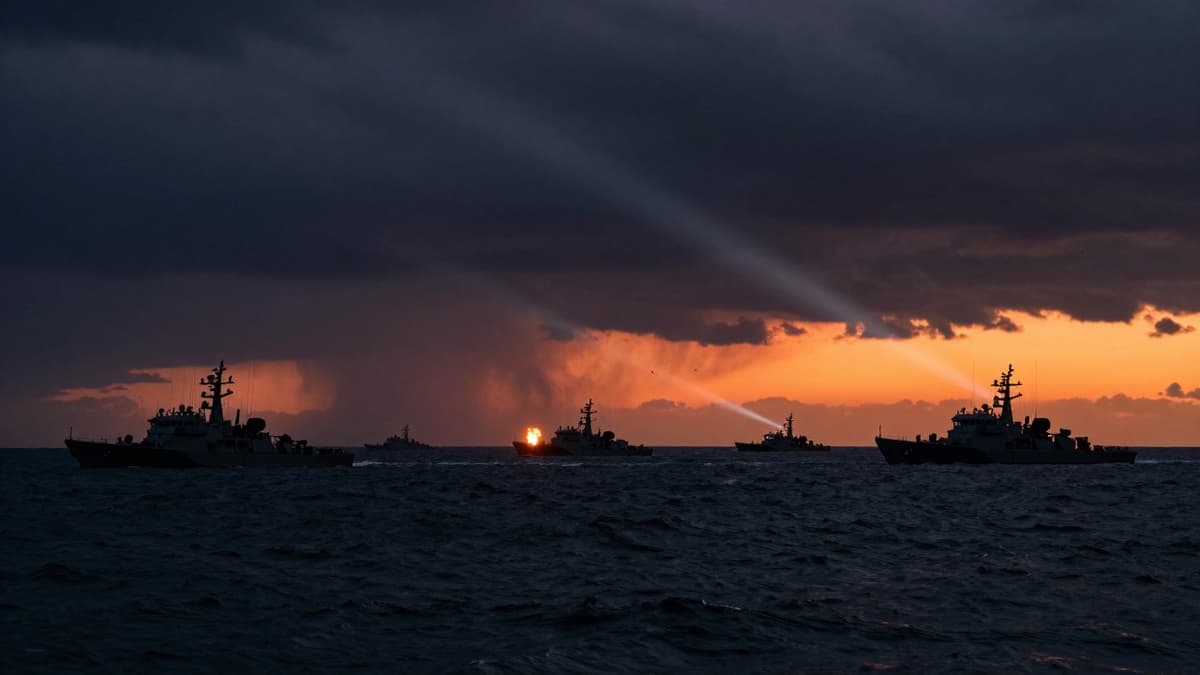
In a stunning escalation, Israel confirms the elimination of key Iranian naval leadership, marking a critical turning point in the ongoing regional conflict and joint military operations.
Israeli Defense Minister Israel Katz announced on Thursday, March 26, 2026, that the United States and Israel have successfully executed a strike resulting in the death of Commodore Alireza Tangsiri, the head of the Iranian Revolutionary Guard's navy. This high-profile official was a central figure overseeing the strategic closure of the strait, a move critical to regional maritime control. The announcement was part of a series of devastating blows delivered to Iranian leadership and infrastructure during a sustained campaign of joint military operations that began in late February.
The strike, which reportedly killed Tangsiri alongside other senior naval commanders, occurred overnight following a period of escalating hostilities. While the Israeli leadership moved quickly to claim responsibility and detail the operational success, the Iranian government has not immediately acknowledged the death of their naval chief. This lack of immediate confirmation leaves the full extent of the impact on Iranian command structures in a state of flux, though the strategic implications of removing the head of the navy are significant.
Since the inception of the joint U.S.-Israeli attacks on February 28, the operational scope has broadened significantly. Israel has publicly announced the elimination of several top-tier Iranian figures, including Supreme Leader Ali Khamenei and Ali Larijani, the Islamic republic's powerful security chief. These announcements highlight a shift from targeted precision to a comprehensive dismantling of the highest levels of Iranian political and military hierarchy. The timing of the latest strike on the naval command suggests a continued strategy to degrade Iran's ability to project power and control critical waterways.
In the days leading up to this announcement, Israeli forces have intensified their focus on maritime targets. The recent operational focus has included Caspian Sea naval strikes that have specifically targeted the Iranian fleet. These actions were not limited to a single vessel; instead, they involved a broad sweep of assets including ships equipped with sophisticated missile systems, various support vessels, and patrol craft. The destruction of these assets serves to cripple Iran's naval mobility and its capacity to threaten the strait, which remains a focal point of the conflict.
The claim that Commodore Alireza Tangsiri was killed underscores the precision and reach of the current military campaign. As the key official responsible for the closure of the strait, his removal fundamentally alters the command chain regarding maritime blockades and naval defense. The death of such a high-ranking official, as confirmed by Israel Katz, represents a significant psychological and tactical victory for the coalition forces. It signals to the Iranian military leadership that no position is safe from retaliatory and preemptive strikes aimed at neutralizing the war effort.
The absence of an immediate acknowledgment from Tehran regarding Tangsiri's death stands in contrast to the speed of the Israeli announcement. Historically, Iran's communications regarding high-profile casualties can be delayed or ambiguous, often waiting to verify information or to formulate a political response. However, the detailed account provided by Israeli officials regarding the simultaneous deaths of other naval commanders suggests a coordinated and decisive blow to the Revolutionary Guard's naval division.
The sequence of events indicates a calculated escalation. The joint operations, initiated with a focus on broader strategic goals, have now zeroed in on specific individuals who manage critical infrastructure and defense capabilities. The targeting of the navy, particularly in the Caspian Sea, demonstrates an intent to sever the logistical and command links that enable Iranian naval dominance in the region. This shift in focus from general infrastructure to individual leadership aims to create a vacuum of command, potentially causing confusion and disarray within the Iranian military apparatus.
The impact of these strikes extends beyond the immediate loss of personnel. By neutralizing the leadership overseeing the strait's closure, the coalition may be attempting to reopen or destabilize the blockade, thereby altering the strategic balance of power in the region. The presence of missile-equipped ships among the targeted assets further emphasizes the high stakes involved, as the destruction of such weaponry reduces the immediate threat to coalition forces and regional allies.
The confirmed elimination of Commodore Alireza Tangsiri and the destruction of multiple naval assets indicate a severe degradation of Iran's operational capabilities in the Caspian Sea. Based on the trajectory of joint U.S.-Israeli attacks which have already removed Supreme Leader Ali Khamenei and security chief Ali Larijani, the immediate future points toward continued pressure on Iran's command hierarchy. If this pattern of targeting key officials and critical naval assets persists, the region may face an immediate shift in control over the strait, potentially leading to a rapid de-escalation of the blockade or a forced strategic retreat by remaining Iranian forces. The lack of official confirmation from Tehran so far suggests that the full reality of the damage is still being assessed within the Iranian command, likely resulting in a period of strategic recalibration that could define the next phase of the conflict.
Jun 8, 2026 02:17 UTC
Magnitude 7.8 Quake Shakes Philippines, Urging Immediate Evacuations
Jun 8, 2026 00:51 UTC
Trump Claims Iran Nuclear Deal Imminent Despite Diplomatic Fractures
Jun 8, 2026 00:47 UTC
Iran Fires Missiles at Israel After Beirut Strike
Jun 7, 2026 22:00 UTC
US, Iran Peace Hops Fade 100 Days Into War
Jun 8, 2026 04:15 UTC
Trump Urges Netanyahu to Halt Iran Strike for Peace


