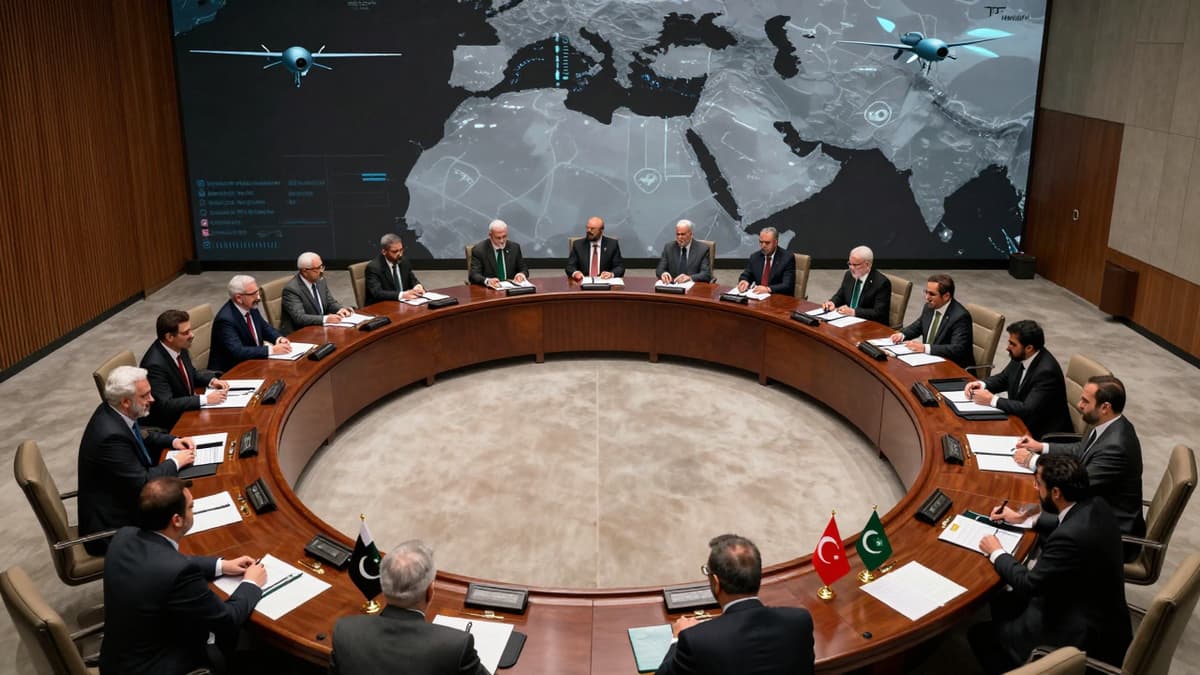
Diplomatic efforts collide with escalating military threats as Iran warns of US ground operations and Pakistan leads regional talks on the unfolding West Asia conflict.
Lead Paragraph On Sunday, March 29, 2026, diplomatic and military tensions reached a critical peak in the Middle East. As the Pakistan quadrilateral summit began in Islamabad, a separate report from Tehran claimed the United States was preparing a clandestine ground assault despite public diplomatic overtures.
Supporting Paragraph The day was defined by a stark contradiction between public diplomacy and alleged military planning. While foreign ministers gathered to discuss de-escalation, Iran's Parliament speaker, Mohammad Bagher Ghalibaf, asserted that the US is simultaneously plotting a physical invasion. Simultaneously, military actions continued across the region, with Iranian forces targeting industrial sites in neighboring Gulf states.
Detailed Body The atmosphere in Islamabad was charged with urgency as Pakistan Foreign Minister Ishaq Dar met with his counterparts from Egypt and Turkiye on March 29, 2026. These meetings were the precursor to a broader quadrilateral summit that also includes Saudi Arabia. The primary objective for the delegation was to discuss the ongoing conflict in West Asia and to negotiate a path toward peace. According to official statements, the discussions focused heavily on the need for restraint and de-escalation. The diplomats underscored the necessity of resolving disputes through dialogue and diplomacy rather than further armed confrontation.
The diplomatic efforts in Islamabad stood in sharp contrast to the rhetoric emerging from Tehran. Iran's Parliament speaker, Mohammad Bagher Ghalibaf, made a startling accusation on the same Sunday. He stated that the United States is plotting a ground attack despite publicly engaging in diplomatic efforts aimed at ending the war. "The enemy publicly sends messages of negotiation and dialogue while secretly planning a ground attack," Mr. Ghalibaf said, highlighting the deep mistrust permeating the region. This claim adds a layer of danger to the West Asia conflict, suggesting that while diplomats are negotiating in Islamabad, military planners in Washington may be preparing for a kinetic escalation.
Parallel to these diplomatic and rhetorical clashes, active military hostilities continued. The Islamic Revolutionary Guards reported that Iran launched a barrage of missiles and drones. The targets were facilities belonging to two of the world's largest aluminium producers located in Bahrain and the UAE. Tehran claimed these industrial sites were linked to the U.S. military, justifying the strikes as a direct response to American involvement in the region. This development marks a significant escalation, as the attacks moved beyond direct military targets to critical economic infrastructure in allied Gulf states.
On the other side of the conflict, Israel reported its own security challenges. On Sunday, March 29, 2026, Israel stated that a new wave of missiles was fired from Iran at its territory. This exchange of fire underscores the volatility of the situation, with multiple actors directly engaging one another. The claims of US planning for a ground assault, if true, represent a massive shift in the nature of the conflict, potentially drawing American troops into a direct land engagement in Iran.
The convergence of these events on a single Sunday paints a picture of a region on a knife's edge. The quadrilateral summit represents a last-ditch effort to channel the growing aggression into diplomatic channels. However, the statements from Tehran suggest a lack of confidence in the sincerity of US peace efforts. The allegation of a secret ground attack plan, coupled with the actual strikes on aluminum facilities and missile barrages at Israeli soil, indicates that the conflict is widening rather than narrowing.
The role of Pakistan as the host of the Pakistan quadrilateral summit is now more critical than ever. By bringing together Egypt, Turkiye, and Saudi Arabia, Pakistan is attempting to create a unified regional front to address the crisis. The discussions emphasized the need for restraint, a theme that echoes the desire to prevent a full-scale regional war. Yet, the actions on the ground-missiles striking Bahrain and the UAE, and attacks on Israel-challenge the efficacy of these diplomatic talks.
The situation remains fluid and dangerous. The interplay between the diplomatic narrative of de-escalation in Islamabad and the military narrative of preparation for a ground attack in Washington creates a complex and potentially explosive environment. As the summit proceeds, the world watches to see if dialogue can overcome the momentum of war, or if the alleged preparations for a ground invasion will trigger a catastrophic escalation that no amount of diplomacy can contain.
The allegations that the United States is planning a ground attack, combined with the ongoing missile exchanges, signal a potential tipping point in the region's stability. If the Iranian assertion of a secret US invasion plan holds truth, the diplomatic summit in Islamabad may struggle to contain the resulting escalation. The targeting of aluminum facilities suggests a strategy aimed at crippling economic assets linked to military operations, which could provoke further retaliation from allied nations. As the quadrilateral summit continues, the window for a diplomatic solution appears increasingly narrow, with military actions driving the narrative toward a broader, more dangerous confrontation. The region faces a critical period where the outcome of these diplomatic talks will determine whether the conflict remains contained or spirals into an even wider war involving direct ground operations.
Jun 8, 2026 02:17 UTC
Magnitude 7.8 Quake Shakes Philippines, Urging Immediate Evacuations
Jun 8, 2026 00:51 UTC
Trump Claims Iran Nuclear Deal Imminent Despite Diplomatic Fractures
Jun 8, 2026 00:47 UTC
Iran Fires Missiles at Israel After Beirut Strike
Jun 7, 2026 22:00 UTC
US, Iran Peace Hops Fade 100 Days Into War
Jun 8, 2026 04:15 UTC
Trump Urges Netanyahu to Halt Iran Strike for Peace


