Section
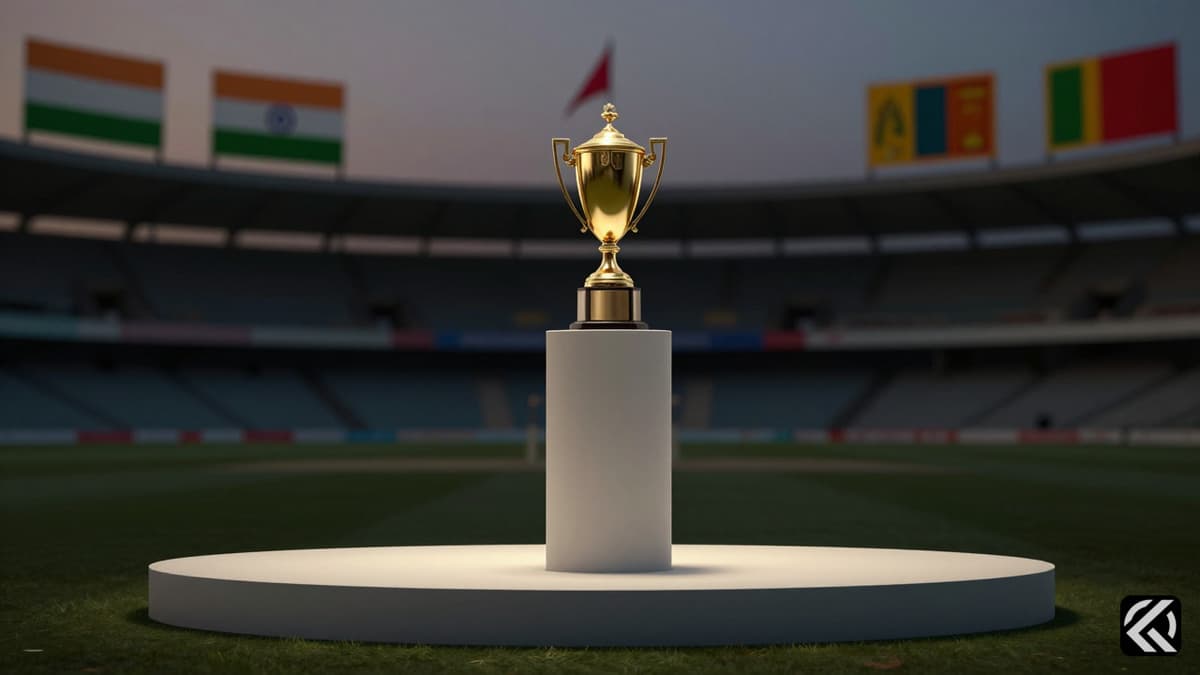
India's women’s cricket team extends their diplomatic protest by refusing to accept the Asian Cricket Council trophy, deepening the ongoing controversy.
The Asia Cup trophy impasse continued for a second consecutive year, marking a significant diplomatic rift in Asian cricket. On Sunday, September 13, 2026, the victorious Indian women’s cricket team refused to accept the cup from Mohsin Naqvi, the Asian Cricket Council (ACC) chairperson and Interior Minister of Pakistan.
Harmanpreet Kaur-led India secured a decisive victory, defeating Sri Lanka by 72 runs to lift their record-extending eighth Asia Cup title. Despite this triumph, the players chose not to participate in the standard post-tournament presentation ceremony, signaling a continued protest against the presence of officials from Pakistan.
This incident recalls last year’s events, where the Indian men’s team similarly declined to receive the Asia Cup trophy and medals from Mohsin Naqvi. That diplomatic stance has persisted, with the Indian team yet to receive their trophy, which remains locked away in the ACC office.
In a distinct deviation from the previous year’s protocol, the Indian women’s team did not even return to the ground after BCCI secretary Devajit Saikia presented Nandini Sharma with an in-house best fielder medal. While the men’s team had conducted an impromptu celebration on the dais without the physical prize, the women’s squad chose complete absence from the field for the formalities.
Conversely, the Sri Lankan team proceeded with the standard procedures. They received their runners-up cheque from Mohsin Naqvi and accepted their medals from SLC interim chief Eran Wikramaratne. After awarding the prize to Sri Lankan skipper Chamari Athapaththu, Mr. Naqvi left the stadium immediately. Notably, unlike the previous year, he departed without carrying the trophy, leaving the symbol of victory untouched and unclaimed.
The refusal of the Indian women's cricket team to engage with the Asian Cricket Council’s leadership underscores a complex intersection of sports and geopolitics. For years, the Asian Cricket Council has faced scrutiny over its governance and the political tensions embedded within its structure. The presence of Mohsin Naqvi, who holds dual roles as the head of the Pakistan Cricket Board and the Interior Minister of Pakistan, has been a point of contention for Indian cricket authorities.
The consistency in this refusal, spanning from the men’s team to the women’s team, suggests a unified institutional policy rather than a spontaneous reaction. By denying the ACC the prestige of a formal award ceremony, India is sending a clear message regarding the separation of sports administration from political posturing. The trophy’s continued presence in the ACC office, rather than being awarded to the rightful winners, highlights the stagnation of the dispute.
The contrasting reactions between the two teams further illustrate the nuanced nature of this protest. While the women’s team opted for a silent boycott of the field entirely, the men’s team’s previous impromptu celebration allowed for a display of victory without acknowledging the official accolades. This evolution in protest tactics may reflect a strategic adjustment to maintain media visibility while adhering to political directives.
For the Sri Lankan team, the ceremony proceeded without the same level of tension, yet the absence of the champions on the field creates an incomplete narrative of the tournament’s conclusion. The visual of Mohsin Naqvi leaving without the trophy further emphasizes the awkwardness of the situation, leaving the ACC in a position where it cannot officially crown its champions.
This ongoing standoff raises questions about the future of cricket diplomacy in Asia. As the sport continues to grow in global popularity, such political entanglements risk undermining the unity and integrity of the Asian Cricket Council. The failure to resolve this impasse may lead to further fragmentation in Asian cricket, with India potentially seeking alternative forums or mechanisms to assert its influence.
The unresolved Asia Cup trophy impasse highlights the urgent need for a diplomatic solution within Asian cricket. The Indian women's team's continued refusal to engage with Mohsin Naqvi suggests that the status quo is unsustainable. Without a formal mechanism to address these political grievances, similar disruptions may become常态 in future tournaments. Stakeholders must prioritize sport over politics to ensure the integrity of the Asia Cup remains intact for future generations of cricketers.
Oct 6, 2026 02:48 UTC
Yemen Forces Recapture Mocha in Major Counteroffensive
Oct 6, 2026 00:07 UTC
Teen Loses Hand in French School Protest Clashes Amid Escalating Violence
Oct 5, 2026 22:36 UTC
UAE Shares FlyDubai Crew Data After Pilot Seize Control Attempt
Oct 5, 2026 22:00 UTC
US Withdraws Heavy Bombers From UK Base Amidst Rising Tensions With Iran
Nov 5, 2026 12:46 UTC
Ronaldo Ends Portugal Career, Targets 1000 Goals