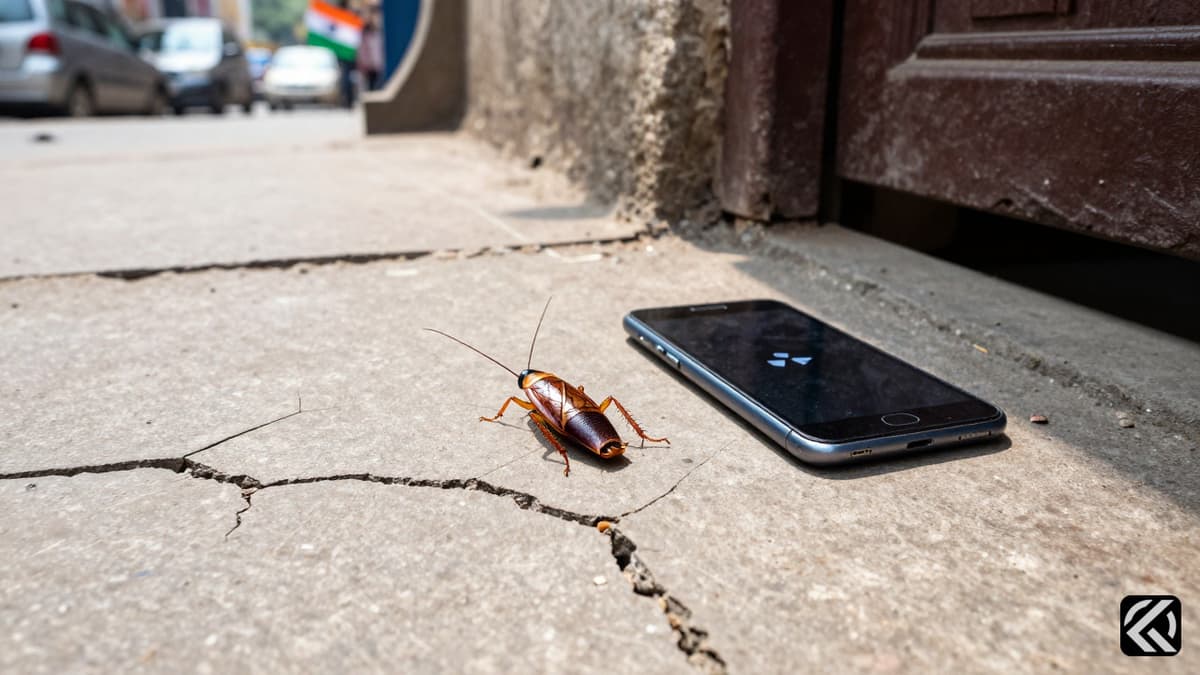
India has blocked the website and social media presence of the Cockroach Janta Party, a satirical group founded by Abhijeet Dipke that mocks political elitism.
India has effectively silenced the digital footprint of the Cockroach Janta Party, blocking access to its website and official social media channels within the country. The move comes as the satirical group, which claims to represent "the voice of the lazy and unemployed," continues to gain massive online traction. The ban appears to be a direct response to the group's growing influence and its sharp critique of political establishments.
The restriction targets both the group's primary website and its X profile, which had amassed over 200,000 followers. Users attempting to access these platforms now encounter messages indicating the content has been withheld in response to legal demands. This sudden digital shutdown has sparked immediate controversy, with critics arguing that the government is overreacting to online humor and satire rather than addressing substantive policy issues.
The catalyst for this digital censorship traces back to a controversial statement made by India's Chief Justice, who reportedly compared unemployed young people to insects. Although the Justice later clarified that his comments were directed specifically at individuals with "fake and bogus degrees" rather than the youth of India as a whole, the remark ignited a fierce online response. In a matter of days, the Cockroach Janta Party emerged from the ashes of this discourse, quickly accumulating more than 20 million online followers. The group was initially established as a joke, leveraging the public's frustration with youth unemployment and credential inflation.
The group's founder, Abhijeet Dipke, a political communications strategist and student at Boston University, has been vocal about the blockage. Dipke stated that Indian officials had "taken down our iconic website" and questioned why they were "so scared of cockroaches." He posted on X that the group, which is not an official political party, was already working on establishing a new "home" for its activities. "Cockroaches never die," Dipke declared, framing the suppression as a futile attempt to extinguish a growing movement.
The censorship extends beyond the website. The group's Instagram account, which has garnered more than 22 million followers, reportedly has been hacked by Dipke. This digital aggression underscores the high stakes of online satire in India's political landscape. The group's name is a direct satire of the name of Prime Minister Narendra Modi's Bharatiya Janata Party (BJP), which has been in power since 2014. By mirroring the BJP's name, the group highlights its critical stance on the current political climate, specifically targeting issues of unemployment and educational integrity.
The Cockroach Janta Party defines its membership through tongue-in-cheek criteria, including being "chronically online" and having "the ability to rant professionally." It positions itself as a haven for those feeling marginalized by traditional political narratives. The group has utilized AI-generated images to promote its cause, further amplifying its reach and visual impact. This digital strategy has inspired the hashtag #MainBhiCockroach, translating to "I too am a cockroach," which has become a symbol of defiance and solidarity among its supporters.
The sheer scale of the group's popularity cannot be overstated. Its Instagram following of over 22 million is more than double that of the BJP's official account, a statistic that likely contributed to the decision to block its digital presence. The rapid rise of the Cockroach Janta Party demonstrates the power of digital platforms in shaping political discourse in India. It also reveals the vulnerabilities of government institutions in managing viral satire that taps into widespread public sentiment.
The blockage of the group's website and X account represents a significant escalation in the government's approach to online dissent. By labeling the content as a subject of legal demand, the authorities have drawn a line in the sand regarding acceptable political satire. However, the group's resilience, as indicated by Dipke's claims of rebuilding and the ongoing popularity of its members, suggests that digital suppression may not be a long-term solution. The movement continues to resonate with millions who feel disconnected from traditional political structures.
The incident also highlights the global nature of India's digital political debates. With Dipke based in the United States, the conflict transcends national borders, drawing international attention to the issues of free speech and censorship in India. The use of AI tools and social media platforms like Instagram and X by the group illustrates the modern toolkit for political activism. It allows for rapid mobilization and narrative control, even in the face of state-level censorship.
As the Cockroach Janta Party works to establish new digital homes for its content, the broader implications for political satire in India remain uncertain. The blockage serves as a warning to other satirists and critics about the potential consequences of challenging powerful political entities. However, it also galvanized the movement, proving that online humor can have real-world political impact. The hashtag #MainBhiCockroach continues to spread, symbolizing a collective identity that defies official silencing.
The blockage of the Cockroach Janta Party marks a pivotal moment in India's digital political history. It signals a tightening grip on online satire that critiques the ruling Bharatiya Janata Party. As the group rebuilds, it may face increased scrutiny and more aggressive digital countermeasures. This could lead to a fragmented online landscape where satire moves to encrypted or decentralized platforms. The long-term impact may be a more polarized digital public square, where humor is increasingly viewed as a threat to national stability rather than a tool for social commentary.
Jun 8, 2026 00:51 UTC
Trump Claims Iran Nuclear Deal Imminent Despite Diplomatic Fractures
Join 50,000+ readers getting the global briefing every morning.
No spam. Unsubscribe anytime.
Jun 8, 2026 00:47 UTC
Iran Fires Missiles at Israel After Beirut Strike
Jun 7, 2026 22:38 UTC
Congress Party Claims Unity for INDIA Bloc Delhi Meeting
Jun 7, 2026 22:00 UTC
US, Iran Peace Hops Fade 100 Days Into War
Jun 7, 2026 20:57 UTC
Iran Strikes Israel: IRGC Promises Week of Continuous Offensive


