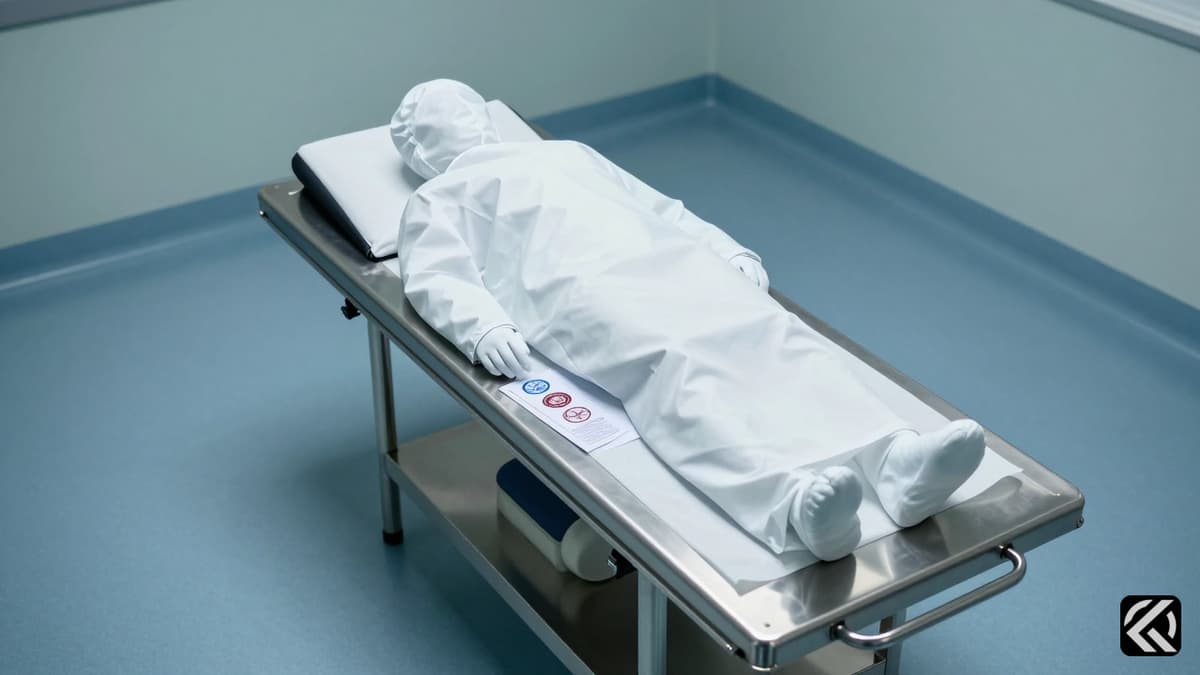
The Madhya Pradesh High Court has ordered a second autopsy in the Twisha Sharma case, while her husband was taken into custody and a CBI probe is recommended.
On Friday, May 22, 2026, Samarth Singh, the husband of Twisha Sharma, was taken into custody by Madhya Pradesh Police after remaining absent for several days regarding a dowry death and harassment case. This development followed a directive from the Madhya Pradesh High Court for a second autopsy of Sharma’s body by a specialized team from AIIMS Delhi.
The day saw significant legal and administrative shifts. Two days after Chief Minister Mohan Yadav met with Sharma’s family, the state government recommended a CBI probe. Police Commissioner Sanjay Kumar confirmed Singh’s detention, stating he would be produced before a court within 24 hours. Singh, a lawyer, surrendered at the Jabalpur District Court but was taken into custody when the court was unavailable, subsequently handed over to Bhopal Police.
Meanwhile, the Madhya Pradesh High Court, hearing a petition by Sharma’s father Navnidhi Sharma, directed the second post-mortem to be conducted in Bhopal. Justice Avanindra Kumar Singh emphasized that this was not to cast doubt on the earlier report but to clear doubts given the death occurred within six months of marriage. The court requested AIIMS Director to send experts via a special flight arranged by the state government.
In parallel proceedings, the High Court directed Giribala Singh, the mother-in-law and an accused, to appear by May 25 after an anticipatory bail granted to her was challenged by Sharma’s family and the state government. Commissioner Kumar noted that the family had filed notices regarding her lack of cooperation and alleged calls to influential persons.
The arrest of Samarth Singh marks a pivotal moment in the investigation. Singh, who had been absconding since the First Information Report (FIR) was registered on May 15, appeared at the Jabalpur District Court to surrender. However, due to the court’s schedule ending, he was held by local police and transferred to Bhopal. His lawyer, Jaideep Kaurav, clarified that Singh had arrived to surrender but found the judge had already left. Consequently, the Jabalpur Police took custody and handed him over to the Bhopal Police, who are now handling the process. Commissioner Sanjay Kumar affirmed that the police team is managing the entire procedure and will produce Singh before a court within the mandatory 24-hour window.
Concurrently, the judicial response to the tragedy has been rigorous. The Madhya Pradesh High Court’s decision to order a second autopsy stems from a petition filed by Navnidhi Sharma, Twisha’s father. Justice Avanindra Kumar Singh noted that since the death occurred within six months of marriage, a second post-mortem was necessary to remove any lingering doubts. The court clarified that this directive did not imply any wrongful motive or distrust of the initial autopsy report but was a procedural measure to ensure absolute clarity. The High Court specifically requested the Director of AIIMS, New Delhi, to constitute a team of experts who would arrive by special flight to conduct the examination in Bhopal.
The administrative landscape of the case also shifted with the state government’s intervention. A notification by the M.P. Home Department, citing Section 6 of the Delhi Special Police Establishment Act, 1946, officially extended the jurisdiction of the Delhi Special Police Establishment to the entire state of Madhya Pradesh. This consent allows for a CBI probe into the case, a move recommended by the state government shortly after Chief Minister Mohan Yadav’s meeting with Sharma’s family. This indicates a high-level commitment to an independent investigation beyond local police capabilities.
The case is further complicated by conflicting narratives regarding the circumstances of Twisha Sharma’s death. Sharma, 33, was found hanging at her marital home in Bhopal on the night of May 12. She had married Samarth Singh on December 25 of the previous year. Her family has leveled serious allegations against Singh and his mother, Giribala Singh, citing mental harassment and financial demands as the primary causes.
In response, the defense has attempted to shift the narrative. Samarth Singh’s mother claimed before the media that Sharma was suffering from mental illness, was taking medication for schizophrenia, and had an addiction to contraband substances like marijuana. This claim was made while Singh was at large, potentially influencing public perception and the defense strategy.
Further legal maneuvers involve Giribala Singh. An anticipatory bail previously granted to her by a local Bhopal court was challenged by both Sharma’s family and the state government. Lawyer Ankur Pandey, representing the family, explained that this challenge led the High Court to issue a notice to Ms. Singh, directing her to appear by May 25. Commissioner Kumar added that the police had issued three notices to Ms. Singh, citing her non-cooperation with the probe. He alleged that the family reported Ms. Singh making calls to influential persons and judicial authorities, which contributed to the challenge against her bail.
Regarding the police’s performance, Commissioner Kumar defended the local force’s actions. He stated that the FIR was registered within two days of the incident, demonstrating prompt action. He clarified that while the local police are conducting the ongoing investigation, the CBI probe is a matter of government level decision-making. This distinction highlights the layered approach being taken to handle the sensitivity and complexity of the dowry death allegations.
As the Madhya Pradesh High Court oversees the second autopsy and the potential transfer to the CBI, the case underscores the increasing scrutiny of dowry harassment incidents in India. The involvement of high-level judicial directives and federal investigative agencies suggests that local resolutions may no longer suffice for such high-profile cases. The outcome of the AIIMS autopsy will likely serve as the critical pivot point for the trial, potentially validating or refuting the family’s harassment claims. Furthermore, the summoning of the mother-in-law and the arrest of the husband indicate a tightening noose around the accused, possibly setting a precedent for how judicial authorities handle anticipatory bail in dowry-related suicides. The state government’s recommendation for a CBI probe signals a broader political will to address systemic issues in marital harassment, aiming to restore public trust in the justice system’s ability to handle such sensitive matters impartially.
Jun 8, 2026 00:51 UTC
Trump Claims Iran Nuclear Deal Imminent Despite Diplomatic Fractures
Join 50,000+ readers getting the global briefing every morning.
No spam. Unsubscribe anytime.
Jun 8, 2026 00:47 UTC
Iran Fires Missiles at Israel After Beirut Strike
Jun 7, 2026 22:38 UTC
Congress Party Claims Unity for INDIA Bloc Delhi Meeting
Jun 7, 2026 22:00 UTC
US, Iran Peace Hops Fade 100 Days Into War
Jun 7, 2026 20:57 UTC
Iran Strikes Israel: IRGC Promises Week of Continuous Offensive


