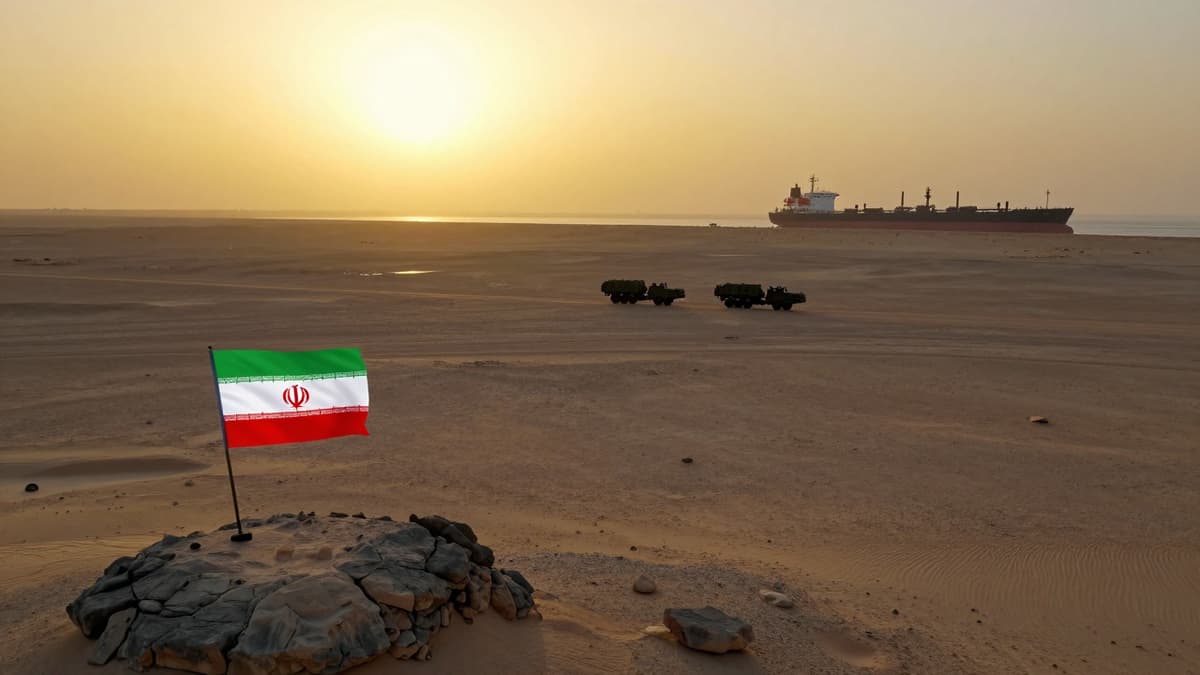
Amidst diplomatic efforts, Iran's parliament speaker warns the US is secretly plotting a ground invasion. The Iran-Israel war continues to escalate, halting global shipping in the Strait of Hormuz.
Iran's parliament speaker, Mohammad Bagher Ghalibaf, declared on Sunday, March 29, 2026, that the United States is actively plotting a ground attack against the nation. This assertion comes while the US publicly engages in diplomatic efforts aimed at resolving the ongoing conflict. Ghalibaf stated in a statement carried by the official IRNA news agency that the enemy sends messages of negotiation while secretly preparing for an invasion. His comments mark a sharp escalation in rhetoric as the conflict, known as the Iran-Israel war, enters its first month. The tension is further exacerbated by the disruption of vital shipping lanes in the Strait of Hormuz, where traffic has been brought to a near-standstill, affecting the flow of global energy resources.
The conflict was ignited on February 28, 2026, when Israel and the United States launched air strikes on Iran. These strikes resulted in the death of Iran's supreme leader, a pivotal event that triggered a regional war spreading across the Middle East. In response to the ongoing hostilities, Ghalibaf issued a defiant message regarding the nation's military preparedness. He claimed, "Our men are waiting for the arrival of the American soldiers on the ground to set them on fire and punish their regional allies once and for all." This statement underscores a belief that the US intent is not merely diplomatic but involves a direct physical invasion despite public statements to the contrary.
Ghalibaf addressed the Iranian public, calling for unity as the country faces what he described as a "major global war." He emphasized that the nation is currently in its "most critical stage." The speaker expressed confidence in Iran's ability to retaliate effectively. "We are certain that we can punish the United States, make it regret attacking Iran, and firmly secure our legitimate rights," he said. The economic and strategic implications of this escalation are severe, particularly given the location of the conflict relative to one of the world's most critical energy chokepoints.
The war has had immediate and tangible effects on global trade, specifically within the Strait of Hormuz. This body of water is a vital artery for the global economy, through which 20 percent of the world's crude oil and liquefied natural gas normally passes. According to the report, shipping traffic through this region has been brought to a near-standstill due to the hostilities. This disruption highlights the severity of the Iran-Israel war, as it threatens to destabilize global energy markets and increase fuel costs worldwide. The speaker's declaration of a potential US ground attack adds a layer of uncertainty that could prolong or intensify this economic paralysis.
As the conflict drags on, the divergence between public diplomatic engagement and the alleged covert military planning remains a central point of contention. Ghalibaf's assertion that the US is plotting a ground invasion while simultaneously negotiating creates a paradoxical situation where trust has completely eroded. The speaker's call for unity suggests that the Iranian government views the situation as an existential threat requiring total national mobilization. The statement regarding "punishing their regional allies" indicates that the conflict has expanded beyond the immediate belligerents to include a broader regional dimension, potentially drawing in other actors who are currently aligned with the United States.
The timeline of events is crucial to understanding the current state of affairs. With the air strikes occurring just over a month ago on February 28, the war has transitioned from a sudden shock to a protracted conflict. The death of the supreme leader serves as the catalyst for this spread, moving the war from a localized incident to a regional crisis. Ghalibaf's timeline references a specific window of opportunity for the US, suggesting that the diplomatic efforts are viewed by Tehran as a stalling tactic while the military preparations are finalized. This perception of deception fuels the defiant tone of the Iranian leadership and suggests that the path to de-escalation is currently blocked by mutual distrust and aggressive posturing.
The ongoing Iran-Israel war shows no immediate signs of abating, with the parliament speaker emphasizing a readiness for a ground conflict. The disruption to the Strait of Hormuz presents a critical economic risk that is likely to intensify if a US ground invasion materializes as claimed. Based on the current trajectory of "critical stage" rhetoric and the halt in global shipping, the region faces a prolonged period of instability. If the US proceeds with the alleged ground attack while maintaining diplomatic channels, the resulting escalation could further isolate the US from its regional allies and deepen the global energy crisis, forcing a reassessment of military and diplomatic strategies in the Middle East.
Jun 8, 2026 02:17 UTC
Magnitude 7.8 Quake Shakes Philippines, Urging Immediate Evacuations
Jun 8, 2026 00:51 UTC
Trump Claims Iran Nuclear Deal Imminent Despite Diplomatic Fractures
Jun 8, 2026 00:47 UTC
Iran Fires Missiles at Israel After Beirut Strike
Jun 7, 2026 22:00 UTC
US, Iran Peace Hops Fade 100 Days Into War
Jun 8, 2026 04:15 UTC
Trump Urges Netanyahu to Halt Iran Strike for Peace


