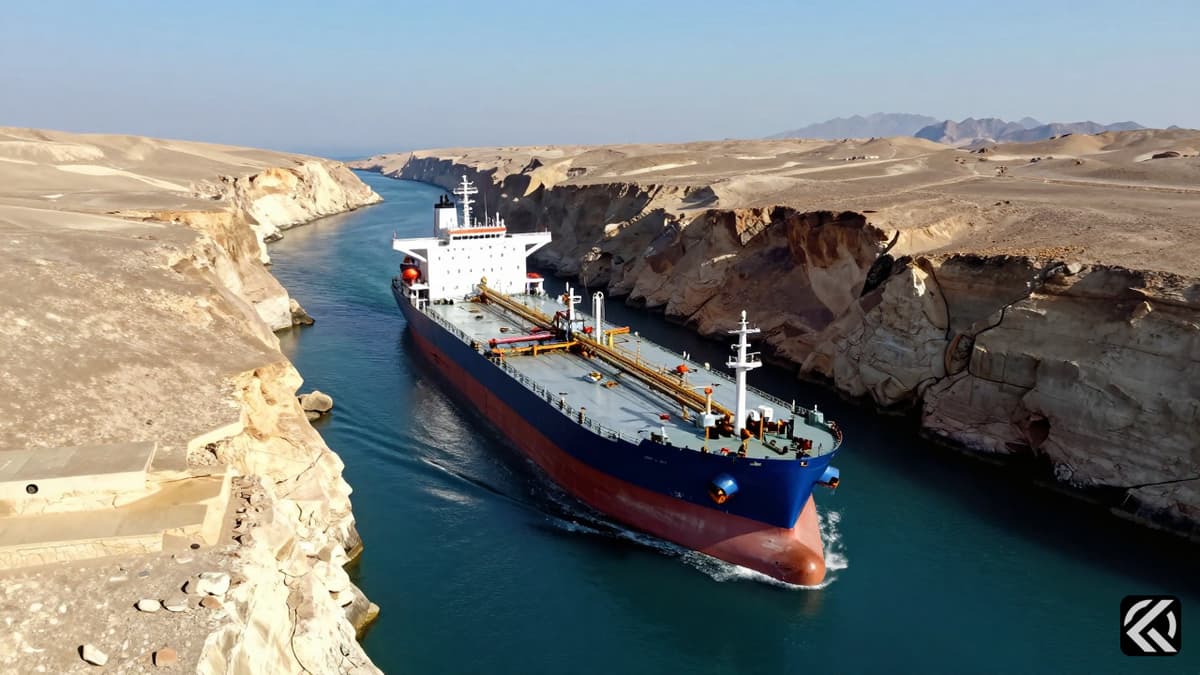
Amidst Donald Trump's fierce ultimatum, key Asian economies bypass the threat to secure safe passage for their vessels, ensuring energy supplies continue despite the looming crisis.
Donald Trump set a stern ultimatum for Iran to reopen the Strait of Hormuz by 20:00 Washington DC time on Tuesday, or face military action. Despite this Trump Iran deadline, several Asian countries have already secured agreements with Tehran to ensure their vessels can transit the vital waterway. This diplomatic maneuvering occurs as oil prices surge following disruptions that threaten a fifth of the world's energy shipments.
On Monday, US President Donald Trump warned he would take out Iran "in one night" if a deal was not reached by the specified deadline to reopen the route. However, the geopolitical landscape had shifted before his latest threat. Nations heavily reliant on Gulf energy, particularly in Asia, began engaging Tehran independently. Asian nations - most recently the Philippines - have been particularly keen to reach agreements as their economies are heavily reliant on energy from the Gulf. The critical route has become a global flashpoint after Tehran retaliated to US and Israeli airstrikes by threatening to attack ships in the strait.
Oil prices have surged since the disruption to shipping in the narrow waterway, through which a fifth of the world's energy shipments usually transits. Last week, Trump said the US did not need the Gulf's oil. He has repeatedly urged countries reliant on the region's energy to send warships to the strait and to take the lead to ensure shipments can resume. In recent weeks, several Asian countries including Pakistan, India and the Philippines have made agreements with Tehran to let some ships pass through the strait safely. China has also acknowledged that their vessels have also used the channel.
Questions remain over the scope of these assurances and just how lasting these agreements with Iran will be. We still don't know whether the guarantees apply only to some ships or all vessels flagged under a certain country, said Dimitris Maniatis from shipping consultancy Marisks. Nevertheless, countries that need the Gulf's energy are now recognising that they must engage with Iran if they want to resume shipments, said Roc Shi from the University of Technology Sydney.
The fruits of diplomacy were evident as the Philippines became the latest nation to strike a deal with Iran. Iranian officials assured the "safe, unhindered and expeditious passage" for Philippines-flagged ships through the waterway, said Theresa Lazaro, the South East Asian country's foreign affairs secretary. She said the agreement - reached after "a very productive phone conversation" with Tehran on Thursday - was "vital" in helping to ensure energy and fertiliser supplies. The Philippines imports 98% of its oil from the Middle East and was the first country to declare a national energy emergency after petrol prices in the country more than doubled after the start of the Iran war. There remains uncertainty over Tehran's claim that the strait is open to all countries except the US and its allies, said Roger Fouquet from the National University of Singapore's Energy Studies Institute. The Philippines, often seen as a US ally, is an interesting case that could suggest that Iran is "willing to compartmentalise", he said. "Iran appears to be distinguishing between a country's alliance and its active participation in the conflict."
Other countries have also held talks with Iran. Pakistan announced on 28 March that Iran has agreed to let 20 of its ships pass through the Strait of Hormuz. "This is a welcome and constructive gesture by Iran and deserves appreciation," said Pakistani Foreign Minister Ishaq Dar. "Dialogue, diplomacy and such confidence-building measures are the only way forward." Iran has openly welcomed India-flagged ships crossing the strait. "Our Indian friends are in safe hands, no worries," the Iranian Embassy in India posted on X last week. The embassy was responding to another post by its offices in South Africa saying that "only Iran and Oman" will decide the future of the Strait of Hormuz. India's foreign minister Subrahmanyam Jaishankar told the Financial Times in March that the passage of its tankers was the result of diplomacy. China, the biggest buyer of Iranian oil, also confirmed last week that some of its ships had crossed the strait, although it did not mention Iran or give more details on the vessels. "Following coordination with relevant parties, three Chinese vessels recently transited the Strait of Hormuz. We express our gratitude to the relevant parties for the assistance provided," a foreign ministry spokeswoman told reporters. Vessel-tracking data show that despite the war millions of barrels of US-sanctioned Iranian oil have been delivered to China in recent weeks. Beijing holds friendly diplomatic ties with Tehran and has joined Pakistan in trying to broker a ceasefire between the US and Iran.
While Asian nations shipping deals have moved forward, significant ambiguities persist regarding the terms. It is uncertain under what conditions some ships have negotiated safe passage - and whether they paid to cross the strait. Over the weekend, a Japanese vessel carrying liquefied natural gas passed through the Strait of Hormuz, shipping firm Mitsui OSK Lines told the BBC. "The safety of the vessel and all crew members have been confirmed," said the company, without commenting on whether any tolls were paid and how the crew secured safe passage. In March, Malaysia also said some of its tankers have been cleared by Tehran to pass through the strait, with Prime Minister Anwar Ibrahim thanking Iran's president for facilitating the passage of its vessels. Energy economist Shi noted, however, that while these agreements mark a "diplomatic breakthrough", it is not a resolution to the problem. It is still unknown just how lasting these assurances will be and how military operations in the region will impact them, he said.
While diplomatic breakthroughs have allowed specific vessels from the Philippines, Pakistan, India, China, and Malaysia to navigate the Strait of Hormuz, the underlying conflict remains unresolved. Experts warn that these assurances may not be all-encompassing or permanent, as the scope of the agreements and the potential for military escalation remain unknown. If US military operations intensify or if Tehran alters its stance on ally nations, the current safe passage guarantees could evaporate, leaving global energy supplies once again at risk of disruption.
Jun 8, 2026 00:51 UTC
Trump Claims Iran Nuclear Deal Imminent Despite Diplomatic Fractures
Jun 8, 2026 00:47 UTC
Iran Fires Missiles at Israel After Beirut Strike
Jun 7, 2026 22:00 UTC
US, Iran Peace Hops Fade 100 Days Into War
Jun 7, 2026 20:57 UTC
Iran Strikes Israel: IRGC Promises Week of Continuous Offensive
Jun 8, 2026 02:28 UTC
Trump Walks Out of Meet the Press After Rejecting Evidence Demands


