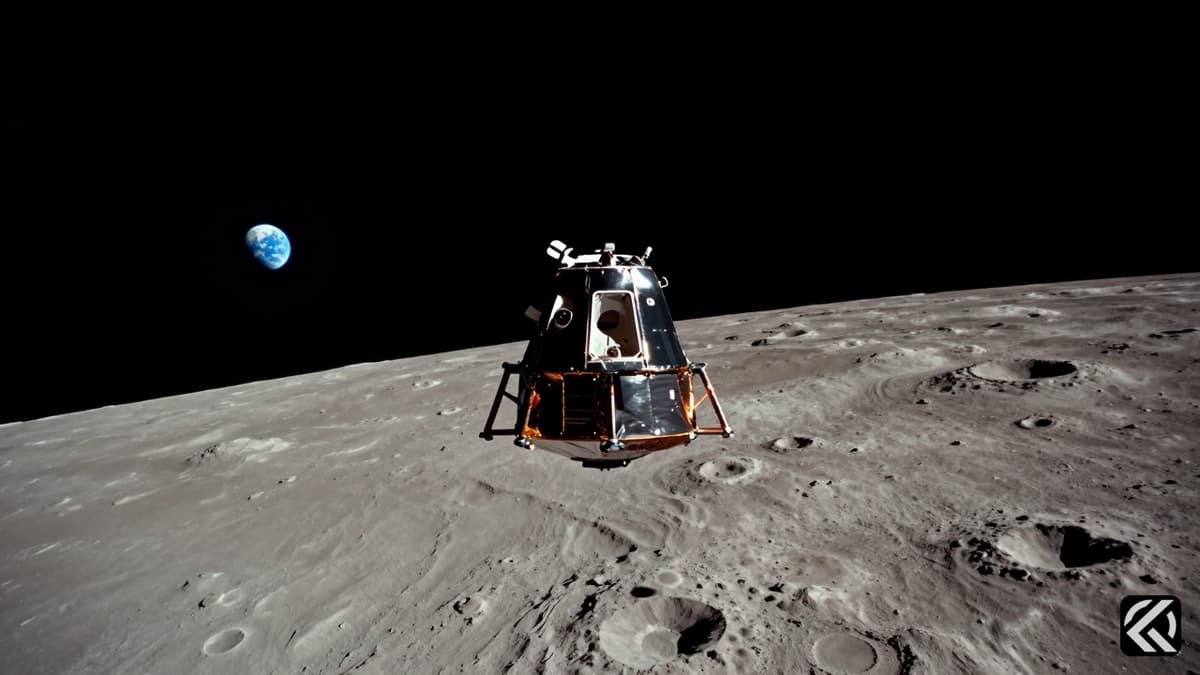
Astronauts return safely after the deepest human spaceflight, capturing unprecedented views of the lunar far side while setting the stage for future Moon landings.
The Artemis II astronauts have successfully returned from a groundbreaking mission, traveling further from Earth than any humans in history before them. The four-person crew splashed down off the coast of San Diego following a 10-day journey that marked a significant milestone in human spaceflight.
Following a tense 40-minute period where contact with the Orion spacecraft was lost, mission specialist Christina Koch broke the silence to announce their safe return. The crew described the moment of regaining communication as a relief, with Koch stating, "It is so great to hear from Earth again." As the capsule swung around the Moon far side to utilize the celestial body's gravity for its return trajectory, the astronauts were isolated in deep space, facing harsh radiation and the potential for instant death just millimeters outside their thin aluminum shell.
Pallab Ghosh, the science correspondent, described the event as a story of inspiration and science, drawing parallels to the Apollo program. He noted that in a world lacking optimism, this mission offered a chance to view Earth as a single planet, free from the immediate context of war. The most moving moments were reported to be the human ones, such as when astronauts named a crater after Reid Wiseman's wife, a gesture of emotion distinct from recent robotic explorations. "You have four people out there being our eyes and transferring their love of the Moon to us," Ghosh observed.
The scientific community anticipates a treasure trove of data from the mission. While satellites from China and India have previously sent probes to capture images of this side of the Moon, the Artemis II crew has seen sights that no human has ever laid their eyes on. Professor Chris Lintott of the University of Oxford noted that while the value of the images may be artistic, the act of human observation remains vital. Abbie MacKinnon, a curator at the Science Museum, emphasized that having humans on board to decide what images to take and what looks good is fundamentally different from automated satellite imagery.
The data and images collected during the flyby are expected to be analyzed over the coming days and weeks. These records are crucial for understanding what happened to our own planet as it was forming. Ghosh highlighted that the images will reveal features and terrain of the Moon never seen before, offering a unique record of planetary formation. The mission was not a final landing but a test flight, designed to pave the way for an eventual landing, not just one, but many more to come.
Retired NASA astronaut Terry Virts explained the technical success of the return, noting that the crew did not perform a complicated maneuver or docking. Instead, they allowed gravity to take over. Sir Isaac Newton, he noted, is in charge. The spacecraft utilized the Moon's gravity to bend their trajectory 180 degrees, bringing them back to Earth without a major engine burn. This "slingshot" maneuver was essential for a safe return from the deep space environment.
Public reaction to the mission has been mixed, reflecting the complex feelings of the populace regarding space exploration. BBC Radio 5 Live listeners shared diverse opinions. Steve from Malton expressed hope that the mission would serve as a launchpad to protect the planet more, noting how "fragile we are in space." Conversely, Peter from Exeter worried that humanity would treat other planetary bodies with the same lack of respect as Earth, exploiting them for resources. Karen from Northumberland voiced fatigue, stating she was "sick of hearing everywhere that everybody loves this," citing wars and hunger as reasons why the mission is not for all humanity.
Despite these critical views, former NASA space scientist Dr. Hina Khan defended the mission's value. She argued that we must look beyond current capabilities to see the positive and good the mission provides. "It's been a bit of a release with all the other news we have to deal with," Khan said, suggesting it offers hope and transcends our current location. "We will explore, we will build, we will build ships, we will visit again," Koch stated during the post-failure check, outlining a future of science outposts, rovers, and industry bolstered by space exploration.
The return of the Artemis II crew marks the beginning of a new chapter in lunar exploration, with the immediate priority being the analysis of the unprecedented imagery captured during the flyby. As the world processes the visual data of the far side, the focus will shift toward the practical applications of this knowledge for future landings. The success of this test flight, where the crew allowed gravity to manage their return, validates the trajectory for future missions that aim to establish a permanent human presence. The hope expressed by Dr. Khan suggests that this mission will continue to serve as a source of inspiration and a release from terrestrial conflicts, potentially galvanizing support for the construction of science outposts and the expansion of space-based industry. If the analysis of the lunar features yields significant insights into planetary formation, the momentum for future Artemis landings could accelerate, transforming the Moon from a destination for flybys into a hub for sustained human activity and scientific discovery.
Jun 8, 2026 02:17 UTC
Magnitude 7.8 Quake Shakes Philippines, Urging Immediate Evacuations
Join 50,000+ readers getting the global briefing every morning.
No spam. Unsubscribe anytime.
Jun 8, 2026 02:17 UTC
Magnitude 7.8 Quake Shakes Philippines, Urging Immediate Evacuations
Jun 8, 2026 00:51 UTC
Trump Claims Iran Nuclear Deal Imminent Despite Diplomatic Fractures
Jun 8, 2026 00:47 UTC
Iran Fires Missiles at Israel After Beirut Strike
Jun 7, 2026 22:38 UTC
Congress Party Claims Unity for INDIA Bloc Delhi Meeting


