A fatal runway collision at LaGuardia killed two pilots, following a CNN review revealing years of ignored safety warnings and air traffic control missteps.
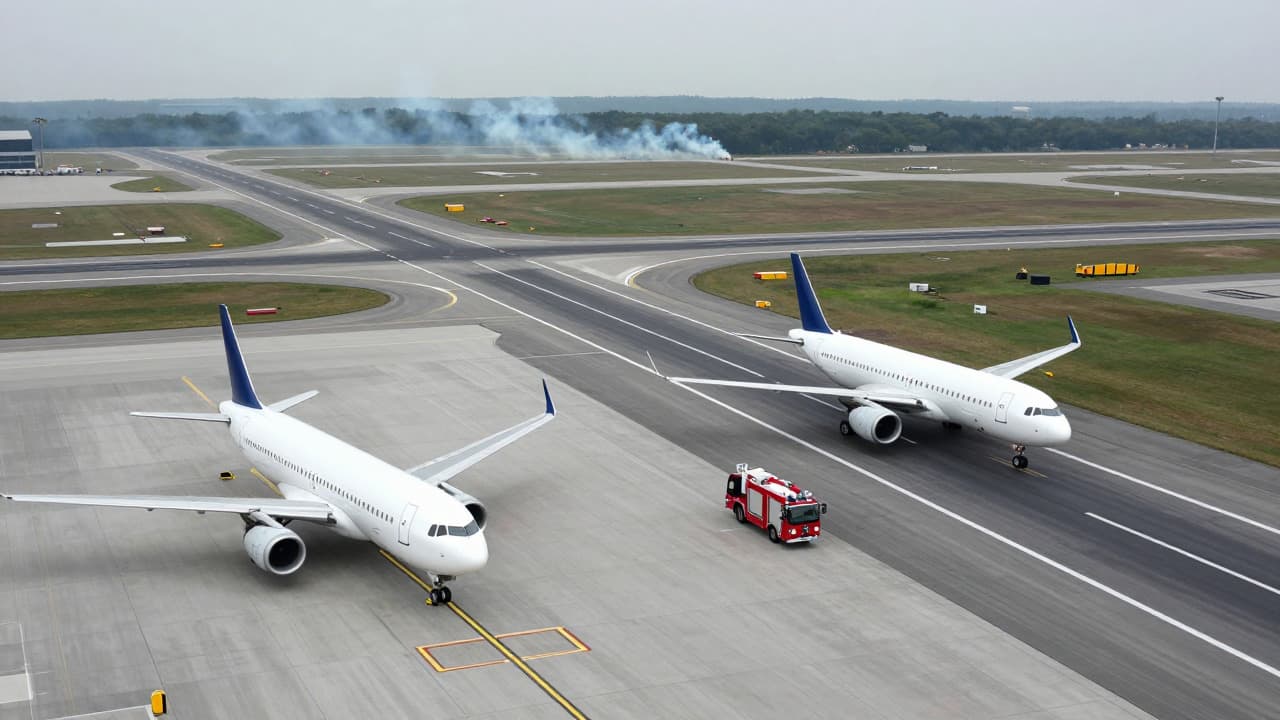
In a tragic high-speed collision on Sunday, two pilots were killed and dozens of passengers injured at LaGuardia Airport when an Air Canada plane struck a fire truck on the runway. This disaster occurred after an air traffic controller cleared the truck to cross the runway and then frantically attempted to halt its movement, but it was too late. Following the incident, the controller admitted on the ground radio frequency that he had been dealing with a prior emergency and confessed he had "messed up."
A recent CNN review of government records spanning two years exposes a pattern of alarming warnings regarding LaGuardia Airport safety that predated this fatal accident. Pilots have repeatedly raised concerns about miscommunication, specific air traffic control errors, and various other hazards within the airspace. In one report from last summer, a pilot explicitly pleaded, "Please do something," citing a dangerous close call where controllers failed to provide appropriate guidance about multiple nearby aircraft. The pilot noted that the pace of operations was building and that controllers were "pushing the line," warning that on thunderstorm days, LaGuardia was beginning to resemble the dangerous conditions in Washington, DC, prior to the January 2025 mid-air collision that claimed more than 60 lives.
The urgency of these reports is underscored by a series of incidents occurring in the months leading up to the Sunday tragedy. In October, just a few months prior, two Delta Airlines regional jets collided on a LaGuardia taxiway, resulting in one person requiring hospitalization. Furthermore, just this week in Newark, a significant aviation near miss occurred when two aircraft were attempting to land on intersecting runways, highlighting that these safety breaches are not isolated to a single location.
Detailed reports filed with NASA's Aviation Safety Reporting System illustrate that the risk of collisions at LaGuardia was not only suspected but documented repeatedly. In the two years leading up to the fatal crash, multiple reports detailed situations where collisions were narrowly avoided. The system, which allows aerospace employees to anonymously flag safety issues, showed that while reports are reviewed by safety analysts tasked with alerting the Federal Aviation Administration, the individual details have not always been verified by government regulators until after incidents occur.
Specific instances cited in the database highlight the frequency of human error. In December 2024, a report described a plane coming dangerously close to another aircraft on the ground due to inaccurate instructions. Months earlier, in July, a copilot reported a similar near collision after controllers cleared the plane to cross a runway while another aircraft was landing. Ground control eventually issued a stop command just in time, but the potential for catastrophe was evident. Other reports described confusing or dangerous scenarios that were less clear-cut but equally indicative of systemic issues at one of the country's busiest airports.
The root causes of these recurring safety failures appear to be linked to broader systemic problems within the national aviation infrastructure. The chronic understaffing of air traffic control facilities, compounded by previous government shutdowns, has created an environment where reports of near misses and safety concerns are not uncommon across airspaces and runways around the country. This data from the safety reporting system suggests that the conditions leading to the fatal LaGuardia collision are part of a larger, unresolved national crisis in aviation safety management.
The convergence of a fatal crash, specific controller errors, and two years of documented warnings indicates that the structural integrity of safety protocols at LaGuardia Airport has been compromised. Given the chronic understaffing and the pattern of ignored pilot reports, future regulatory actions may face significant challenges in restoring full operational safety. If understaffing and the resulting pressure on controllers persist, the likelihood of further aviation near misses and potential fatal collisions across the national airspace remains high, suggesting a need for immediate and comprehensive reform in air traffic management.
Mar 25, 2026
Iran Reverses Stance with Ceasefire Demands as US-Iran Peace Talks Continue
Mar 25, 2026
India Rejects Role in Iran-Mediation, Prioritizes Energy Security
Mar 25, 2026
US-Israel Offensive Enters Day 26 as Iran Rejects Peace Deal