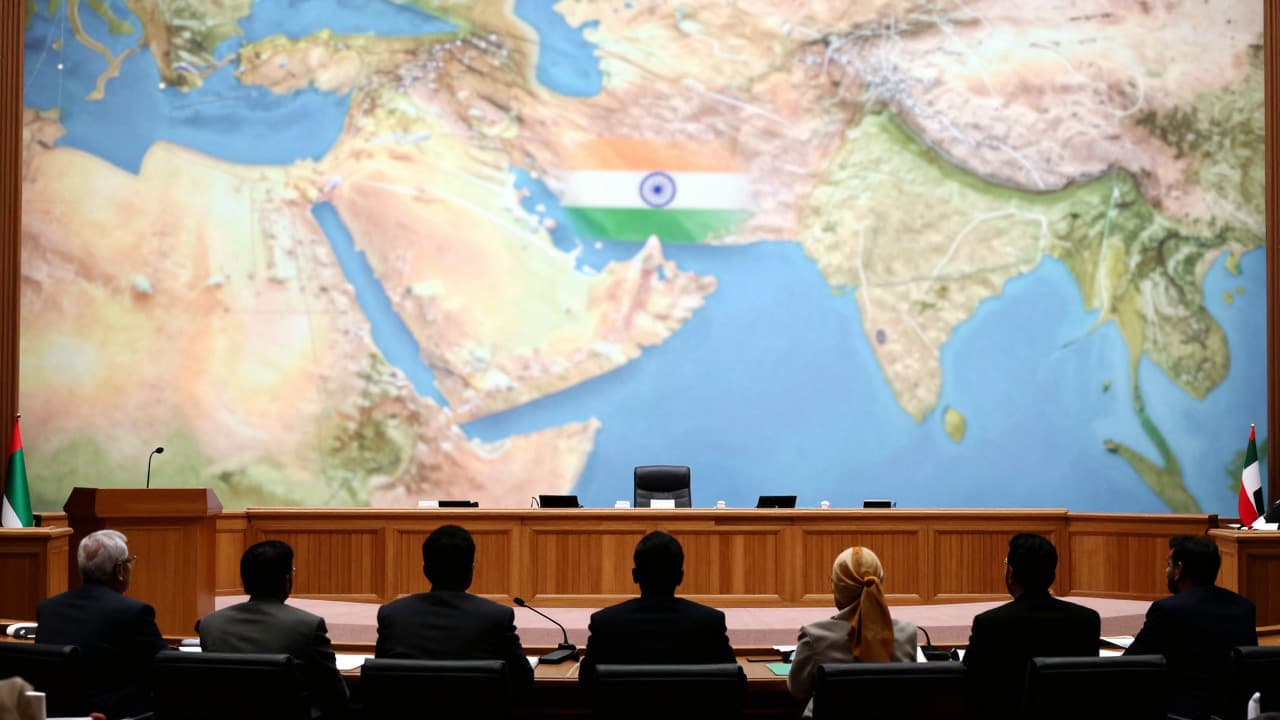
External Affairs Minister S Jaishankar firmly told the ruling party during an all-party meeting that India is not acting as a mediator in the Middle East, clarifying New Delhi's distinct diplomatic posture amid rising global tensions.
The External Affairs Minister, S Jaishankar, addressed a gathering of political leaders on Wednesday, stating that India does not serve as a "go-between country" like Pakistan. This declaration came during a critical all-party meet focused on the escalating Iran-Israel-US conflict in the Middle East. The meeting was convened to address rising concerns regarding India's diplomatic stance and the potential impact on national interests.
Multiple nations, including Pakistan and Turkey, have recently stepped up efforts to act as intermediaries between Washington and Tehran to de-escalate tensions. Sources quoted the Minister as noting that Pakistan's mediation efforts are not new, as the country has historically been "used" by the US since 1981. In response, the government refuted accusations of silence, asserting that they are actively commenting and responding to the situation. When the Iranian embassy was reopened, the Foreign Secretary immediately visited and signed a condolence book, countering claims of moral weakness regarding the late Supreme Leader.
The government emphasized that its primary concern is the security of the Indian diaspora in the Gulf region and the fulfillment of domestic energy needs. Officials stated that these goals have been successfully met so far. However, the Opposition expressed dissatisfaction with the government's answers, demanding a formal debate on the West Asia situation in both the Lok Sabha and Rajya Sabha. Congress leader Tariq Anwar argued that while Pakistan acts as a mediator, India remains a "mute spectator," calling for a debate under specific parliamentary rules.
Union ministers representing the government included Defence Minister Rajnath Singh, Home Minister Amit Shah, External Affairs Minister Jaishankar, and Finance Minister Nirmala Sitharaman. Other attendees included Union Health Minister JP Nadda and Parliamentary Affairs Minister Kiren Rijiju. Foreign Secretary Vikram Misri also presented before the gathering. The Opposition was represented by leaders such as Tariq Anwar, Mukul Wasnik, Dharmendra Yadav, Sasmit Patra, and Asaduddin Owaisi, among others. The meeting lasted nearly two hours, with Jaishankar responding to most queries.
During the session, the government conveyed that there is no need for panic regarding energy supplies. Officials informed the parties that India has sufficient stockpiles, with more crude oil and gas incoming. The country has diversified its sources, now procuring energy from 41 countries. To bolster this, the government noted that four India-bound ships carrying petroleum products have already crossed the Strait of Hormuz, with five more expected soon. Conversely, 18 India-bound ships are currently stranded around the Strait. Addressing the sinking of an Iranian ship by US forces, the government clarified that had it been in Indian waters, it would have been saved, but the vessel was near Sri Lankan waters. The government expressed gratitude from Iran for the protection of other ships and sailors.
On the matter of the India diplomatic mediation role, the government reiterated its balanced foreign policy. Officials stated, "We are good friends with everyone," noting that the US is the largest trading partner, Israel is the largest technological partner, and good relations exist with Iran. Defence Minister Singh opened the proceedings, followed by speeches from Jaishankar and Petroleum Minister Hardeep Singh Puri. Home Minister Amit Shah intervened on a few occasions to address queries. Parliamentary Affairs Minister Kiren Rijiju later briefed reporters, confirming that Prime Minister Narendra Modi initiated the meeting to share information on the West Asia crisis.
Rijiju asserted that all questions raised by the opposition regarding the conflict's impact on India and steps taken for citizens were fully addressed. He expressed satisfaction that the comprehensive and detailed responses met the requirements. Rijiju added that all opposition members stated they would stand united and support government decisions made in this time of crisis. Despite this, Congress leader Anwar maintained that the meeting was unsatisfactory, reiterating the demand for a parliamentary debate to satisfy the public. CPI-M leader John Brittas noted that opposition leaders expressed disapproval of the government's silence regarding the unilateral attack on Iran.
Regarding the absence of Rahul Gandhi and TMC members from the meet, Union Minister Pralhad Joshi labeled their behavior "highly irresponsible." Joshi questioned whether Gandhi's statements were in India's interest, suggesting they appeared to appreciate Pakistan's actions while Pakistan makes statements against India. He challenged Gandhi to clarify whether he stands with India or Pakistan. Joshi concluded that Gandhi's statements raise serious questions about his genuine interest in the country's interests versus spreading rumors.
The discussion on West Asia energy security revealed that the government has successfully managed supply chains despite the geopolitical turbulence. The diversification strategy, which now includes procurement from 41 countries, ensures that the nation is not overly reliant on a single source or region. The successful transit of four India-bound ships past the Strait of Hormuz serves as a tangible indicator of these efforts. With 18 ships currently stranded, the situation remains tense, but the government's assessment is that there is no immediate threat of panic due to existing stockpiles.
Looking ahead, the trajectory suggests that India will continue to maintain a cautious, non-mediator stance while prioritizing the safety of its citizens and the stability of its energy supply. The government's emphasis on existing friendships with the US, Israel, and Iran indicates a strategy of balanced engagement rather than taking sides. As long as the energy diversification and evacuation protocols for the diaspora remain robust, India is positioned to navigate the crisis without adopting the intermediary roles taken by other regional players. The political consensus among ministers suggests a unified front will persist, even as opposition parties continue to push for more vocal parliamentary engagement.
Mar 25, 2026
Iran Reverses Stance with Ceasefire Demands as US-Iran Peace Talks Continue
Mar 25, 2026
India Rejects Role in Iran-Mediation, Prioritizes Energy Security
Mar 25, 2026
US-Israel Offensive Enters Day 26 as Iran Rejects Peace Deal