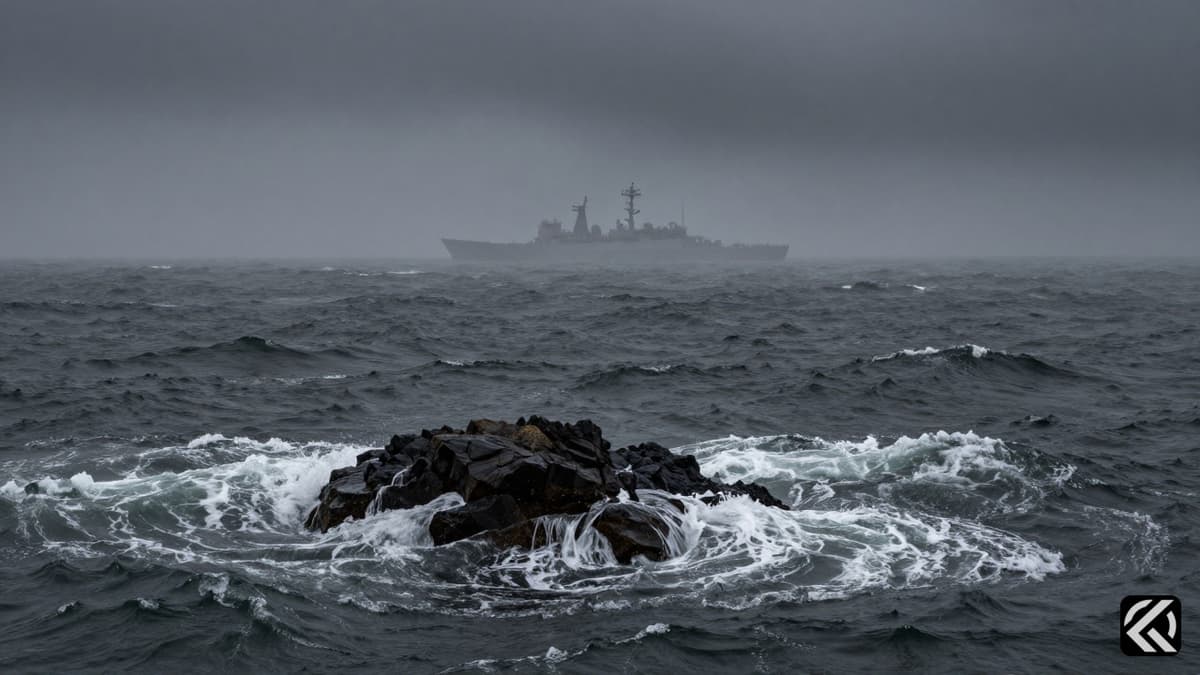
The US military has launched fresh strikes on southern Iran, targeting missile sites and naval mines, further intensifying the conflict just as peace negotiations stall.
The US military has launched new strikes against targets in southern Iran, specifically targeting Iranian missile sites and boats attempting to place naval mines. US Central Command stated that these operations were executed in self-defense to protect American troops from threats posed by Iranian forces.
US Central Command said in a statement the strikes were taken in "self-defense", and were designed "to protect our troops from threats posed by Iranian forces". A spokesperson emphasized that the military "continues to defend our forces while using restraint during the ongoing ceasefire". These actions come at a critical juncture in diplomatic efforts, as Iran's foreign ministry spokesman, Esmail Baqai, acknowledged some progress in talks with the US but insisted that a deal to end the conflict "is not imminent".
The timing of these strikes adds significant complexity to the ongoing peace talks between Washington and Tehran. At the weekend, President Donald Trump had suggested that the sides were close to a deal, but he later clarified that he had instructed negotiators "not to rush into" an agreement. This cautious approach was echoed by US Secretary of State Marco Rubio, who stated that an agreement could possibly be reached on Monday. However, Baqai’s response on Monday offered a more sober assessment: "It is correct to say that we have reached a conclusion on a large portion of the issues under discussion... But to say that this means the signing of an agreement is imminent - no-one can make such a claim."
The conflict between the US and Iran has been marked by rapid escalation and significant geopolitical consequences. On 28 February, the US and Israel launched wide-ranging strikes on Iran, sparking a broader conflict across the Middle East. In response, Iran attacked Israel and US-allied states in the Gulf, effectively closing the Strait of Hormuz. This strategic move sent oil prices soaring globally, highlighting the economic stakes involved in the region.
Iran has yet to respond to the latest US strikes, leaving uncertainty about the impact these actions will have on any potential peace agreement. The lack of immediate Iranian reaction to the new assaults contrasts with their earlier decisive moves, such as the closure of the Strait of Hormuz. This ambiguity leaves analysts and diplomats closely monitoring the situation for signs of further escalation or de-escalation.
The ongoing Strait of Hormuz closure remains a critical flashpoint, affecting global energy supplies and international trade. The Strait is one of the world's most important oil transit chokepoints, and any disruption to its operations has immediate and severe implications for the global economy. The current standoff between the US and Iran continues to threaten the stability of the region, with both sides engaging in military posturing while simultaneously engaging in diplomatic channels.
The US military's assertion of "restraint" during the ongoing ceasefire suggests an attempt to limit the scope of the conflict while still addressing perceived threats. However, the targeting of missile sites and naval mines indicates that the US views Iranian naval activities as a direct threat to its forces. This perspective underscores the fragile nature of the ceasefire and the potential for further violence if diplomatic efforts fail.
As negotiations continue, the world watches closely to see if the recent strikes will serve as a deterrent or a catalyst for further aggression. The conflicting signals from both sides-Trump's suggestion of a nearing deal versus Baqai's denial of an imminent agreement-create a volatile environment where miscalculation could lead to severe consequences. The international community remains on edge, hoping that dialogue will prevail over force, even as military actions continue to shape the landscape of the US-Iran conflict.
The latest US strikes in southern Iran and the stalled diplomatic negotiations highlight the fragile state of the US-Iran conflict. While Central Command cites self-defense and restraint, the continued targeting of military infrastructure suggests a deepening rift. The lack of an Iranian response to the new strikes, combined with conflicting statements from US and Iranian officials regarding the timeline for peace, indicates that a resolution remains distant. The potential reopening of the Strait of Hormuz depends heavily on these diplomatic outcomes, as global markets remain sensitive to any signs of prolonged regional instability. If peace talks fail to produce a tangible agreement, the risk of further military escalation and economic disruption in the Middle East will likely intensify.
Jun 9, 2026 18:37 UTC
Israel Strikes Tyre Despite Iranian Warnings
Jun 9, 2026 14:27 UTC
US Sea Drone Saves Army Helicopter Crew Near Strait of Hormuz
Jun 9, 2026 04:31 UTC
India Condemns Pakistan’s ‘Fitna al Hindustan’ Narrative at UN
Jun 9, 2026 02:39 UTC
US Warplane Strikes Tanker MT Marivex; Crew Evacuated in Gulf of Oman
Jun 9, 2026 20:58 UTC
Trump Demands U.S. Action as Iran Shoots Down Second Aircraft


