Diplomatic breakthroughs in the Middle East face a critical hurdle as President Trump holds the final approval power for a tentative 60-day extension amid renewed hostilities.
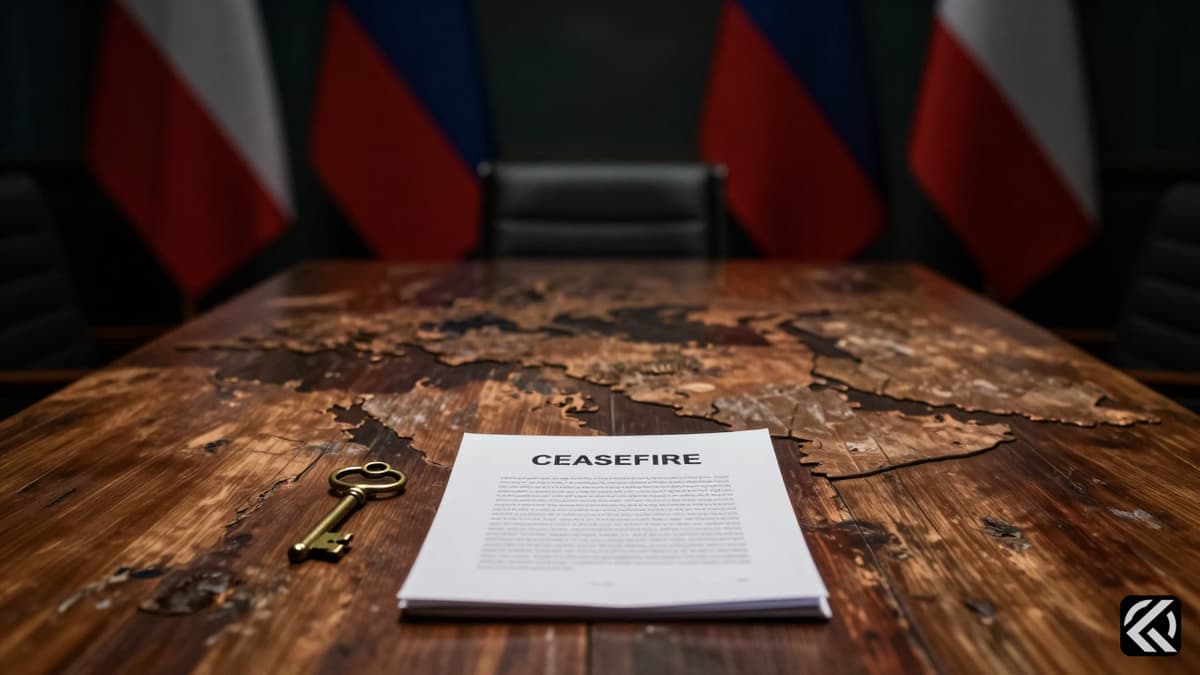
In a significant but precarious diplomatic development, United States and Iranian negotiators have reached a tentative agreement on a framework for a U.S.-Iran ceasefire extension. However, the deal remains contingent upon the final approval of President Donald Trump. U.S. sources confirmed to AFP that the two sides have agreed on a memorandum of understanding intended to prolong the current truce and simultaneously launch new negotiations regarding Iran’s nuclear program. Despite this diplomatic progress, the agreement has not yet been finalized, leaving the region in a state of suspended animation as Washington and Tehran prepare for potential shifts in policy.
The timing of this potential deal is critical, coming just days after a violent exchange of strikes that rattled regional stability. The United States and Iran traded blows on Thursday, May 28, marking their most serious clash since an April ceasefire began. This exchange included U.S. forces striking a ground control station in the southern port area of Bandar Abbas, which prompted Iran’s Revolutionary Guards to target the American air base believed to be the source of the attack. Furthermore, an Iranian missile attack on Kuwait was described by the U.S. military as an "egregious ceasefire violation." These hostilities complicate the path to peace, as the shaky truce is challenged by repeated violations and escalating rhetoric.
Tensions have also spilled over into broader regional dynamics, particularly concerning the vital waterways of the Middle East. The United States has issued a stark warning to Oman, instructing the nation not to get directly or indirectly involved in any effort to impose a toll system in the Strait of Hormuz. U.S. Treasury Secretary Scott Bessent emphasized on social media that the U.S. Government will not tolerate such efforts. He warned that the U.S. Treasury will aggressively target any actors, including willing partners, involved in facilitating tolls for the strait. This pressure campaign is part of a broader strategy by Washington to intensify pressure on Tehran and ensure the free flow of trade through the critical chokepoint, which Iran has effectively blockaded since the start of the war in late February.
Adding to the pressure, Secretary Bessent announced that the United States will halt Iranian airlines’ access to landing spots, refueling, and ticket sales. This measure aims to disrupt Iranian operations further, with Bessent stating that only a satisfactory outcome in negotiations will end the current downward spiral. In response to the intensifying military actions, Iran’s Revolutionary Guards threatened a "firm response" if renewed attacks occur. The Guards stated in a statement on their Sepah News website that if the action is repeated, the U.S. military will face significant retaliation. Meanwhile, Iranian Supreme Leader Ayatollah Mojtaba Khamenei, in a written message read on state television, accused the United States and Israel of seeking to destabilize the Islamic republic. He described the enemy's plan as one of creating divisions to compensate for military defeats, calling for unity and cohesion among Iranians.
International observers have also weighed in on the crisis. Russia’s Foreign Ministry spokeswoman, Maria Zakharova, called on the U.S. and Iran to avoid sliding back into armed conflict and to continue talks. Russia offered to assist in the removal of enriched uranium from Iran, though Washington has not yet accepted this initiative, which has been on the table for months. The geopolitical uncertainty has had immediate economic repercussions. World shares declined on Thursday, with Britain’s FTSE 100 slumping 0.9% and the CAC 40 in Paris losing 0.4%. However, oil prices gained more than $2 a barrel, reflecting the market's fear regarding the security of energy routes.
The conflict's reach extends beyond the immediate belligerents. Israel continued its military escalation in Lebanon, killing at least eight people in strikes on Beirut, the country’s fourth-largest city. An Israeli soldier, 20-year-old Sergeant Rotem Yanai, was also killed by a Hezbollah drone near the border. The intensification of violence in Lebanon, coupled with the renewed hostilities between the U.S. and Iran, has created a multi-front crisis. Kuwait, caught in the crossfire, announced it faced a missile and drone attack, further illustrating the spillover effect of the war.
In the aviation sector, the instability has forced operational suspensions. Air India announced the extension of its suspension of operations on the Tel Aviv-Delhi route until July 31. This decision follows an earlier suspension until June end, driven by the unclear security situation and rising operational costs due to costlier fuel and airspace curbs. The prolonged uncertainty continues to weigh heavily on airlines navigating the West Asian conflict.
The fragile nature of the current diplomatic framework suggests that the region remains on a knife-edge. If President Trump approves the Iran nuclear program negotiation extension, it could provide a brief window for de-escalation. However, the recent egregious violations of the truce by Iran and the aggressive stance taken by U.S. Treasury Secretary Scott Bessent indicate that trust is minimal. The lack of response to Russia’s mediation offer further isolates Tehran diplomatically. If the ceasefire fails to hold or if Iranian-backed militias continue to target regional allies like Kuwait and Israel, the risk of a broader conflagration increases. Economically, the volatility in oil prices and stock markets is likely to persist as long as the Strait of Hormuz remains under threat. Investors and policymakers alike are watching closely for the White House’s final decision, as it will determine whether this diplomatic breakthrough leads to lasting peace or becomes another failed attempt in a prolonged conflict.
Jun 9, 2026 18:37 UTC
Israel Strikes Tyre Despite Iranian Warnings
Jun 9, 2026 14:27 UTC
US Sea Drone Saves Army Helicopter Crew Near Strait of Hormuz
Jun 9, 2026 04:31 UTC
India Condemns Pakistan’s ‘Fitna al Hindustan’ Narrative at UN
Jun 9, 2026 02:39 UTC
US Warplane Strikes Tanker MT Marivex; Crew Evacuated in Gulf of Oman
Jun 9, 2026 20:58 UTC
Trump Demands U.S. Action as Iran Shoots Down Second Aircraft


