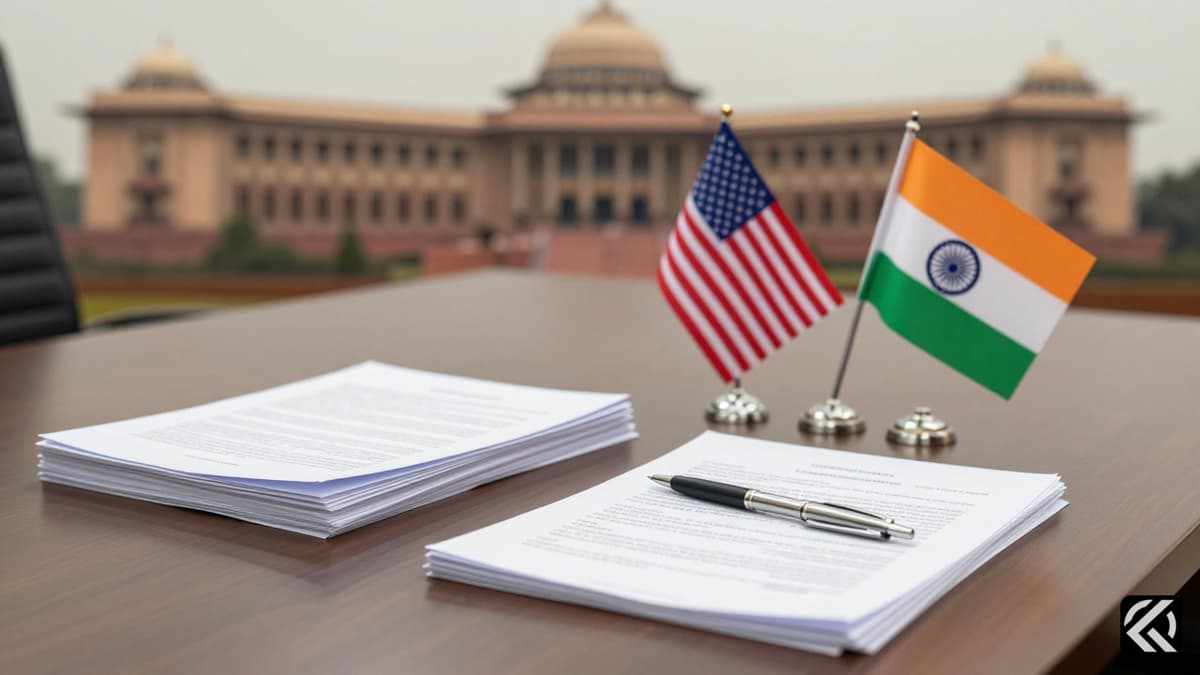
As high-stakes India-US trade talks unfold in New Delhi, the US has proposed steep new tariffs on Indian imports, citing unfair trade practices and labor violations.
The United States has formally identified India among 54 economies for failing to adequately prohibit the importation of goods produced using forced labor, triggering the proposal of additional tariffs ranging from 10% to 12.5%. This significant development emerges concurrently with a critical three-day round of India-US trade talks in New Delhi, where senior trade officials from both nations are striving to advance a proposed bilateral trade agreement. The Office of the United States Trade Representative (USTR) released the results of 60 investigations under Section 301, directly implicating India alongside major global economies in this assessment of inadequate trade measures.
This announcement marks a pivotal moment in the ongoing diplomatic and economic dialogue between Washington and New Delhi. The USTR’s notification explicitly lists India among the countries that have not implemented effective prohibitions against the importation of goods made with forced labor. While the US has identified 54 economies that fail to impose such prohibitions and six others, including Canada and Mexico, that fail to effectively enforce them, the proposed penalties apply broadly to those lacking sufficient frameworks. The move underscores the US administration’s stringent stance on labor standards as a non-negotiable component of its trade policy.
The core of the USTR’s decision rests on the findings that these nations do not have adequate measures in place to prohibit or effectively prevent the import of goods allegedly produced using forced labor. Ambassador Jamieson Greer, quoted in the notification, emphasized the severity of the issue, stating, “The failure of our most important trading partners to address the importation of goods made with forced labor is unacceptable.” He further argued that this failure creates a dynamic where American workers are forced to compete globally on an unlevel playing field. This rationale forms the basis for the proposed forced labor tariffs, which aim to rectify what the US views as discriminatory practices detrimental to US commerce.
Under the proposed framework, countries that already enforce a ban on imports linked to forced labor, or have committed to introducing such measures under a reciprocal trade arrangement, would face an additional tariff of 10%. For nations that do not meet these criteria, including India as per the current findings, the proposed additional duty has been set at a higher rate of 12.5%. The USTR has also indicated its intention to pursue responsive trade actions based on these investigation findings, signaling a hardening of position ahead of the current negotiations.
To provide some relief to specific industries, the USTR suggested a separate mechanism for textiles and apparel. This mechanism would permit a specified volume of imports from selected economies to enter the US market at a lower Section 301 tariff rate. However, the broader implication for India remains the threat of substantial duties that could impact various sectors beyond textiles. The list of 54 economies deemed non-compliant includes major trade partners such as China, Japan, South Korea, the European Union, and Brazil, highlighting the widespread nature of the US concern regarding forced labor in global supply chains.
The timing of this announcement is particularly strategic. It occurs during a delicate phase of Section 301 negotiations, where both sides are attempting to balance mutual economic interests with regulatory compliance. Indian Minister of Commerce and Industry Piyush Goyal recently commented on the nuances of these negotiations, noting that discussions are currently focused on detailed technicalities, metaphorically described as dealing with “commas and full stops.” This suggests that while high-level political will exists for a deal, the granular details of tariff structures and labor compliance remain contentious issues.
The legal basis for these actions is found in Section 301 of the US Trade Act of 1974. This provision grants the USTR the authority to examine the trade practices, policies, and actions of foreign governments to determine if they are unfair, discriminatory, or place an unreasonable burden on US trade and commercial interests. If an investigation concludes that a country has engaged in practices detrimental to US commerce, the administration is empowered to take corrective action. Such measures can include imposing higher tariffs, introducing trade restrictions, or adopting other remedies designed to address the identified concerns. In this case, the corrective action proposed is the imposition of additional duties.
The inclusion of India in this list places significant pressure on New Delhi to demonstrate compliance or negotiate exemptions. While India is listed among the 54 economies that have failed to impose a prohibition on the importation of goods produced with forced labor, the US has also identified six economies, including Pakistan, that have failed to effectively enforce such prohibitions. This distinction may offer some avenues for diplomatic negotiation, depending on the evidence presented by Indian officials regarding their current enforcement mechanisms.
As the three-day talks proceed, the US stance remains clear: any bilateral trade agreement must address the concerns raised in the Section 301 investigations. The proposed tariffs serve as both a penalty for past inaction and a lever for future compliance. For Indian exporters, the uncertainty looms large, with the potential for increased costs impacting competitiveness in the US market. The outcome of these talks could set a precedent for how the US enforces labor standards in future trade agreements with major emerging economies.
The identification of India in the US Section 301 report signals a potential escalation in trade tensions, prompting New Delhi to reassess its labor enforcement strategies during the current negotiations. Given the US administration's emphasis on leveling the playing field for American workers, India may face pressure to enhance its monitoring of supply chains or seek specific exemptions for key industries. If a bilateral agreement is reached, it will likely require India to adopt more rigorous frameworks for prohibiting forced labor imports, mirroring the requirements applied to other trading partners. The proposed 12.5% duty acts as a significant deterrent, suggesting that any future trade deal must include robust labor compliance provisions to avoid the imposition of these additional tariffs. Long-term impacts could include a restructuring of Indian export strategies to align with US labor standards, potentially increasing compliance costs for Indian manufacturers but also securing greater market access under reciprocal terms.
Jun 9, 2026 18:37 UTC
Israel Strikes Tyre Despite Iranian Warnings
Jun 9, 2026 14:27 UTC
US Sea Drone Saves Army Helicopter Crew Near Strait of Hormuz
Jun 9, 2026 04:31 UTC
India Condemns Pakistan’s ‘Fitna al Hindustan’ Narrative at UN
Jun 9, 2026 02:39 UTC
US Warplane Strikes Tanker MT Marivex; Crew Evacuated in Gulf of Oman
Jun 9, 2026 20:58 UTC
Trump Demands U.S. Action as Iran Shoots Down Second Aircraft


