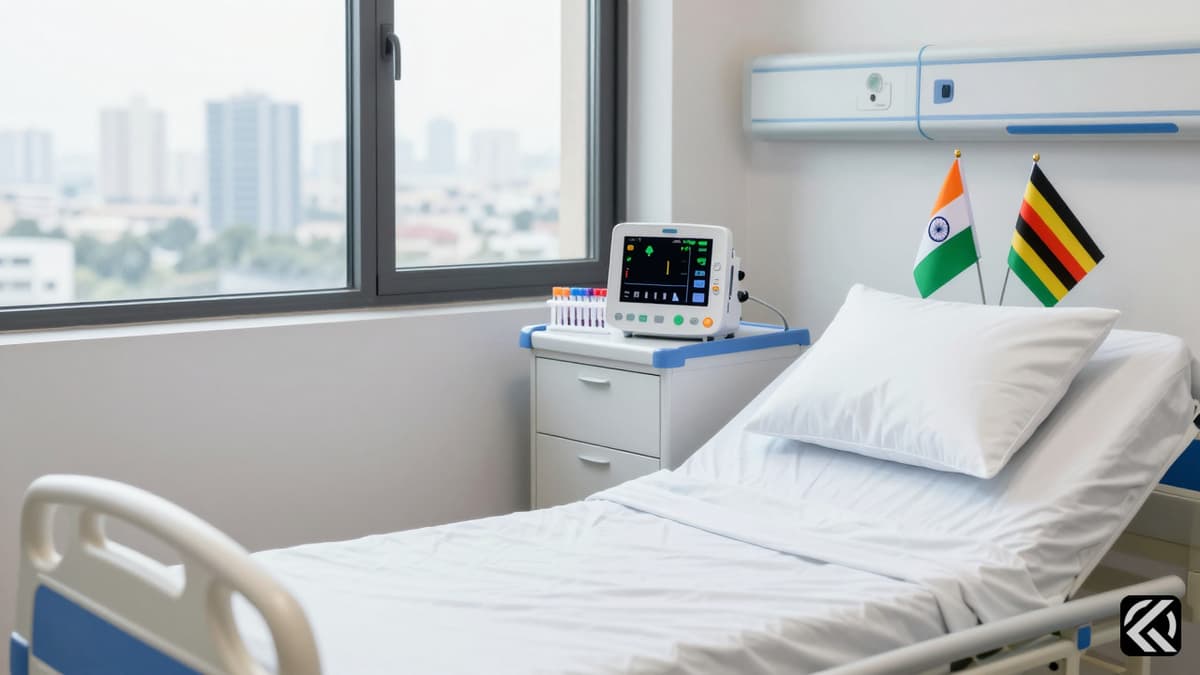
A suspected Ebola case in Bengaluru has sparked health alerts and designated isolation centers following the arrival of a traveler from an affected region.
A suspected Ebola case has triggered a significant health alert in Bengaluru after a 28-year-old woman, who recently arrived from Uganda, exhibited mild symptoms. The individual was shifted from a hotel to the State-run Epidemic Diseases Hospital on Tuesday, May 26, 2026, following the onset of a body ache. This incident has prompted immediate surveillance and the activation of specialized medical protocols by local health authorities to manage potential public health risks effectively.
Bengaluru District Surgeon and Medical Superintendent of the hospital, Dr. Anil Kumar Banagar, confirmed that the woman had recently traveled from Uganda to Ahmedabad before arriving in Bengaluru. Although she passed initial airport screening without showing symptoms, health authorities maintained close monitoring due to her travel history from an Uganda-affected region. The District Surveillance team and airport health officials were tracking her condition closely. Approximately 24 hours after arrival, she developed a mild body ache, leading officials to collect samples and send them to the National Institute of Virology (NIV) in Pune for comprehensive analysis. Dr. Banagar noted that the patient remains stable with no additional symptoms so far.
Test reports from the National Institute of Virology are expected to arrive within a day or two. Dr. Banagar clarified that even if the initial result is negative, protocol dictates a repeat test after 48 hours of observation. The woman will be discharged only after testing negative twice, ensuring rigorous safety standards are met before she leaves the facility. This cautious approach underscores the severity with which health officials are treating potential Ebola cases, regardless of the patient's current stable condition.
Amid this alert, Karnataka’s Health Department has taken proactive steps to strengthen preparedness. Specialized isolation, quarantine, and treatment facilities have been designated at government hospitals in Bengaluru and Mangaluru. In Bengaluru, the Rajiv Gandhi Institute of Chest Diseases has been identified as the isolation center, while the Epidemic Diseases Hospital serves as the quarantine and treatment facility. These designations are part of precautionary measures designed to contain any potential spread and ensure rapid response capabilities are fully operational.
In Mangaluru, Srinivas Port Hospital under the New Mangalore Port Authority has been identified as the quarantine center. Meanwhile, the Wenlock District Hospital has been designated as the isolation and treatment center. These strategic assignments across major cities in Karnataka reflect a coordinated effort to manage public health emergencies efficiently. The preparedness measures follow directives issued by the Union Health Ministry, which has asked all States and Union Territories to strengthen surveillance, hospital preparedness, and rapid response systems.
The urgency of these measures is amplified by recent developments at the global level. The World Health Organisation (WHO) had recently declared the ongoing Ebola outbreak in Uganda and the Democratic Congo a “Public Health Emergency of International Concern” (PHEIC). This declaration highlights the global significance of the current situation in Bengaluru and the need for heightened vigilance. The case serves as a critical test of India's public health infrastructure and its ability to respond swiftly to emerging infectious disease threats.
The activation of specific isolation centers in Bengaluru and Mangaluru demonstrates a robust institutional response to the suspected case. By leveraging existing infrastructure such as the Rajiv Gandhi Institute of Chest Diseases and Wenlock District Hospital, authorities can quickly scale up response capabilities without disrupting regular hospital operations. The strict protocol of double-negative testing before discharge ensures that public safety is prioritized over speed, reflecting a cautious approach to public health management. As the WHO continues to monitor the situation in Uganda and the Democratic Congo, the protocols established in Bengaluru may serve as a model for other Indian cities facing similar risks. The outcome of this case will likely influence future guidelines for traveler screening and hospital preparedness in India, ensuring that the nation remains resilient against potential global health emergencies.
Jun 9, 2026 20:58 UTC
Trump Demands U.S. Action as Iran Shoots Down Second Aircraft
Join 50,000+ readers getting the global briefing every morning.
No spam. Unsubscribe anytime.
Jun 9, 2026 20:58 UTC
Trump Demands U.S. Action as Iran Shoots Down Second Aircraft
Jun 9, 2026 18:37 UTC
Israel Strikes Tyre Despite Iranian Warnings
Jun 9, 2026 16:42 UTC
IAB Framework Data Practices and User Privacy Choices
Jun 9, 2026 16:07 UTC
Madhya Pradesh Congress Departs for Bengaluru to Avoid Rajya Sabha Elections Pitfalls


