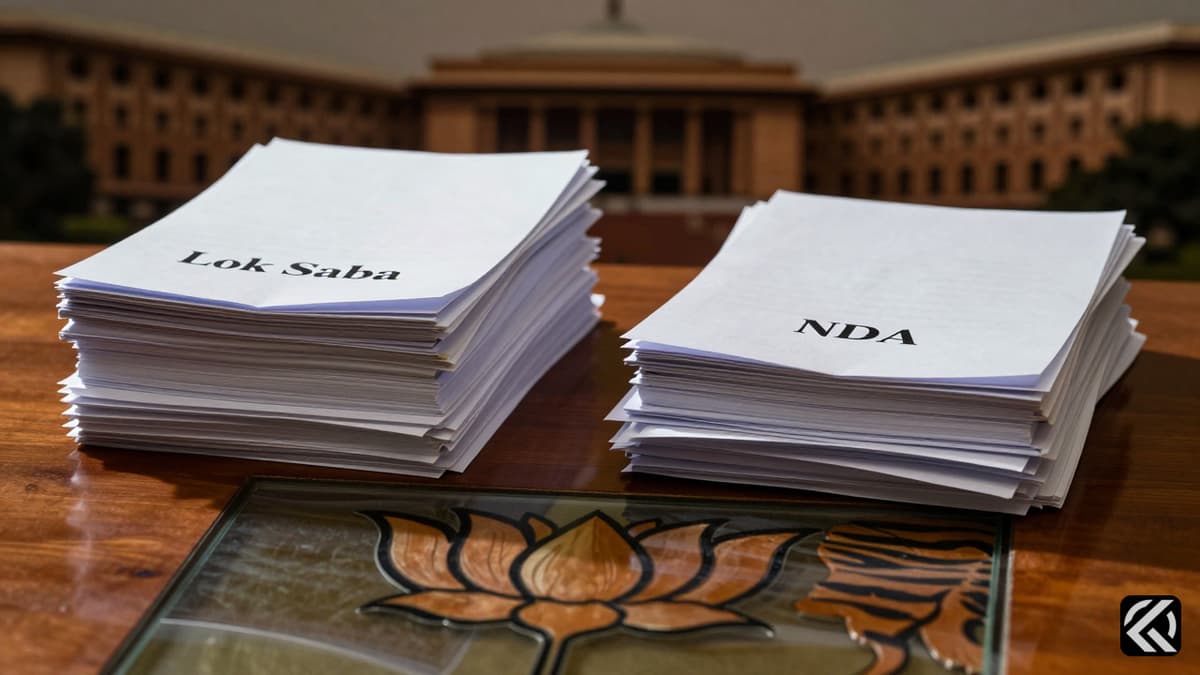
Amidst deepening internal fractures, Kalyan Banerjee claims several Trinamool Congress leaders have defected to the BJP, plotting to form a new parliamentary bloc.
In a press conference held in New Delhi on Tuesday, June 9, 2026, All India Trinamool Congress (AITC) leaders Kalyan Banerjee, Chief Whip of AITC in Lok Sabha, and Lok Sabha MP Kirti Azad addressed the ongoing crisis within their party. The conference focused on the intensifying Trinamool Congress rebellion, highlighting a significant shift in parliamentary allegiance.
The immediate trigger for this announcement was a meeting held the previous day, Monday, June 8, 2026. Several MPs from the Trinamool Congress met with Union Minister and Bharatiya Janata Party (BJP) West Bengal observer Bhupendra Yadav at his residence. Citing this encounter, Mr. Banerjee launched a scathing attack on the defectors, accusing them of abandoning their party's core values.
“Today their leader is Narendra Modi. They have become BJP,” Banerjee stated during the conference. He emphasized that while leaders are free to leave the party, they should “stop writing TMC leader/MP beside your name.” This comment underscored the growing rift between the rebel group and the mainstream Trinamool leadership.
The rebellion has taken a concrete organizational shape. The twenty rebel MPs intend to form a separate bloc within the Lok Sabha. This new group plans to actively support the BJP-led National Democratic Alliance (NDA) government at the Centre. The strategic alignment marks a significant challenge for the ruling Trinamool Congress, which has traditionally dominated West Bengal politics.
Barasat Lok Sabha MP Kakoli Ghosh Dastidar is emerging as the leader of this bloc. Mr. Banerjee has alleged that Ms. Dastidar is targeting TMC leaders in her constituency with the help of the BJP. “Kakoli Ghosh immediately took security from the State and Central government, and now she is, with the help of the BJP, targeting leaders from TMC of her area,” said the TMC MP. The accusation suggests a coordinated effort to weaken the party's ground-level structure.

Banerjee also questioned the moral stance of the rebels. “Post the election results, did these leaders or Sharmila Sarkar stand by the families of the deceased or affected party workers?” This query highlights the narrative of betrayal, contrasting the rebels' actions with the party's supposed duty to its victims. The mention of Sharmila Sarkar, a prominent Trinamool leader who died during political violence, adds emotional weight to the criticism.
Simultaneously, law enforcement activities are continuing in West Bengal. Trinamool Congress leader Sabyasachi Dutta was arrested early on Tuesday, June 9, 2026. The arrest took place in the North 24 Parganas district. Police charged him with extortion and criminal intimidation. While the source material does not explicitly link Dutta’s arrest to the parliamentary rebellion, the timing suggests a broader crackdown on dissent or criminal activities within the party's fold.
The political landscape in Delhi and Kolkata is thus becoming increasingly complex. The formation of a separate bloc by twenty MPs could influence legislative proceedings and confidence motions in the Lok Sabha. The BJP’s role as the observer and supporter of these rebels indicates a strategic calculation to gain leverage in future alliances or governance.
The response from the Trinamool Congress leadership underscores the severity of the internal conflict. By publicly denouncing the rebels and linking them directly to the BJP, Kalyan Banerjee and Kirti Azad are attempting to delegitimize the new bloc. The reference to the party workers' families serves to rally the remaining grassroots support and frame the defection as a betrayal of sacrifice.
Looking ahead, the next few weeks will be critical. The formal registration of the new bloc in the Lok Sabha will determine its procedural power. If the twenty MPs successfully operate as a cohesive unit, they could disrupt the opposition's numbers or create a third force in parliament. Conversely, if they face internal fragmentation or legal challenges, their impact may diminish.
For the BJP, supporting these rebels offers a foothold in West Bengal, a state that has been resistant to national parties for years. This move could signal a long-term strategy to erode the Trinamool's monopoly in the region. However, it also risks alienating potential allies who might view the support for defectors as opportunistic rather than ideological.
The arrest of Sabyasachi Dutta adds another layer of tension. While ostensibly a criminal matter, in the context of political unrest, such actions are often interpreted through a partisan lens. It remains to be seen if this arrest will lead to further mobilization by the Trinamool base or if it will be dismissed as routine law enforcement.
Ultimately, the Trinamool Congress rebellion represents a pivotal moment for Indian regional politics. The alignment of TMC defectors with the BJP could reshape the political map of Eastern India. The actions of leaders like Kakoli Ghosh Dastidar will set the precedent for how regional identities are negotiated within national coalitions. The coming months will likely see intensified rhetoric, legal maneuvers, and political maneuvering as both the Trinamool Congress and the BJP test the limits of this new alliance.
Jun 9, 2026 20:58 UTC
Trump Demands U.S. Action as Iran Shoots Down Second Aircraft
Join 50,000+ readers getting the global briefing every morning.
No spam. Unsubscribe anytime.
Jun 9, 2026 18:37 UTC
Israel Strikes Tyre Despite Iranian Warnings
Jun 9, 2026 16:42 UTC
IAB Framework Data Practices and User Privacy Choices
Jun 9, 2026 16:07 UTC
Madhya Pradesh Congress Departs for Bengaluru to Avoid Rajya Sabha Elections Pitfalls
Jun 9, 2026 14:27 UTC
US Sea Drone Saves Army Helicopter Crew Near Strait of Hormuz