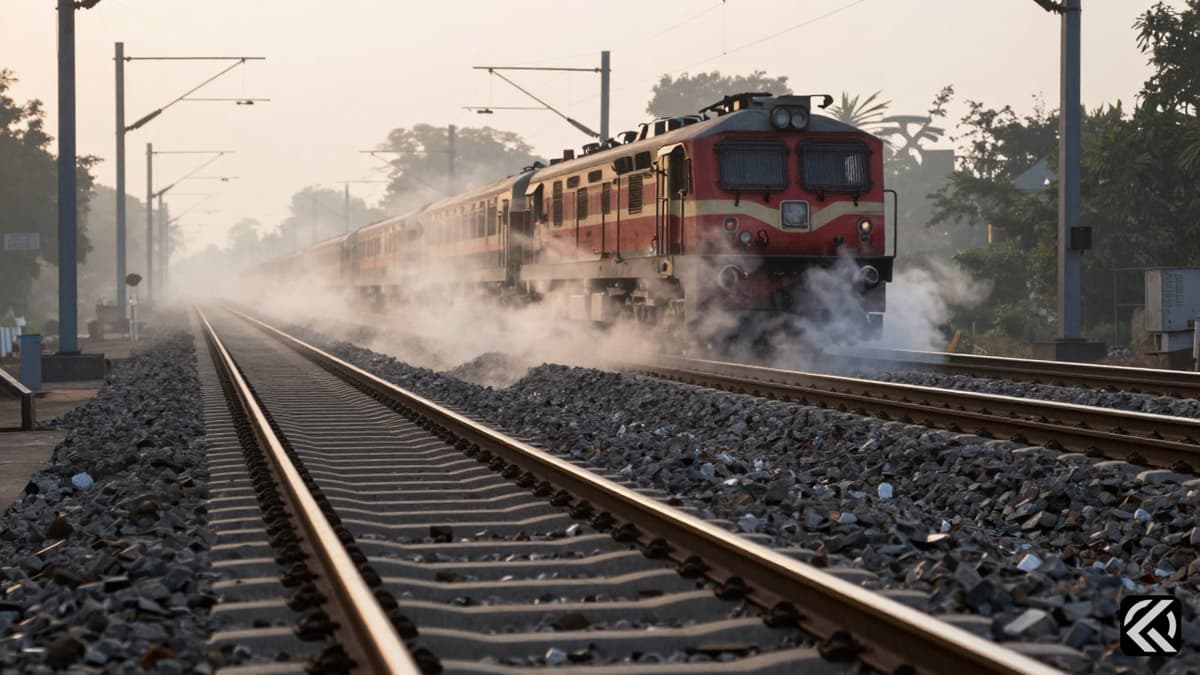
A sudden blaze in an AC coach of the Thiruvananthapuram-Hazrat Nizamuddin Rajdhani Express forced an emergency railway evacuation near Ratlam.
In the early hours of Sunday morning, a significant safety incident unfolded in Madhya Pradesh when a fire broke out in an Air Conditioned coach of the Thiruvananthapuram-Hazrat Nizamuddin Rajdhani Express. The incident occurred around 5:15 am in the Ratlam district, specifically within the Kota division of the Indian Railways. According to senior railway commercial manager Sourbah Jain, the fire erupted in the B-1 coach, which was carrying 68 passengers. Despite the severity of the situation, railway officials confirmed that no casualties were reported in the incident, marking a successful outcome for the emergency teams involved.
The immediate response to the crisis was swift and coordinated. Upon detecting the fire, railway staff initiated critical safety measures, including the immediate shutdown of the overhead electric supply (OHE) to prevent electrocution hazards. Passengers were deboarded from the affected area, and the compromised coach was physically separated from the rest of the train rake. Sourbah Jain detailed the timeline of these actions, stating that railway staff promptly evacuated all passengers, separated the affected coach, and alerted the fire brigade, state administration, and railway authorities. "Immediate action ensured the safety of all passengers," Jain emphasized during his briefing.
The scale of the emergency response was substantial. Three fire brigade units, along with multiple ambulances and civil administration personnel, were deployed to the site. Their collaborative efforts worked to contain the blaze, which Jain reported has now been "almost completely controlled." As a precautionary measure, the affected coach was detached from the train, and the overhead electric supply was switched off. Kota railway PRO Ravindera Lakhara confirmed the status of the travelers, noting, “All the passengers were deboarded from the train. None of the passengers sustained injuries.” This confirmation underscored the effectiveness of the railway evacuation protocols that were put into motion within minutes of the fire's discovery.
Logistical arrangements were put in place to ensure the continuity of the journey for those who had not yet reached their destination. The railways announced that accommodations had been made to house the passengers in other remaining coaches for the journey up to Kota. Furthermore, an additional coach is being attached at Kota station to restore the train's full capacity. The remaining portion of the train is expected to depart from the site within 30 to 45 minutes. Once the train departs, track restoration activities will commence to repair any potential damage to the railway infrastructure.
However, the incident did have ripple effects on the broader railway network. The derailment of the coach and the subsequent emergency operations caused some regulation of trains in both directions along the affected route. Approximately 5 to 6 other trains were impacted by these regulatory measures. To assist affected travelers, authorities advised passengers to contact the railway website or the helpline number 139 for any information regarding their status or alternative arrangements. This proactive communication channel was vital for managing passenger expectations and reducing confusion during the crisis.
While the immediate danger has passed, the root cause of the Rajdhani Express fire remains under investigation. Railway officials have launched a thorough inquiry to determine the origin of the blaze, whether it was mechanical, electrical, or due to other factors. This investigation is critical for preventing future occurrences and ensuring the safety standards of the high-profile Rajdhani Express service, which connects the capital of Kerala to New Delhi.
The promptness of the railway evacuation played a pivotal role in minimizing harm. The ability of the staff to quickly identify the threat, communicate with emergency services, and physically isolate the hazard zone demonstrates the operational readiness of the railway staff in the Kota division. The separation of the B-1 coach not only stopped the spread of fire to other passengers but also allowed the fire brigade to work on a contained area, significantly reducing the time required to control the incident.
The impact on the local infrastructure in the Ratlam district was also managed efficiently. With the fire brigade and civil administration working collaboratively, the site was secured without causing prolonged gridlock or danger to local residents. The presence of multiple ambulances on-site ensured that if any minor injuries had occurred, they could be treated immediately, although none were reported. This level of coordination is essential for maintaining public trust in the railway system, especially given the high volume of passengers who rely on these long-distance trains daily.
Looking ahead, the railways have stated that the remaining portion of the train is expected to depart within a short window. The attachment of an additional coach at Kota station highlights the logistical resilience of the system. Passengers who were displaced are now being accommodated, ensuring that their travel plans are not entirely derailed by the incident. The advice to contact the helpline or website serves as a reminder of the importance of real-time information dissemination during such disruptions.
As the investigation into the cause of the fire proceeds, it will likely lead to enhanced safety checks for the rake of the 12431 train. The incident serves as a reminder of the potential risks associated with long-haul train travel and the necessity of rigorous maintenance protocols. The successful handling of this emergency, with zero casualties and minimal disruption to the passengers' well-being, stands as a testament to the preparedness of the Indian Railways' emergency response teams.
The fire on the Thiruvananthapuram-Hazrat Nizamuddin Rajdhani Express in the Ratlam district highlights the critical need for continued vigilance in railway safety protocols. Given the high speed and occupancy of Rajdhani trains, immediate railway evacuation strategies are paramount. The successful containment of this incident suggests that current emergency response mechanisms are effective, but the ongoing investigation into the cause will likely lead to stricter maintenance audits for AC coaches. Future impacts may include enhanced monitoring systems for overheating components, ensuring that such fires are detected at the earliest possible stage, thereby preventing the need for emergency detachments and minimizing operational delays for the thousands of passengers who rely on this service.
Jun 9, 2026 02:39 UTC
US Warplane Strikes Tanker MT Marivex; Crew Evacuated in Gulf of Oman
Join 50,000+ readers getting the global briefing every morning.
No spam. Unsubscribe anytime.
Jun 9, 2026 00:00 UTC
INDIA Bloc Leaders Gather in Delhi to Forge Strategic Unity
Jun 8, 2026 22:55 UTC
Netanyahu Vows Forceful Response to Future Iran Attacks
Jun 8, 2026 20:56 UTC
Netanyahu Halts Iran Fighting, Vows Future Force
Jun 8, 2026 20:54 UTC
Justice Department Moves to Strip Citizenship from 17 Individuals


