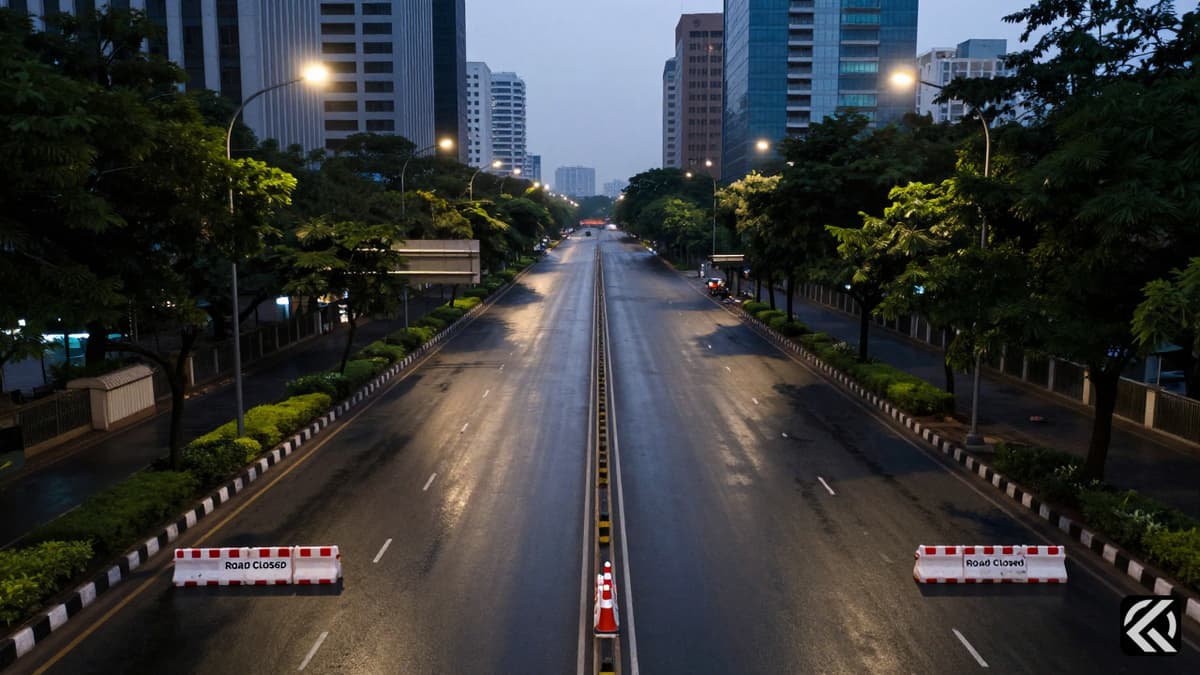
Bengaluru faces major traffic curbs on June 3 due to the high-profile Karnataka CM swearing-in ceremony at Lok Bhavan, impacting thousands of commuters.
The Bengaluru Traffic Police have announced extensive traffic restrictions and diversions across the Central Business District (CBD) on June 3 in view of the swearing-in ceremony of the new Chief Minister of Karnataka, which is scheduled to be held at 4 p.m. at the Glass House in Lok Bhavan. The event is expected to witness the presence of several dignitaries, VVIPs, and political leaders from across the country, prompting heightened security measures and traffic management arrangements. Entry to the venue will be restricted to invited guests.
According to the traffic police, vehicle movement will be prohibited on several key roads between 12 noon and 8 p.m., including stretches of Cubbon Road, Dr B.R. Ambedkar Road, Race Course Road, Queens Road, and roads leading towards Lok Bhavan. Heavy congestion is anticipated in and around the CBD area due to the event, and public gatherings. Motorists have been advised to use alternative routes through Shivajinagar, Cunningham Road, Nrupathunga Road, Sivananda Junction, and the Outer Ring Road to avoid delays. Special diversions have been planned for vehicles heading towards Kempegowda International Airport and Hebbal from the eastern parts of the city.
Parking will be prohibited on more than 20 major roads, including Ambedkar Road, Palace Road, Race Course Road, Queens Road, Kasturba Road, Cubbon Road, and several internal roads within Cubbon Park. Authorities warned that vehicles parked in violation of the restrictions may be towed away. Designated parking facilities have been earmarked for vehicles with event passes at Vidhana Soudha, Vikas Soudha, Raj Bhavan and Nehru Planetarium premises. Visitors without event passes have been directed to use parking facilities at Kanteerava stadium, UB City, Shivajinagar Bus Stand multi-level parking, Government Arts College, and Palace grounds.
In addition, the movement of heavy vehicles across Bengaluru city limits will remain prohibited from 12 noon to 10 p.m. on June 3. Traffic police have appealed to commuters to plan their journey in advance, avoid restricted stretches, and co-operate with officials to ensure smooth conduct of the swearing-in ceremony. The scale of these measures reflects the significance of the Karnataka Chief Minister swearing-in, requiring coordinated efforts from law enforcement and the public to maintain order in the city.
The implementation of such comprehensive Bengaluru traffic restrictions indicates a shift in how metropolitan authorities manage high-security political events. Historically, traffic disruptions in Bengaluru have been frequent due to infrastructure challenges and rapid urbanization. However, the specific duration and geographical spread of these curbs suggest a more rigid approach to securing VVIP movements and major ceremonial events. The prohibition on heavy vehicles for ten hours suggests an effort to reduce load on specific corridors and minimize noise and pollution during the critical hours surrounding the ceremony.
The detailed allocation of parking zones for pass holders and general public indicates a pre-planned logistical framework designed to prevent ad-hoc congestion. By directing non-pass holders to specific landmarks like Kanteerava Stadium and UB City, authorities are attempting to create designated buffer zones. This strategy likely aims to keep the inner CBD clear for security perimeters while providing accessible alternatives for the wider public. The special diversions for those heading to Kempegowda International Airport are particularly notable, highlighting the need to balance political security with essential travel needs for domestic and international visitors.
Furthermore, the emphasis on towing vehicles parked in violation of restrictions underscores the zero-tolerance policy for non-compliance. This strict enforcement is likely intended to ensure that emergency services and security convoys have unimpeded access to the Lok Bhavan complex. The involvement of political leaders from across the country amplifies the national importance of the event, justifying the extensive resources deployed. As Bengaluru continues to grow, such large-scale traffic management protocols may become more common for significant state and national events, requiring citizens to adapt their daily commuting patterns accordingly. The success of these measures will depend heavily on public cooperation and real-time communication from traffic authorities.
The extensive traffic curbs for the Karnataka Chief Minister swearing-in demonstrate how Bengaluru adapts its infrastructure for major political milestones. The city's ability to enforce road closures and manage heavy vehicle bans highlights its operational capacity for large-scale security operations. As political events become more prominent, the city may need to develop more flexible traffic management systems that minimize long-term economic disruption. The current approach of temporary, high-intensity restrictions serves as a model for handling future VIP visits. However, sustainable urban planning must also address the recurring issue of congestion to ensure that such events do not become permanent disruptions to daily life.
Jun 9, 2026 02:39 UTC
US Warplane Strikes Tanker MT Marivex; Crew Evacuated in Gulf of Oman
Join 50,000+ readers getting the global briefing every morning.
No spam. Unsubscribe anytime.
Jun 9, 2026 00:00 UTC
INDIA Bloc Leaders Gather in Delhi to Forge Strategic Unity
Jun 8, 2026 22:55 UTC
Netanyahu Vows Forceful Response to Future Iran Attacks
Jun 8, 2026 20:56 UTC
Netanyahu Halts Iran Fighting, Vows Future Force
Jun 8, 2026 20:54 UTC
Justice Department Moves to Strip Citizenship from 17 Individuals


