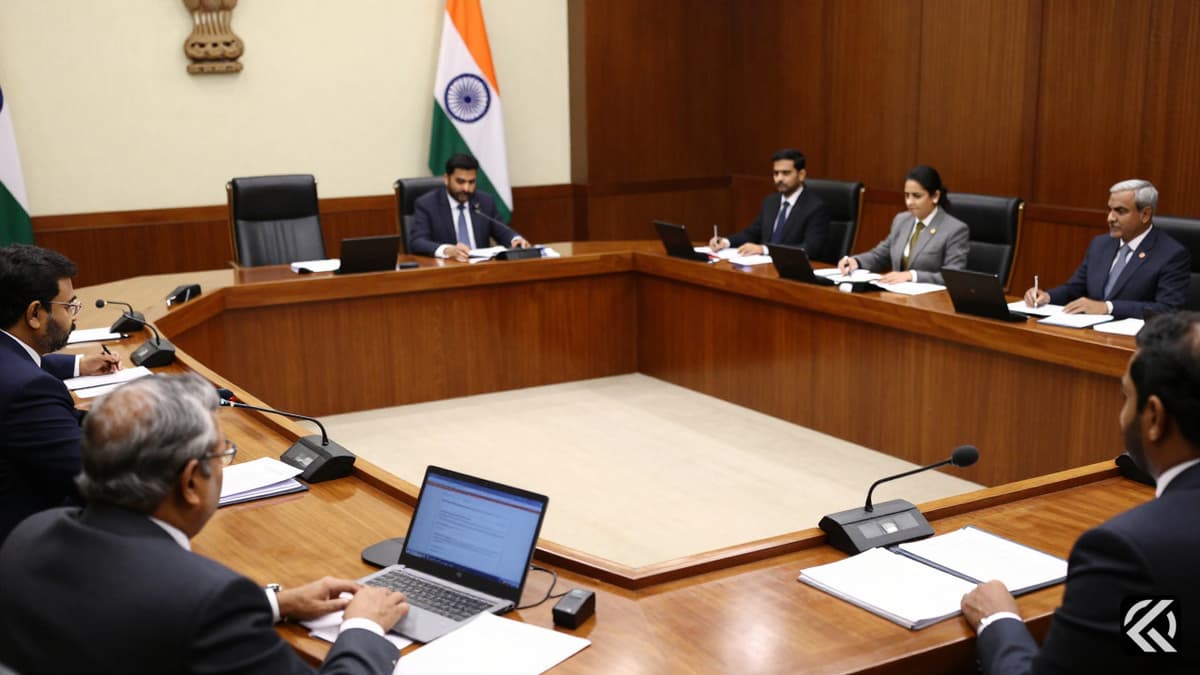
A 17-year-old student’s allegations of tender irregularities in CBSE’s On-Screen Marking system have surfaced before Parliament, triggering immediate administrative scrutiny and official responses.
On Tuesday, June 2, 2026, a significant development unfolded before the Parliamentary Standing Committee on education, where Sarthak Sidhant, a 17-year-old student from Jharkhand, presented alleged irregularities in the Central Board of Secondary Education’s (CBSE) tendering process. Despite being too young to be elected, Sidhant successfully flagged issues regarding the On-Screen Marking (OSM) system used for Grade 12 exams.
The committee, specifically tasked with issues concerning women, children, youth, and sports, was chaired by Congress MP Digvijaya Singh. The session focused on the "use of On-Screen-Marking (OSM) in Grade 12 CBSE exams and issues faced by students." Sidhant, who recently appeared for these Class 12 exams, submitted a seven-page document outlining alleged anomalies in the selection of vendors for the online marking system. Sources indicated that he posed a series of critical questions to the board during his presentation.
The gravity of the situation was underscored by the presence of high-ranking officials. The presentation occurred in the presence of CBSE Chairman Rahul Singh and School Education Secretary Sanjay Kumar, alongside other officials from the Ministry of Education and the board. In a swift administrative reaction, CBSE Chairman Rahul Singh was transferred just hours after the meeting concluded, signaling immediate government scrutiny over the matter.
Meanwhile, the CBSE submitted a detailed report to the panel, outlining the challenges involved in implementing the OSM process. Officials addressed the MPs with assurances that technical issues with the portal had been resolved. To aid affected students, the board promised that they would have time until Saturday, June 6, to apply for the re-evaluation of their answer sheets. This incident highlights the intense pressure on educational bodies to maintain transparency and technical reliability in high-stakes examinations.
The core of Sidhant’s presentation centered on the integrity of the CBSE tendering process. By submitting a detailed seven-page document, he provided a structured critique of how vendors were selected for the online marking system. This act of civic engagement by a minor has drawn significant attention to the procedural safeguards within India’s largest secondary education board. The allegations suggest potential flaws in the procurement or operational selection phases, which are critical for ensuring fairness in national examinations.
The committee's inquiry was not merely academic; it addressed real-time consequences for students. The OSM system, intended to streamline the evaluation of thousands of answer sheets, faced backlash due to technical glitches and perceived irregularities. Sidhant’s role as a direct stakeholder-a student who sat for the exam-added weight to the allegations. His findings were not abstract complaints but grounded in the immediate experience of the examinees who relied on this specific technological infrastructure.
The presence of School Education Secretary Sanjay Kumar and CBSE Chairman Rahul Singh at the session emphasized the government’s direct involvement in resolving these grievances. However, the rapid transfer of Chairman Singh suggests that the findings may have carried significant political or administrative weight. Such swift action is often indicative of the government's desire to distance itself from perceived failures in public sector undertakings or educational boards.
The resolution offered by CBSE officials indicates a shift from denial to remediation. By confirming that portal issues were resolved and extending the deadline for re-evaluation applications, the board attempted to mitigate the immediate distress of students. This response aligns with the urgent need to maintain public trust in the examination system. The deadline of June 6 provides a concrete window for affected students to seek justice through re-evaluation, addressing the immediate academic fallout.
However, the underlying issue of tender irregularities remains a subject of ongoing parliamentary inquiry. The committee’s investigation into the CBSE tendering process will likely determine whether the anomalies were isolated technical glitches or systemic failures in vendor selection. Such inquiries are crucial for establishing accountability in public education infrastructure. The case of Sarthak Sidhant may set a precedent for student activism and the scrutiny of educational technology procurement in India.
As the committee continues its deliberations, the focus remains on ensuring that the OSM system operates with complete transparency. The intersection of student advocacy, parliamentary oversight, and administrative response in this incident underscores the evolving dynamics of accountability in India’s education sector. The outcome of this inquiry could influence future procurement policies and the oversight mechanisms applied to national educational boards.
The presentation by Sarthak Sidhant before the parliamentary committee serves as a critical case study in the intersection of youth activism and educational governance. By exposing alleged irregularities in the CBSE tendering process, he has forced a re-euation of the transparency measures in place for selecting vendors for high-stakes examination systems. The immediate transfer of CBSE Chairman Rahul Singh and the subsequent remedial actions by the board, including the re-evaluation window until June 6, suggest that the government is taking these allegations seriously. Looking forward, this incident may lead to stricter regulatory oversight of educational technology procurements, ensuring that technical reliability and procedural integrity are prioritized in future tendering processes. The reliance on digital systems like On-Screen Marking necessitates robust safeguards against both technical failure and administrative irregularity to maintain public confidence in national examinations.
Jun 9, 2026 02:39 UTC
US Warplane Strikes Tanker MT Marivex; Crew Evacuated in Gulf of Oman
Join 50,000+ readers getting the global briefing every morning.
No spam. Unsubscribe anytime.
Jun 9, 2026 00:00 UTC
INDIA Bloc Leaders Gather in Delhi to Forge Strategic Unity
Jun 8, 2026 22:55 UTC
Netanyahu Vows Forceful Response to Future Iran Attacks
Jun 8, 2026 20:56 UTC
Netanyahu Halts Iran Fighting, Vows Future Force
Jun 8, 2026 20:54 UTC
Justice Department Moves to Strip Citizenship from 17 Individuals


